Centralized vs decentralized machine learning workflows
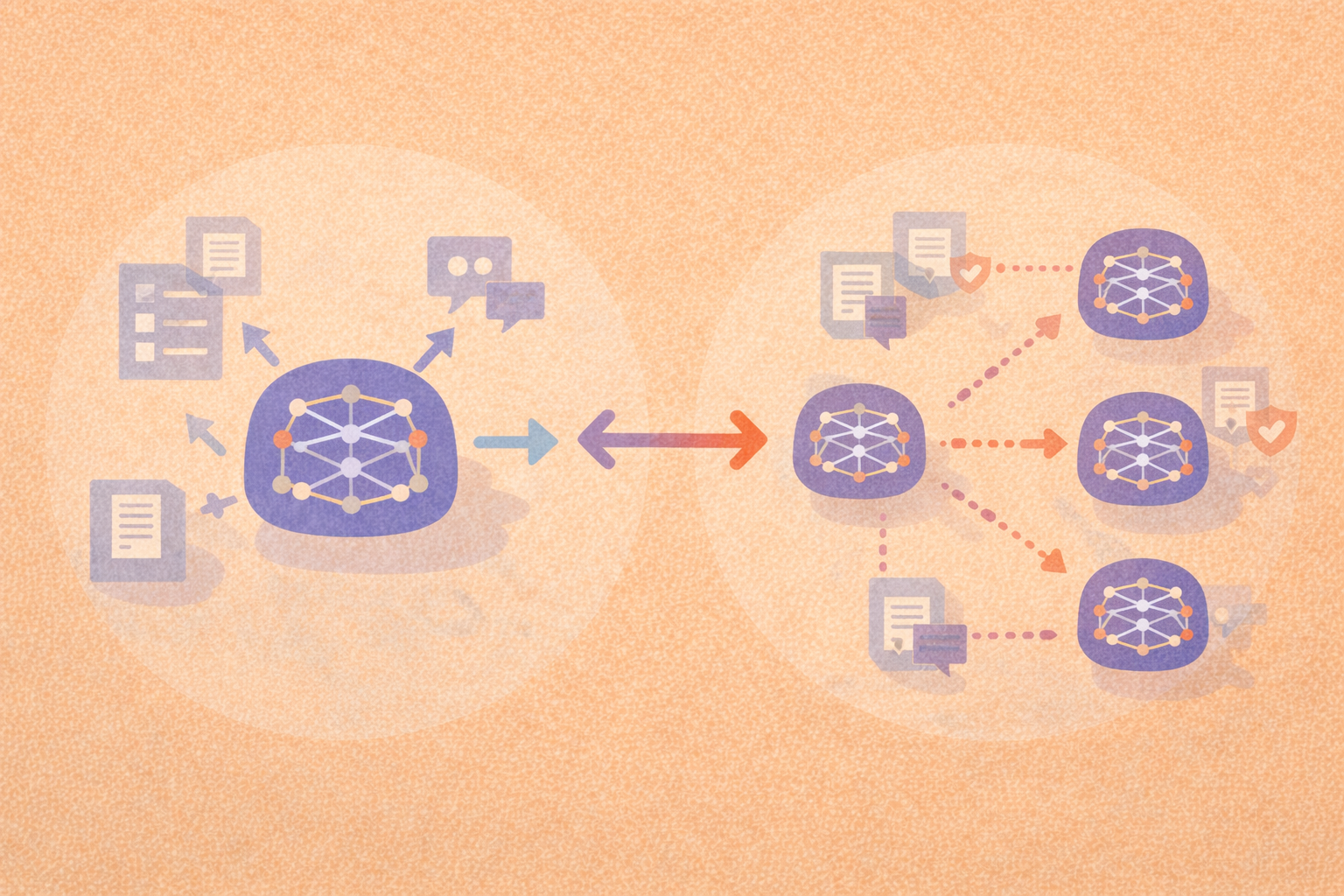
About centralized machine learning workflows
Centralized machine learning workflows bring data, training, evaluation, and deployment into a single coordinated environment. Data is aggregated into one place, models are trained centrally, and evaluation standards are applied consistently across teams.
This approach simplifies collaboration and governance. When everyone works from the same datasets and evaluation criteria, it is easier to compare models, enforce quality standards, and track performance over time. Centralized workflows also reduce duplication of effort, since shared infrastructure and processes can be reused.
Centralization works best when data can be legally and practically combined. Many organizations prefer this model because it lowers operational complexity and makes debugging and auditing more straightforward.
The main limitation of centralized workflows is data movement. Aggregating data may be restricted by privacy regulations, security policies, or organizational boundaries. Centralized systems can also become bottlenecks if multiple teams compete for the same resources.
About decentralized machine learning workflows
Decentralized machine learning workflows keep data and sometimes training distributed across locations, teams, or organizations. Instead of moving data to a central location, models or updates are exchanged between systems.
This approach is often driven by privacy, regulatory, or operational constraints. Data may be too sensitive to share, too large to move efficiently, or governed by different stakeholders. Decentralized workflows allow learning to occur without centralizing raw data.
The benefit is flexibility and compliance. Teams can collaborate across boundaries while respecting data ownership and local control. Decentralized approaches can also scale across organizations more naturally.
The downside is complexity. Evaluation becomes harder when data distributions differ. Governance requires coordination rather than enforcement. Debugging issues may involve multiple systems and stakeholders.
Decentralized workflows demand stronger communication, clearer standards, and more sophisticated evaluation practices to maintain consistency.
Comparison
| Dimension | Centralized workflows | Decentralized workflows |
| Data location | Aggregated | Distributed |
| Governance | Easier to enforce | Requires coordination |
| Operational complexity | Lower | Higher |
| Privacy constraints | Fewer | More significant |
| Evaluation consistency | High | Variable |
| Scalability across orgs | Limited | Strong |
| Debugging | Simpler | More complex |
| Best-fit use cases | Single organization, shared data | Regulated or siloed environments |
Suggestion
If data can be centralized safely, centralized workflows are usually the most efficient starting point. They reduce complexity and make evaluation more consistent. Decentralized workflows are powerful but should be adopted deliberately, when privacy, regulation, or organizational structure make centralization impractical.
Teams transitioning to decentralized workflows should invest early in shared evaluation standards and communication practices.
Conclusion
Centralized workflows optimize for simplicity and control. Decentralized workflows optimize for autonomy and privacy. Neither is universally better—the right choice depends on constraints, not preferences. Understanding these tradeoffs helps teams design machine learning systems that are both effective and responsible.
Frequently Asked Questions
Frequently Asked Questions
What drives the choice between centralized and decentralized workflows?
The primary drivers are data privacy, regulatory constraints, organizational structure, and operational complexity, not model performance alone.
Are decentralized workflows always more secure?
Not necessarily. They can reduce data movement but introduce coordination and consistency challenges that must be managed carefully.
Can teams transition from centralized to decentralized workflows over time?
Yes. Many organizations start centralized and evolve toward decentralization as constraints or scale increase.
Which workflow is easier to govern and audit?
Centralized workflows are generally easier to govern because standards and controls are enforced in one place.
Do decentralized workflows make evaluation harder?
They can. Differences in data distributions and local practices require stronger coordination and shared evaluation standards.
Related Content
-
How to Compare Machine Learning Tools (Without a Giant Spreadsheet)
Comparing ML tools doesn’t have to mean endless feature charts. This guide shows you how to evaluate tools based on real-world fit, not just checkboxes.
-
Why Open Source ML Tools Still Power the Most Innovative AI Projects
Open source machine learning tools give teams flexibility, transparency, and control over their AI pipelines. Here’s why they’re still a go-to choice for leading ML projects.
-
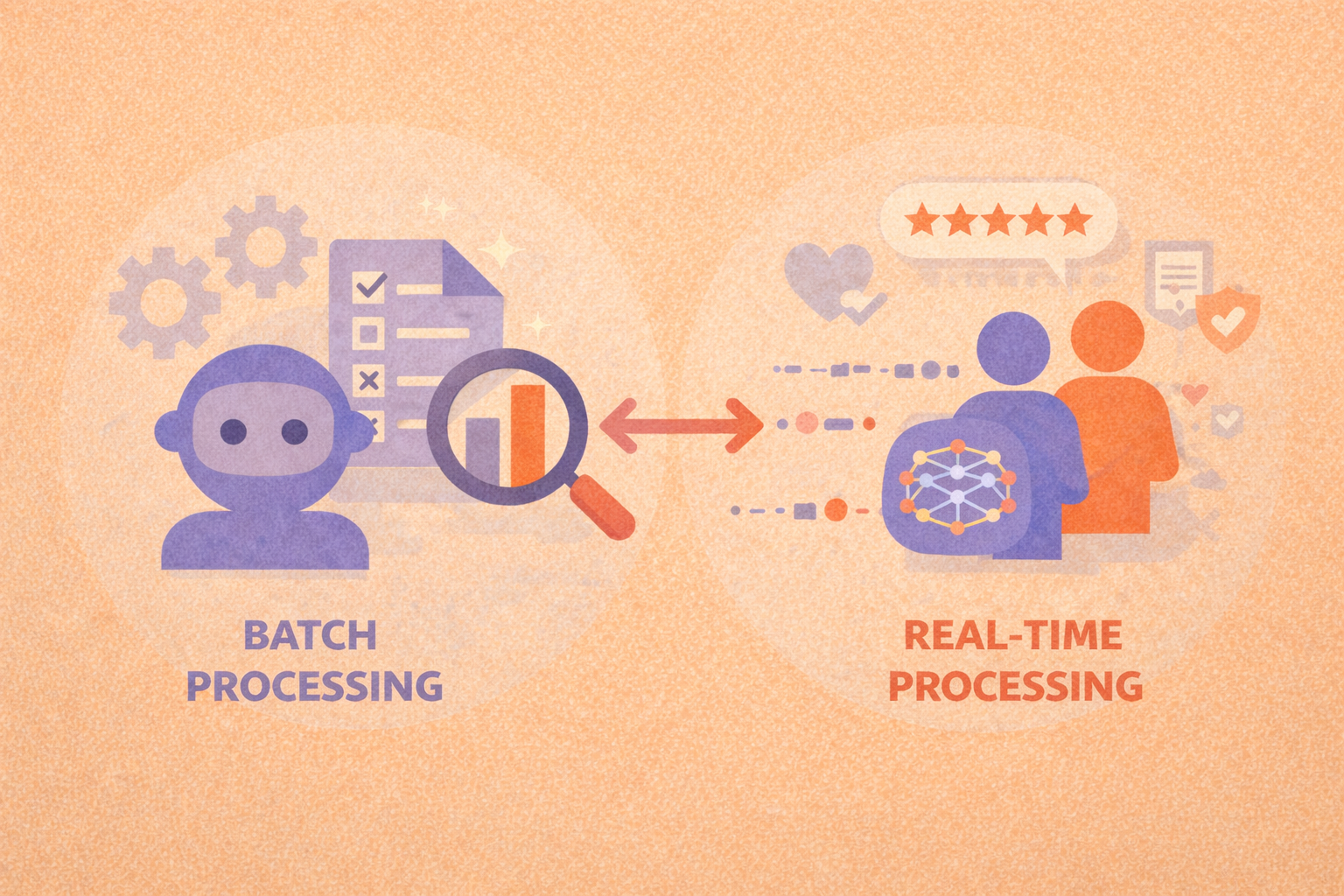
Batch processing vs real-time processing in machine learning workflows
Batch workflows prioritize scale and stability, while real-time systems prioritize speed, understanding the difference helps you design the right ML pipeline.
-
A Guide to Machine Learning Tools
This hub breaks down categories, use cases, and selection strategies to help you scale smarter across the ML lifecycle.