How to write a brief that gets you the training data you need
Labels come back inconsistent. You read through the brief and it looks fine. Then you look at the edge-case policy and find three words that meant different things to different annotators. The annotators followed the brief. The brief just didn't say enough.
TL;DR
A training data brief controls annotation quality before any labeling starts.
Task scope and risk tolerance anchor every other decision in the brief.
Legal provenance is no longer optional. 2025 rulings shift liability to unlicensed content.
Annotation guidelines need paired examples and tie-break rules for every disputed class.
Quality thresholds must be written into the brief, not added after inconsistencies surface.
What a training data brief actually controls
The training data brief defines your model's fuel, separate from a project scope document. It sets what gets labeled and how annotators resolve ambiguity. It also sets the quality threshold that rejects bad labels before they reach your pipeline.
The decisions you make in the brief constrain what the model can learn. Clear documentation directly benefits the AI development lifecycle, according to a 2024 ACM study. An Extended Data Brief with risk labels gives teams an overview of potential ethical harms from data composition before those harms reach the model.
Write the brief poorly and annotators fill the gaps with their own judgment. That judgment varies. Variance compounds across thousands of labels. Retraining cycles multiply.
Scope the task and set risk tolerance first
Two decisions anchor every other part of your brief: what your model must distinguish, and how much annotation disagreement your deployment context will handle.
Define the task scope: the label schema, the input types, and the distinctions the model must make. "Classify customer sentiment" is not a scope. A scope looks like: "Label each sentence in a support transcript as positive, negative, neutral, or ambiguous. Apply ambiguous when a sentence contains conflicting signals in the same clause."
Risk tolerance determines how much annotation disagreement your deployment can accept. A model routing internal support tickets can handle more disagreement. A model flagging medical imaging for radiologist review requires much higher agreement. Risk tolerance sets your Inter-Annotator Agreement (IAA) target. IAA is a derived decision based on deployment stakes, not an arbitrary number from a template.
IAA in turn sets how strict the guidelines need to be, what annotator qualifications to require, and how much QA volume to budget. Start with one question: "What is the cost of a wrong label at inference time?" Work backward from that answer to a threshold your project can defend.
If you build a low-stakes internal tool, you might accept an IAA where annotators agree on 80 percent of cases. A model that informs clinical decisions needs a higher bar, tighter guidelines, and a smaller, more qualified annotator pool. Setting the wrong risk threshold in the brief means recalibrating mid-project, after you've already collected inconsistent data.
Document data sourcing and legal clearance
Where the data originates
Your sourcing section answers three questions. Where did your data originate? Do you have rights to use it for AI training? What deletion obligations apply after your model ships?
Record the collection method. Web-scraped data, licensed datasets, internal records, and user-generated content each carry different rights profiles. For each source, record when you collected it, how you accessed it, and any terms of service or data use agreements that applied.
The "Datasheets for Datasets" framework requires records across the full dataset lifecycle. That spans motivation, composition, collection process, preprocessing, uses, distribution, and maintenance. Treat those stages as the minimum section headers for your sourcing records.
Rights, licensing, and deletion obligations
Legal provenance is now a practical consideration for data teams. Two separate 2025 rulings found that using copyrighted material for AI training is fair use when obtained legally, per the Virginia JCOTS policy brief. Teams should be cautious about content sourced from unauthorized or paywalled repositories, where the same protection does not apply.
Your brief needs a confirmed license status for each data source. Note whether the license covers commercial use and whether it allows derivative works. Also flag whether any "right to be forgotten" requests apply to individuals whose data appears in the set. If a source's license status is unclear, verify it before moving forward. Confirming these details early helps prevent rework or compliance issues later in the project.
Write annotation guidelines that leave no decision to chance
Classification and structured labeling tasks
Annotation guidelines are where the brief does its work. Annotators learn what labels exist and how to choose among them when reality does not fit the schema.
Every label class needs three things: a definition, a paired qualifies/does-not example, and a tie-break rule for cases where two annotators would reasonably disagree. Guidelines that stop at definitions produce disagreement on edge cases. Guidelines that include paired examples reduce that disagreement. Guidelines that add tie-break rules nearly eliminate it.
HumanSignal onboarding practices require paired qualifies/does-not examples, edge-case policies, and tie-break rules built in before production starts.
When stakeholders understand how a dataset is built, they are more likely to trust the results, according to an ACM study. The same rule applies to annotators: clear instructions produce consistent behavior across the team, while ambiguous ones produce compliance theater where people guess to get through the task.
Sense Street annotated roughly 15,000 complex conversations across five languages in six months and saw a 150 percent increase in total labels (HumanSignal). The high volume required guidelines structured enough that annotators across five languages could apply the same decision logic. Without that clarity, every edge case would have escalated. The guidelines did the disambiguating work.
GenAI and RLHF tasks
Preference-ranking and RLHF tasks need a different guidelines structure. There is no binary correct label. The annotator is choosing which of two model outputs better satisfies a rubric.
For these tasks, replace class definitions with a scoring rubric. Define each dimension (helpfulness, factual accuracy, harmlessness) with anchored examples at each point on the scale. Include worked comparisons showing why output A scores higher than output B on that dimension. Annotators calibrate their judgment against those examples, not against abstract descriptions. Vague rubrics produce vague preferences, and vague preferences train models toward the wrong qualities.
The brief's guidelines section doubles as the annotator training document. Write it at that standard.
When a full brief is more than the task needs
For commodity classification with low deployment stakes, a tiered brief with layered edge-case trees adds more setup time than the project recovers. Sorting product images into three fixed categories for internal tooling works with a one-page checklist. Annotators can self-correct, and no regulatory or safety outcome depends on the model.
Set quality thresholds before labeling starts
Quality thresholds written before labeling starts are enforceable. Written after inconsistencies surface, they are retrospective. The brief must specify all of the following before a single production label is submitted:
The IAA target for the task, expressed as the agreement rate that triggers human review versus passes to the training pipeline automatically.
The size and composition of the ground-truth set, scaled to task complexity. Simple binary tasks need fewer gold-standard examples than multi-class or sequence labeling tasks.
Competency gating rules: the quiz format, the passing threshold, and the re-attempt policy before an annotator can access production data.
Behavioral guardrails: the signals that flag low-trust behavior. Labeling at speeds inconsistent with the task's cognitive load, or duplicate copy-paste answers across different inputs, are both detectable and meaningful. Define the detection logic in the brief.
Continuous evaluation cadence: how often gold-standard tasks are mixed into the production stream to catch quality drift before it contaminates a large share of the dataset.
Scoutbee achieved greater than 90 percent model accuracy across millions of documents. They also cut the time to label data and maintain models by 20x while holding quality at SLA level. Achieving 90 percent accuracy across a large dataset does not happen without thresholds defined at the start. Mid-project course corrections are expensive; the brief is where you avoid them.
Convert the brief into a workflow configuration
A brief that remains a document stops being enforced the moment the first annotator opens a task.
Every decision in the brief maps to a platform setting. Label class definitions become the tooltip text shown in the annotation interface. IAA thresholds become the agreement trigger that holds a task in the review queue until the required agreement is met. Edge-case policies become the instruction panels annotators see before they submit. Pre-labeling configuration specifies which model provides suggestions and at what confidence threshold those suggestions appear.
When the tool configuration mirrors the brief, the guidelines become self-enforcing. Annotators can't deviate from the guidelines because the interface doesn't give them the option.
The Prompts feature in Label Studio connects brief decisions to platform actions directly. Pre-labeling generates initial labels for human review. LLM output comparison measures responses against ground truth. Synthetic data generation fills gaps in underrepresented classes. The brief's task definition drives the configuration directly, instead of living in a separate document that drifts from the actual workflow.
When to bring in external annotation expertise
Some briefs reveal a gap the internal team cannot close.
Medical record annotation requires annotators with clinical credentials. Legal document review for jurisdiction-specific tasks requires lawyers or trained paralegals. Multilingual RLHF requires fluent native speakers with domain familiarity. Bilingual generalists produce lower-quality preference data. When the brief surfaces one of these gaps, make the resourcing decision there. Waiting until the project is half-complete makes the right choice much harder.
The global AI training dataset market was valued at $7.47 billion in 2026 and is projected to reach $52.41 billion by 2035. The market expansion is driven by demand for domain-specific datasets where subject matter expertise is required. That pricing reflects the real cost of expertise at scale.
For teams whose brief reveals a domain or scale gap, HumanSignal Data Services provides managed annotation without transferring workflow control to a third party. The brief you wrote still governs the task definitions, quality thresholds, and IAA targets. The managed team executes against it. That means the data returns in the format your pipeline expects, with the quality bar you defined.
The test a finished brief must pass
The opening scenario traced back to a brief that left one decision to annotator judgment. Every annotator filled that gap differently. The labels reflected the gap, not the task.
A training data brief is finished when every decision an annotator might face in isolation already has an answer written down. The test: if two reasonable annotators could read the brief and reach different conclusions on the same example, the brief needs one more revision. That standard is not perfectionism. It is the minimum threshold for data that actually trains the model you intend to build.
Related Content
-
Should you run RLHF in-house or bring in a partner?
The cost-vs-control framing leads RLHF teams astray. Learn the three criteria that actually predict whether in-house or partner annotation will work.
-
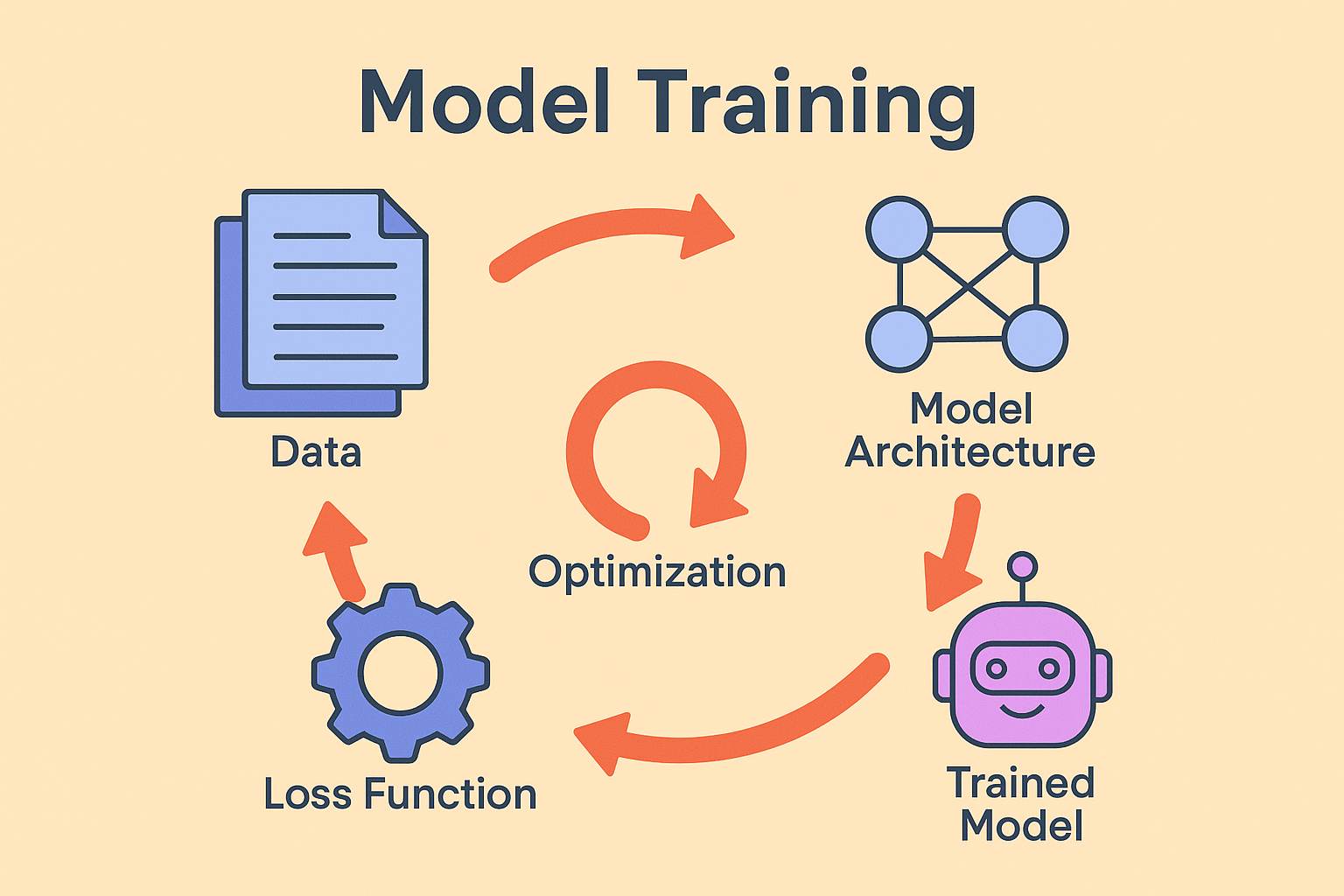
Training a Model: How AI Systems Learn
Model training is how AI systems learn from data. This guide explains the process, its importance, and when to train versus fine-tune for your use case.
-
Why dexterous manipulation is the hardest data in robotics
Dexterous manipulation projects don't fail at the hardware layer. They fail at annotation. Here's why labeling tactile and force data is uniquely hard.
-
What data do you need to train a VLA model?
Training a VLA model isn't a volume problem. Learn why data composition, diversity, and annotation quality matter more than how many episodes you collect.
-
What is dexterous manipulation data?
Learn what dexterous manipulation data is, why it differs from standard sensor streams, and how annotation structure determines whether a policy learns anything useful.
-
How many human demonstrations does it take to train a robot?
The answer isn't a fixed number. It depends on how demonstrations are labeled. Learn what determines whether your dataset produces a deployable robot policy.
-
Where robot training data comes from in 2026
Robot training data can't be scraped. Learn where it actually comes from, what makes an episode worth keeping, and how teams decide what to label.
-
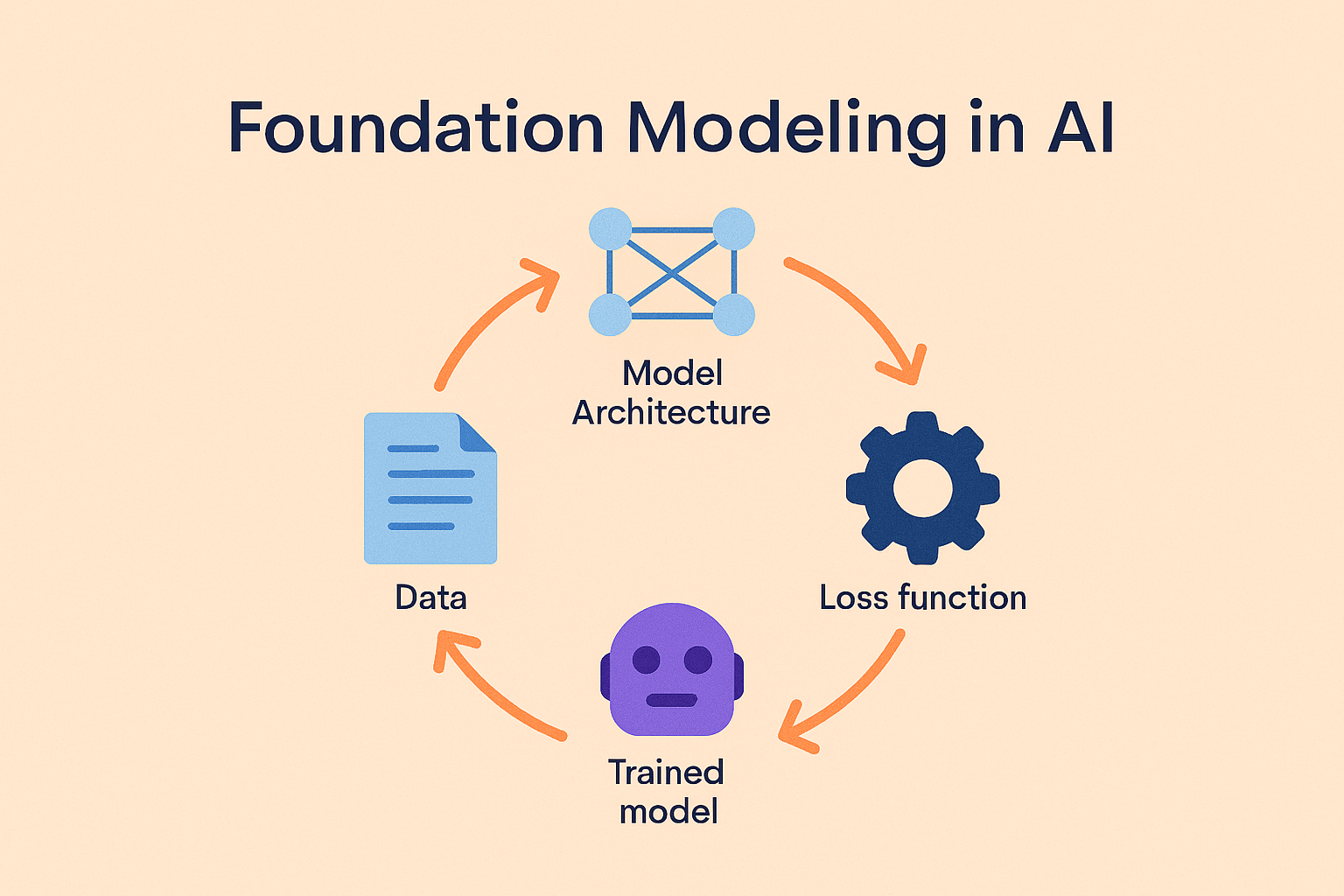
Model Training: How Machines Learn from Data
Model training is how AI systems learn from data. This guide explains the process, why it matters, and when to train your own models versus using pre-trained ones.