Should you run RLHF in-house or bring in a partner?
Cost versus control is the frame most teams use to answer this question. It sounds reasonable. In practice, it often leads to two common challenges. The first: a team that outsources to save money but hands over the on-policy training data that makes their model theirs. The second: a team that insists on in-house but lacks the annotation infrastructure to catch disagreement before it introduces significant noise into the reward model. Both outcomes stem from evaluating the decision on the wrong axis.
TL;DR
Cost vs. control is the wrong frame for RLHF sourcing decisions.
On-policy data and QA infrastructure are the real first-order constraints.
Three criteria predict success: data ownership, domain expertise, maintenance commitment.
Crowdsourced labelers can have higher error rates than managed internal teams, up to 10x higher.
Proprietary human feedback compounds over time; a commodity annotation run doesn't.
Why the cost-vs-control framing leads you astray
The standard debate treats "in-house" as control and "partner" as speed. Both are true. Neither is the point.
The first variable most teams skip: RLHF training requires preference data that is on-policy, collected from the specific model family being trained. As Nathan Lambert's RLHF book documents, generic or aggregated datasets from third-party pools are less effective for training your reward model. A partner supplying pre-collected pairs isn't giving you RLHF data. They're giving you a generic signal that might not work with how you've built your model.
The second variable: noisy annotations don't just degrade output quality. They can impact the reward model itself, which means subsequent fine-tuning runs may inherit that noise. Teams often discover this failure three months later when the model behaves unexpectedly in production, not at annotation time.
Once you see both variables, cost-vs-control becomes a downstream question. The upstream question is whether the sourcing decision you're considering can even produce data your reward model can learn from.
Three criteria that should drive the decision
Answer three questions honestly. Cost follows from the answers.
1. Can your training data leave your environment?
Data sensitivity is not just a compliance checkbox. When you work with a partner, the preference pairs generated from your model outputs travel through their infrastructure. Proprietary models often rely on internal knowledge bases or regulated content. Sending that data through a partner's infrastructure creates legal and competitive risk before annotation begins.
The risk is compounded by contract terms. As Interconnects AI documents, data vendors often restrict how customers can use or share the data they purchase. Teams that want to iterate quickly, run ablation studies, or publish research often hit these restrictions. The dataset you paid to create may not be fully yours to use.
If the answer to "can this data leave our environment?" is "no" or "it depends on the contract," your options narrow. You need either an in-house setup or a partner with explicit, verifiable data ownership terms.
2. Does annotation require judgment your team doesn't have?
The annotation floor is rising. The RLHF market is moving away from simple preference ranking toward expert-level reasoning in medicine, law, and engineering, according to Lemon.io's market analysis. Derivative pricing explanations require more expertise to evaluate than chatbot greetings to rank.
If your internal team cannot provide the required expertise at the volume you need, in-house annotation will produce shallow labels regardless of tooling quality. The right question is: "Can our annotators evaluate this specific output with professional judgment?"
3. Does someone own the feedback loop 12 months from now?
RLHF is not a project. Model behavior drifts, user patterns shift, and edge cases accumulate. An annotation sprint that produces a reward model today creates a maintenance obligation tomorrow.
Teams that evaluate the sourcing decision only against the initial training run often find themselves without a feedback loop six months later. The contract ended, or the internal team that ran the sprint has moved on. A one-time annotation effort produces a snapshot, not a feedback loop.
Where this framework doesn't apply
For tasks with low annotation complexity (ranking binary preferences on text from a general domain, below roughly $200 average cost per item), these criteria are overkill. At that level, a commodity crowdsourcing platform is fast and cheap enough that domain risk barely registers. Apply this framework when annotation requires judgment, not just clicks.
What building in-house actually requires
"Hiring annotators" is not an in-house RLHF practice. Aya Data's RLHF implementation guide identifies three foundational requirements:
Codifying subjective quality goals into objective annotation guidelines
Creating a baseline of human-written demonstrations for supervised fine-tuning
Collecting ranked human outputs to train the reward function
Annotator onboarding and gating
Annotators must prove they can handle your specific tasks before they touch production data. For RLHF preference ranking, that means passing ground-truth examples where the correct ranking is known. Annotators who pass the gate must stay calibrated: mix ground-truth tasks into active labeling streams and pause anyone who falls below quality thresholds. HumanSignal's onboarding documentation describes this as continuous gating, not a one-time screen.
Continuous IAA monitoring
Inter-annotator agreement isn't a final report metric. It's a real-time signal. A drop usually means the guidelines are ambiguous, annotators need recalibration, or the task has drifted beyond their capability. Catching drops early keeps the reward model on track and avoids costly troubleshooting down the line.
A process owner with authority to stop annotation
Someone needs the authority to pause a labeling run when quality degrades. Without a named owner, annotation tends to continue under schedule pressure until the damage is done.
Sense Street, a capital markets technology firm, manages preference annotation across complex financial content in multiple languages. They built exactly this kind of practice. After centralizing their workflow and adding IAA monitoring, they recorded a 120 percent efficiency gain per labeler and 150 percent more total labels. The gains came from building the infrastructure that made each annotator's work usable, with no increase in headcount.
What a partner must provide before you sign
A partner that meets the standard "managed service" description may still fail all three criteria. Use this checklist before committing:
The contract must give you unconditional rights to every preference pair generated from your model outputs. You need to be able to train future models, run ablations, or release data under a license you choose. Any clause that gives the partner a license to your preference data fails this check.
Ask the partner to annotate against your model's live outputs, in your environment or via a secure integration. Generic prompts from their own library don't qualify. The test question: "Can your annotators evaluate outputs from our deployed model, with our prompts, in our staging environment?" Partners who only work from static datasets cannot provide on-policy data.
For expert tasks, ask how subject matter experts are recruited, tested, and replaced. Style guides for specialized RLHF tasks commonly run 30 to 40 pages, as Interconnects AI documents in its analysis of responsible RLHF operationalization. A partner claiming a two-week onboarding timeline for a legal or biomedical domain is not being realistic about what expert calibration requires.
As Interconnects AI documents, lack of transparency about crowd-worker compensation and conditions is common in the partner market. For teams building models deployed publicly, this is an ethical exposure as well as a reputational one.
Scoutbee, a supply chain intelligence platform, replaced fragmented manual annotation with a centralized human-in-the-loop workflow using Label Studio Enterprise. The result: a 20x reduction in labeling time and a 2 to 3x increase in revenue from ML-based products. The gains came from making quality visible and accountable at every stage. A partner who can't show you those signals hasn't solved the problem.
Applying the framework to your situation
If your data cannot leave your environment and you have annotator expertise in your domain, the in-house path is viable. You need to budget for the full infrastructure (gating, IAA monitoring, guideline development, and a process owner), not just annotator time. Read the data labeling guide before you start scoping headcount.
If either condition fails, a managed partner with explicit data ownership terms is the right path. That means: SME coverage is thin, or no one can commit to ongoing calibration beyond the initial run. In that case, HumanSignal Data Services provides expert annotation as a managed offering where the preference data and the pipeline remain yours. You run your own feedback loop with external staffing, rather than renting access to someone else's training data.
Many teams combine both. They run the platform in-house for lower-complexity tasks and use a managed partner for expert-level ranking that requires SME judgment they can't staff full-time.
The asset you're building
Cost-versus-control was never the right frame because it treats RLHF as a line item. The preference data you generate is calibrated to your model, annotated by domain experts, and maintained through a quality process you own. It reflects how your users define good outputs. No public dataset replicates it. No competitor can buy it.
An annotation run produces a one-time signal. A functioning feedback loop produces a dataset that compounds in value each time your model is updated. Build it in-house or run it through a partner with the right terms. Either way, that compounding is what makes the sourcing decision worth getting right.
Related Content
-
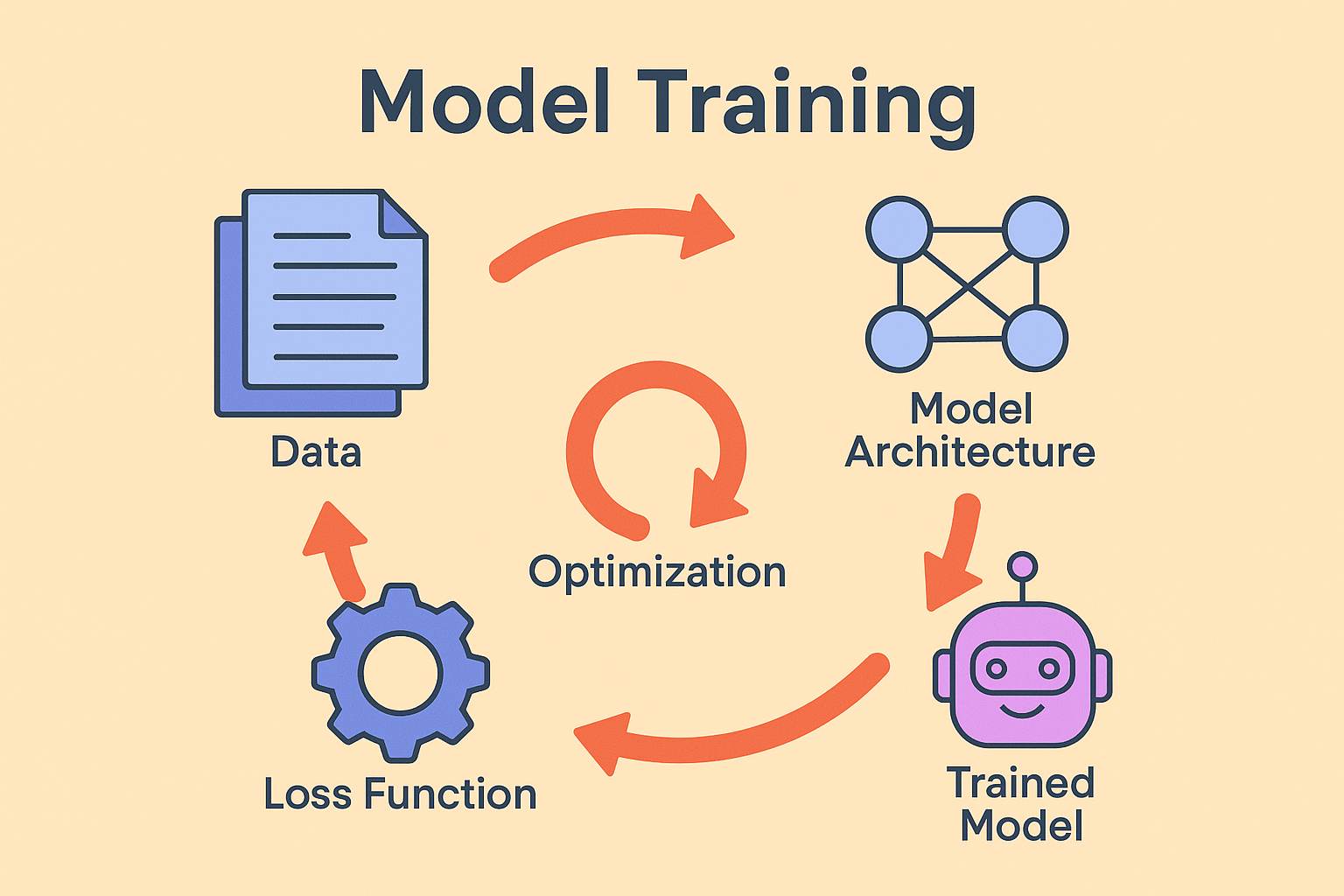
Training a Model: How AI Systems Learn
Model training is how AI systems learn from data. This guide explains the process, its importance, and when to train versus fine-tune for your use case.
-
Why dexterous manipulation is the hardest data in robotics
Dexterous manipulation projects don't fail at the hardware layer. They fail at annotation. Here's why labeling tactile and force data is uniquely hard.
-
What data do you need to train a VLA model?
Training a VLA model isn't a volume problem. Learn why data composition, diversity, and annotation quality matter more than how many episodes you collect.
-
What is dexterous manipulation data?
Learn what dexterous manipulation data is, why it differs from standard sensor streams, and how annotation structure determines whether a policy learns anything useful.
-
How many human demonstrations does it take to train a robot?
The answer isn't a fixed number. It depends on how demonstrations are labeled. Learn what determines whether your dataset produces a deployable robot policy.
-
Where robot training data comes from in 2026
Robot training data can't be scraped. Learn where it actually comes from, what makes an episode worth keeping, and how teams decide what to label.
-
How to write a brief that gets you the training data you need
Learn how to write a training data brief that controls annotation quality: task scope, legal provenance, IAA thresholds, and workflow configuration.
-
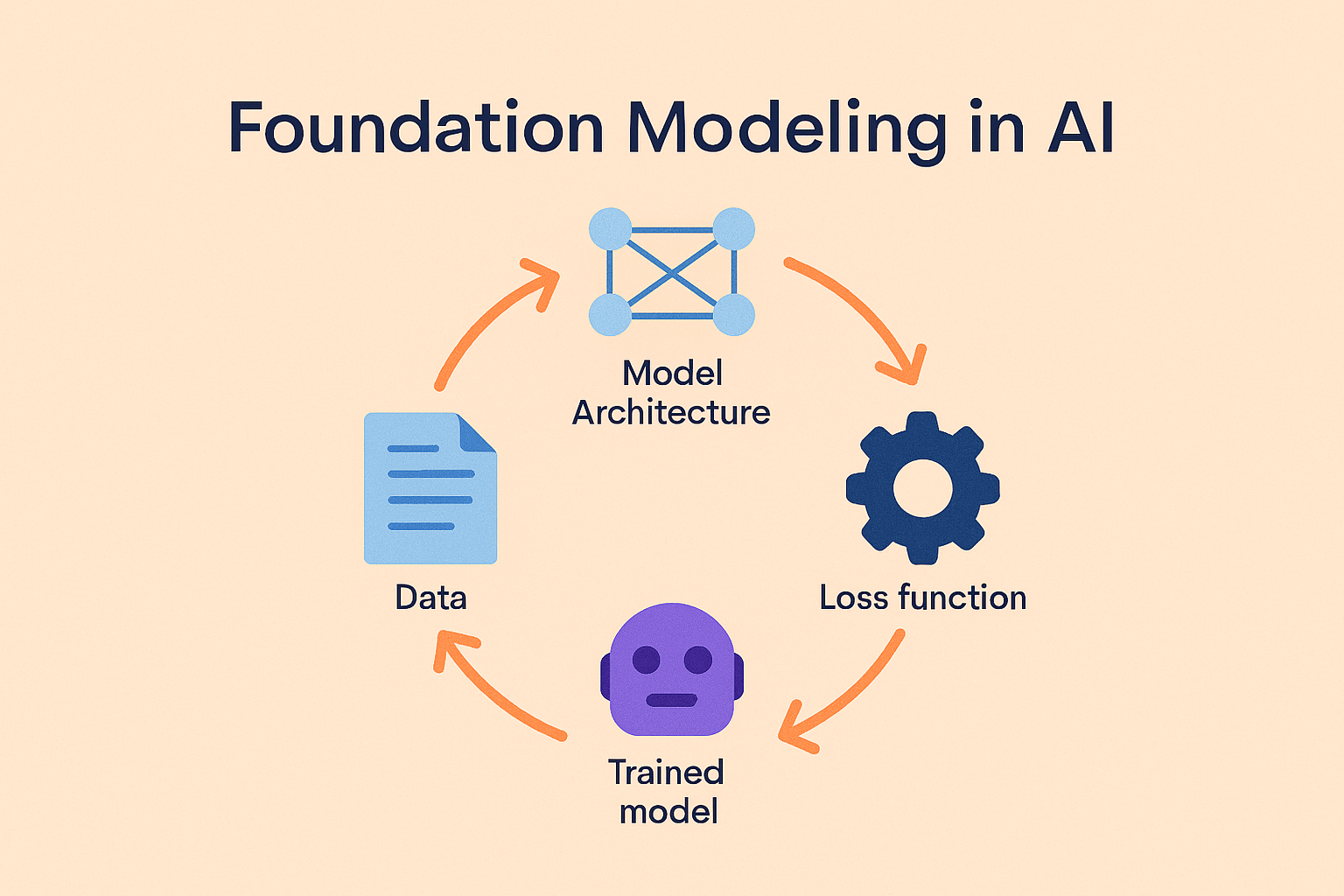
Model Training: How Machines Learn from Data
Model training is how AI systems learn from data. This guide explains the process, why it matters, and when to train your own models versus using pre-trained ones.