Why dexterous manipulation is the hardest data in robotics
The robotics industry has spent years debating which hand to buy. In 2025, the robot multi-fingered dexterous hands market hit $339.56 million; by 2026, it will likely top $406 million, growing at a CAGR of 20.67 percent. The capital follows the hardware. But the hardware isn't the bottleneck. The bottleneck in 2026 is the labeled training data. Labeling dexterous manipulation data is a harder engineering problem than anyone building the hardware has had to address before.
TL;DR
Each human hand has 21 degrees of freedom; annotation tools weren't designed for that action space.
Force and contact events are invisible on camera, so standard labeling tools mislead annotators.
Simulation generates unlimited data but can't close real-world label quality gaps.
Bad contact annotations train wrong behaviors; label noise doesn't average out in physical AI.
Annotation architecture for dexterous manipulation carries the same stakes as hardware selection.
What makes dexterous manipulation data categorically different
The human hand has 21 controllable degrees of freedom, roughly equivalent to both arms, wrists, and one leg combined. Training a robotic policy on that action space means synchronizing joint angles, contact forces, and tactile arrays every millisecond.
This data is structurally different from existing robotics datasets. A policy for pick-and-place with a parallel-jaw gripper needs timestamped joint positions and a success signal. A policy for in-hand reorientation needs force magnitudes and contact locations. Those must span dozens of fingertip sensor patches. It also needs the temporal sequence of finger adjustments that kept the object from slipping.
Object-centric task classifications ("unscrew the cap," "reorient the bolt") do not correlate with hand behavior. The same task goal can be achieved through different finger configurations. That means annotation must capture hand-centric signal at fine resolution, not just task-level outcomes. No single modality is sufficient. None maps to how existing annotation tools were designed.
Three annotation problems that do not exist in other robotics domains
Standard robotics annotation breaks in three ways when applied to dexterous manipulation, explaining why well-resourced hardware projects can still stall before reaching a deployable policy.
Force and contact events leave no visual trace
A robot grasping a bottle looks identical on camera whether it is about to succeed or about to drop the object. The signals that distinguish those two states (fingertip pressure distribution, micro-slip onset, joint torque deviation) are invisible to any vision-based annotation tool.
Annotation workflows designed for computer vision assume the camera sees what matters. The camera captures the hand and the object. It cannot see whether the contact is stable.
Tasks requiring human-like manipulation at small batch scales exceed current robot capabilities, per NIST research involving manufacturers like P&G. The feedback signals that make humans effective have no equivalent in current machine perception. Annotating for that gap requires tools that display tactile and force timelines alongside video. Video alone produces annotations that look complete and are functionally misleading.
The millisecond resolution problem
Stable dexterous manipulation requires aligning dozens of degrees of freedom with millisecond-level feedback. Human annotators reviewing video at standard playback speeds cannot reliably distinguish events at that resolution. A slip onset unfolding over 40 milliseconds is invisible at 30 frames per second.
The issue stems from tooling rather than annotator skill. An annotator who cannot see the event cannot label it correctly, regardless of domain expertise.
Inter-annotator agreement collapses on contact boundary events
Image labeling disagreements usually indicate an ambiguous object boundary. Contact event disagreements in dexterous manipulation most often mean annotators are working from different implicit conventions, because no shared convention exists.
The common assumption is that force and tactile signals are self-labeling: the sensor already reports a value, so annotation is trivial. That misreads the problem. A 0.4N contact reading tells you magnitude. It does not tell you whether that contact represents a correct pre-grasp posture, an incipient slip, or noise from the rig. To determine which is which, you need domain context and a labeling rubric specific to the manipulation task.
Without both, annotators mark the same event differently. Those disagreements can introduce inconsistencies into policy training. The annotators are not wrong; the pipeline simply lacks a shared convention for them to follow.
Why simulation scales the data volume but not the label quality
Simulation solves for volume. Synthetic environments generate unlimited demonstrations with ground-truth physics at each timestep, and cross-embodiment approaches extend coverage further. Researchers now train dexterous policies on large-scale human video datasets, bypassing physical teleoperation entirely. It works, until a sim-trained policy meets the real world.
Recent research identifies three areas where synthetic data falls short:
Perceptual noise: real-world sensors are noisy; simulation supplies clean ground-truth.
Actuator dynamics: rigid-body simulators cannot replicate nonlinear actuator behavior.
Contact physics: simplified models omit micro-slip and surface deformation.
Each gap affects the label space as well as policy behavior. When a sim-trained policy encounters real contact physics, it fails in ways the simulation's own labels could not have predicted. The policy was trained to succeed in a world where ground-truth contact states were always known. The real world does not supply that information.
Teams that rely entirely on synthetic demonstrations still need real-world rollouts with human-reviewed annotations to close that gap.
What a dexterous manipulation annotation pipeline actually requires
Most general-purpose labeling tools fail dexterous manipulation at three points.
Workspaces that synchronize multiple data modes
Annotators reviewing manipulation data need joint angle timelines, video feeds, and tactile heatmaps in a single interface. When these signals live in separate tools (video in one system, sensor logs in a spreadsheet, tactile data in a proprietary viewer) annotators cannot correlate them. Correlation is the annotation task. If the interface fragments the signals, it prevents the work.
A contact event that reads as noise in an isolated force plot becomes unambiguous when the annotator can see it aligned with the video frame where the fingertip first touches the object. The multi-modal display is not a convenience feature. It is the mechanism by which annotation becomes accurate.
Episode-level review, not frame-level
A grasp is a temporal sequence. Pre-grasp, contact, load, and hold phases unfold across hundreds of frames. Reviewing them frame-by-frame, without timeline scrubbing, forces annotators to make judgments without context.
The robotics episode review interface in Label Studio handles this directly. It supports multi-camera views and timeline scrubbing for reviewing policy rollouts, including subtasks and subgoal transitions. Researchers working on zero-shot sim-to-real transfer for dexterous manipulation have cited Label Studio for managing video sequences alongside custom sensor data.
Agreement workflows for ambiguous contact calls
The highest-stakes annotations in a dexterous manipulation dataset are the ambiguous ones: the contact events where experienced annotators disagree. Those disagreements mark the cases where the policy is most likely to learn the wrong behavior. A pipeline that surfaces disagreements at review catches bad labels before training. A pipeline that averages them silently ships them into the model.
HumanSignal designed its multimodal data services for robotics to synchronize motion, vision, and audio data from controlled physical environments. Annotation infrastructure for physical AI must resolve disagreements within the workflow, not during a post-hoc audit.
Label errors in dexterous data compound; they don't average out
In text classification, a 5 percent label noise rate is often tolerable. A model trained on slightly noisy text labels usually generalizes well enough, because individual errors wash out across millions of examples.
Dexterous manipulation does not work this way.
Imitation learning policies for in-hand manipulation train directly on demonstrated action sequences. A mislabeled contact boundary (one where the annotator marked a slip onset three frames too late) gets ingested as a valid policy action. The model learns that this pre-grasp configuration is correct with full confidence. At deployment, it replicates the error.
Label noise in physical AI does not average out across the training set. It encodes into the policy. Annotation accuracy requirements for dexterous manipulation are categorically different from vision tasks, not just higher.
Using HumanSignal's platform, Geberit reached 95 percent annotation accuracy against ground truth at scale. Throughput was 5x faster, with 4–5x cost savings over manual methods. That 95 percent figure is the floor for physical AI annotation. Any dexterous manipulation pipeline operating below it is producing mislabeled contact events and shipping them into policy training.
Careful annotators help, but the pipeline must also enforce consistency. That means structured rubrics, display tools that make contact events visible, and agreement workflows that catch ambiguous cases before training. For anyone building a bespoke robotics data collection workflow from scratch, this infrastructure decision deserves the same rigor as hardware selection.
The rate-limiting variable nobody is measuring
The industry has internalized that data is the bottleneck in dexterous manipulation. Fewer teams have internalized that label quality inside that data is the rate-limiting variable. You can teleoperate a 21-DoF hand at high frequency and generate thousands of episodes. The training set can still teach the wrong behavior: contact boundary annotations drift, annotators lack a shared rubric, and disagreements reach training unchecked.
Teams that treat dexterous annotation as a finished problem are more likely to encounter policy issues during deployment than during QA. The annotation architecture is a design decision with the same stakes as the hardware selection. It belongs on the engineering roadmap, not the operations checklist.
Related Content
-
Should you run RLHF in-house or bring in a partner?
The cost-vs-control framing leads RLHF teams astray. Learn the three criteria that actually predict whether in-house or partner annotation will work.
-
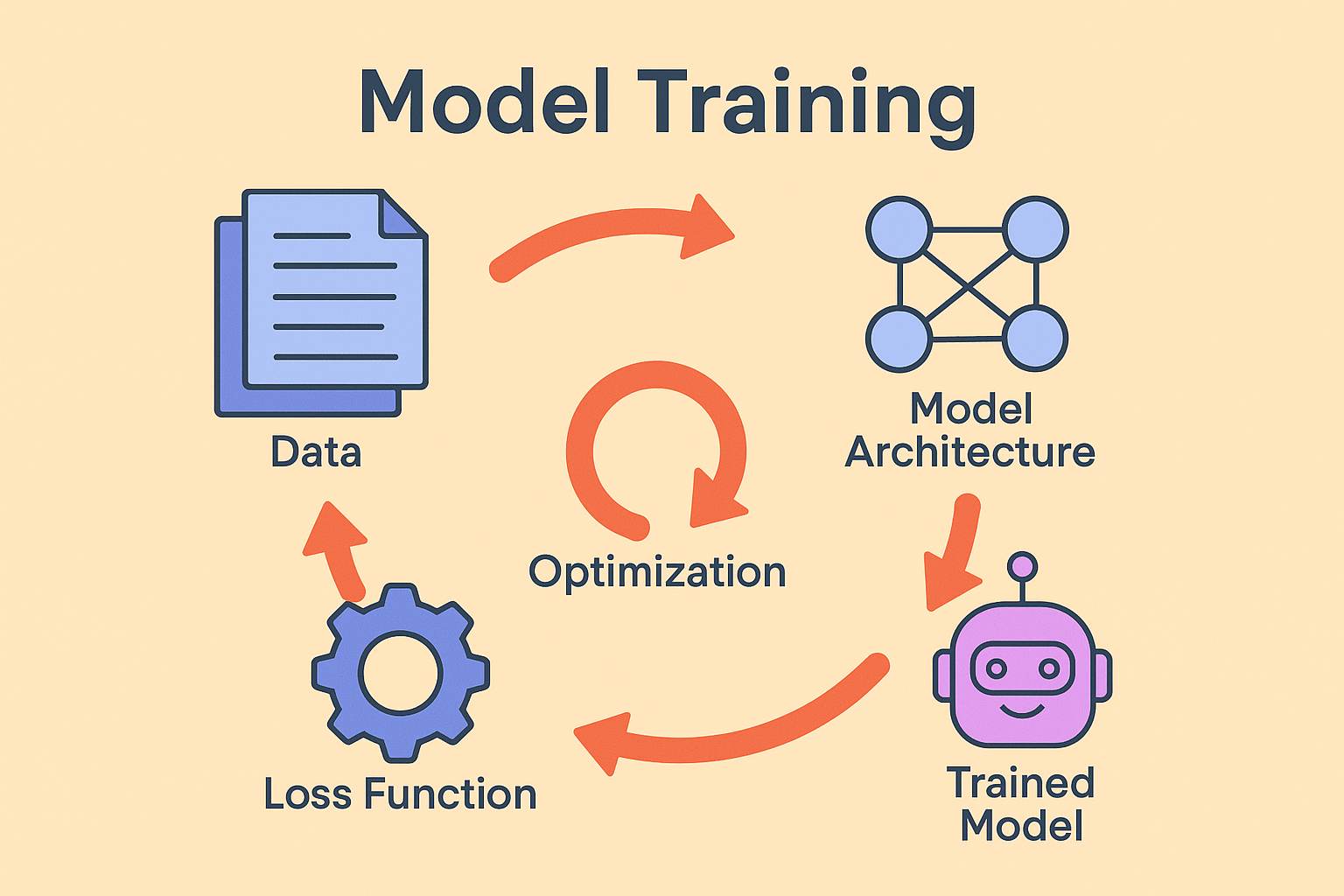
Training a Model: How AI Systems Learn
Model training is how AI systems learn from data. This guide explains the process, its importance, and when to train versus fine-tune for your use case.
-
What data do you need to train a VLA model?
Training a VLA model isn't a volume problem. Learn why data composition, diversity, and annotation quality matter more than how many episodes you collect.
-
What is dexterous manipulation data?
Learn what dexterous manipulation data is, why it differs from standard sensor streams, and how annotation structure determines whether a policy learns anything useful.
-
How many human demonstrations does it take to train a robot?
The answer isn't a fixed number. It depends on how demonstrations are labeled. Learn what determines whether your dataset produces a deployable robot policy.
-
Where robot training data comes from in 2026
Robot training data can't be scraped. Learn where it actually comes from, what makes an episode worth keeping, and how teams decide what to label.
-
How to write a brief that gets you the training data you need
Learn how to write a training data brief that controls annotation quality: task scope, legal provenance, IAA thresholds, and workflow configuration.
-
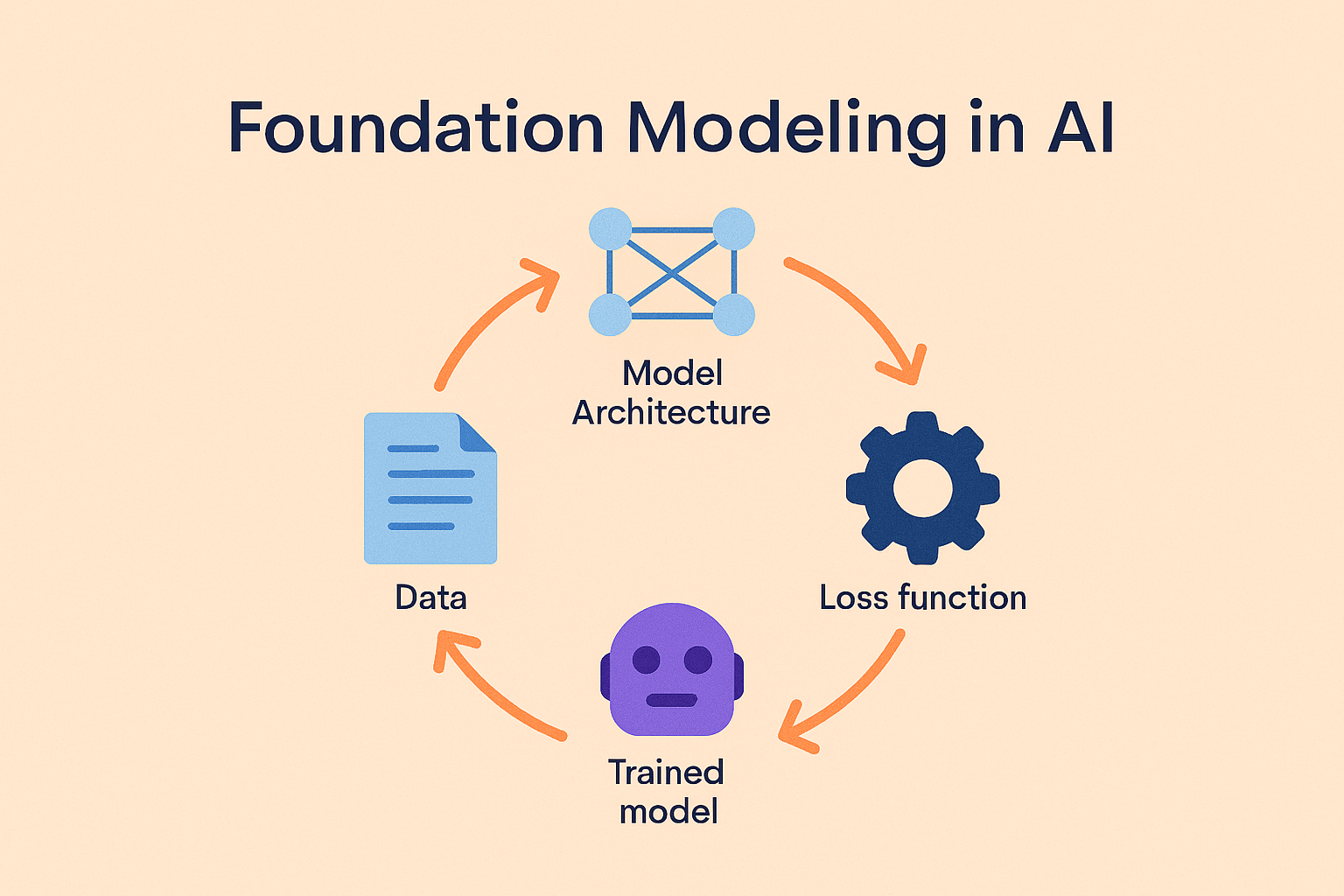
Model Training: How Machines Learn from Data
Model training is how AI systems learn from data. This guide explains the process, why it matters, and when to train your own models versus using pre-trained ones.