How to Set up AI Evaluation Pipelines in a Machine Learning Workflow
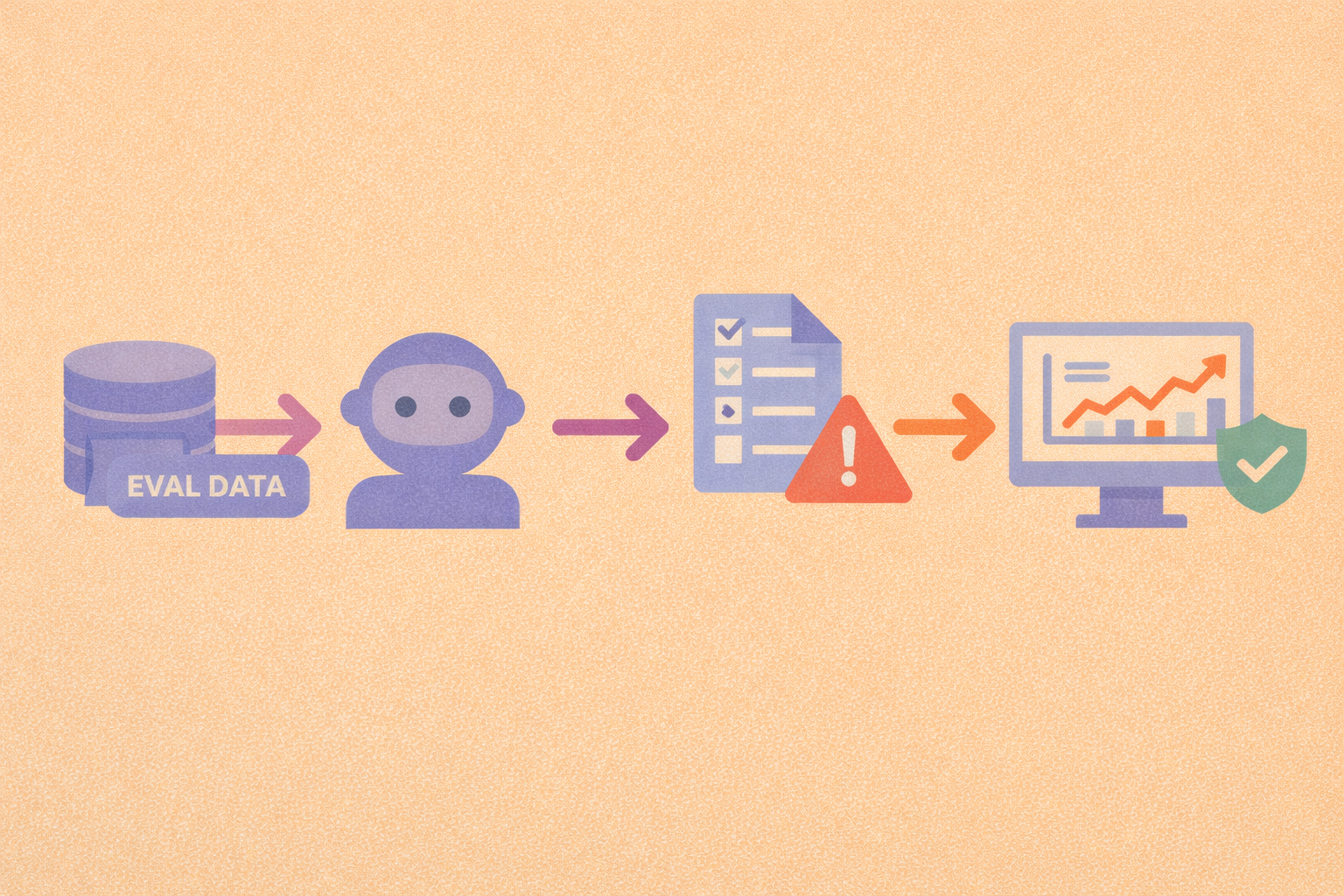
An AI evaluation pipeline is a structured, repeatable process for measuring model performance over time. Well-designed pipelines help teams catch regressions early, understand why performance changes, and maintain trust in models as data and requirements evolve.
1) Establish evaluation datasets and data versioning
Every evaluation pipeline starts with stable evaluation data. This dataset serves as the reference point for comparing model performance across versions. Without it, evaluation results become difficult to interpret because changes in metrics may reflect changes in data rather than improvements or regressions in the model.
Evaluation datasets should be separate from training data and documented clearly. Teams need to know where the data came from, what it represents, and what it does not. Including edge cases and known problem scenarios improves the pipeline’s ability to surface meaningful failures.
Versioning is critical. When evaluation data changes, it should be done intentionally and tracked explicitly. This allows teams to answer a key question later: Did the model change, or did the benchmark change? Without data versioning, long-term performance trends become unreliable.
Over time, teams may maintain multiple evaluation sets, such as a stable “core” set for trend tracking and a rotating set that reflects newer data or emerging risks.
2) Automate evaluation runs and metric tracking
Once datasets are defined, the next step is automating evaluation runs. Each time a model changes, whether due to new training data, parameter updates, or architecture changes—the pipeline should run the same evaluations and produce comparable results.
Automation ensures consistency. Manual evaluation often leads to subtle differences in setup or measurement that make comparisons unreliable. Automated pipelines apply the same metrics, thresholds, and scoring logic every time.
Metrics should be tracked over time, not just reported once. Trend views make it easier to see gradual degradation or unexpected jumps. This is especially important when models evolve incrementally rather than through large releases.
Good pipelines also make regressions obvious. Instead of asking whether a model is “good,” teams can ask whether it is better or worse than the last version and in which dimensions.
3) Include failure analysis and qualitative review
Aggregate metrics are useful, but they rarely explain why performance changes. This is why effective evaluation pipelines include failure analysis as a first-class component.
Failure analysis surfaces individual examples where the model performs poorly. Reviewing these examples helps teams understand whether metric changes reflect meaningful improvements, edge-case regressions, or noise.
Qualitative review is especially important for tasks involving language, perception, or judgment. Two models with similar scores may behave very differently in practice. Seeing concrete outputs makes those differences visible.
Over time, failure analysis results often feed back into evaluation design. Repeated failure patterns can inform new test cases, refined metrics, or updated evaluation criteria.
4) Expand pipelines to support continuous evaluation
As models move closer to production, evaluation pipelines often expand beyond pre-deployment testing. Continuous evaluation involves periodically re-running evaluations to detect changes caused by data drift, evolving user behavior, or shifting requirements.
This does not mean constant retraining or re-approval. Instead, it provides early warning signals. If performance degrades in specific slices or failure types increase, teams can investigate before issues escalate.
Continuous evaluation also supports governance and accountability. When questions arise about why a model was approved or how it has changed over time, pipelines provide an audit trail of evaluation results and decisions.
The goal of an evaluation pipeline is not automation for its own sake. It is about building confidence. Teams should be able to explain what they measured, what changed, and why a model was considered acceptable at each stage.
Frequently Asked Questions
Frequently Asked Questions
Do small teams need evaluation pipelines?
Yes. Even simple pipelines improve consistency and reduce guesswork.
What’s the biggest benefit of an evaluation pipeline?
Early detection of regressions and clearer understanding of performance changes.
Can evaluation pipelines replace human review?
No. Pipelines support decision-making, but human judgment remains essential.
Related Content
-
How to build a red teaming dataset
Learn how to build a red teaming dataset with a reusable schema, three sourcing tiers, expert annotation, and a maintenance workflow that keeps your model's safety coverage current.
-
Few‑Shot Learning: Train AI with Just a Few Examples
Few‑shot learning empowers AI systems to generalize from only a handful of labeled samples. It's a game-changer for settings with limited data, slashing resource needs and accelerating deployment.
-
Step-by-step guide to AI evaluation in machine learning projects
A structured evaluation workflow helps you move from raw metrics to confident decisions about model quality, risk, and readiness.
-
Best AI evaluation platforms with collaboration features for teams
Once evaluation involves multiple reviewers and stakeholders, permissions, review workflows, and audit trails matter as much as the metrics.
-
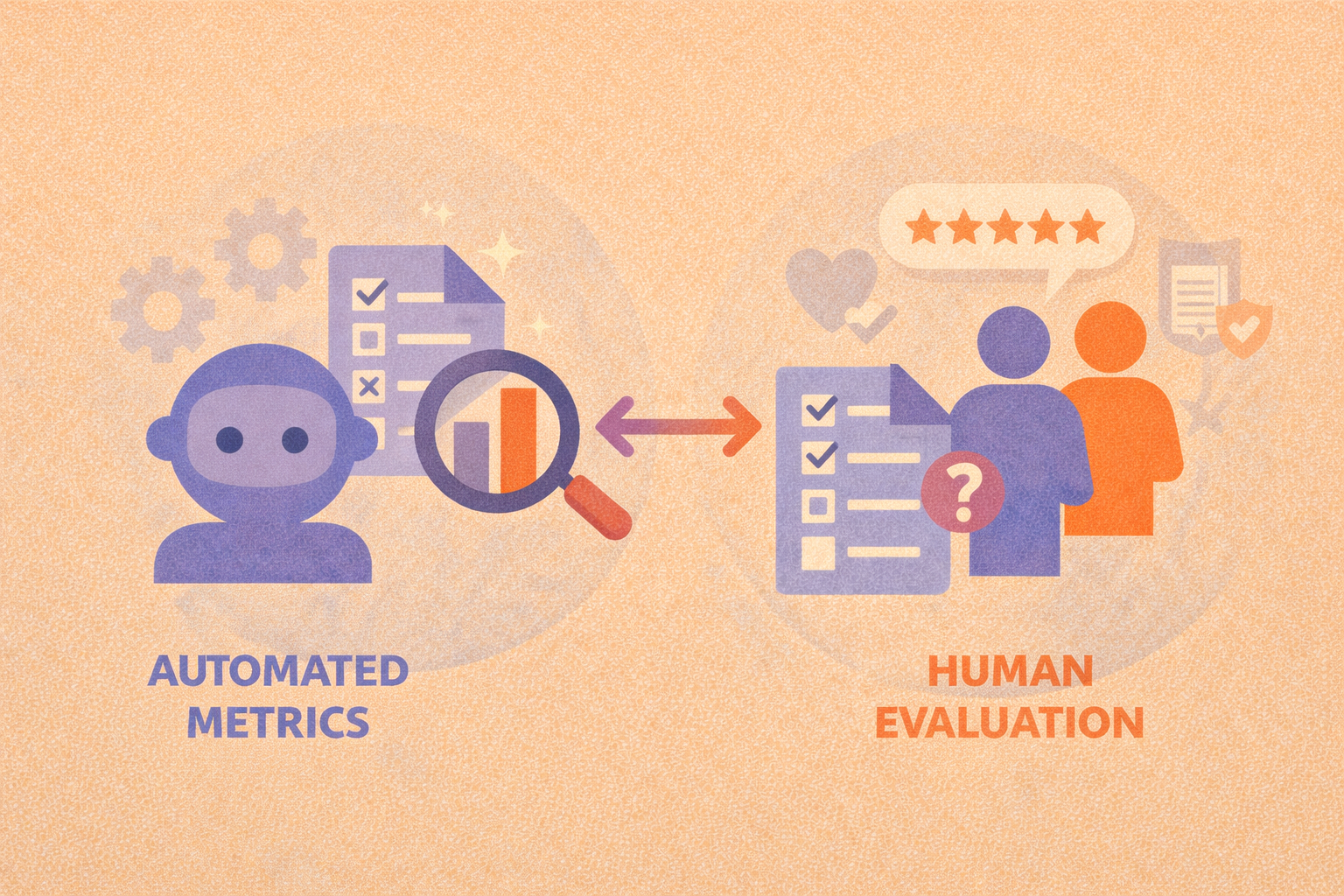
Automated metrics vs human evaluation: when each is the right choice
Automated metrics provide scale and consistency, while human evaluation captures nuance, effective AI evaluation programs rely on both.
-
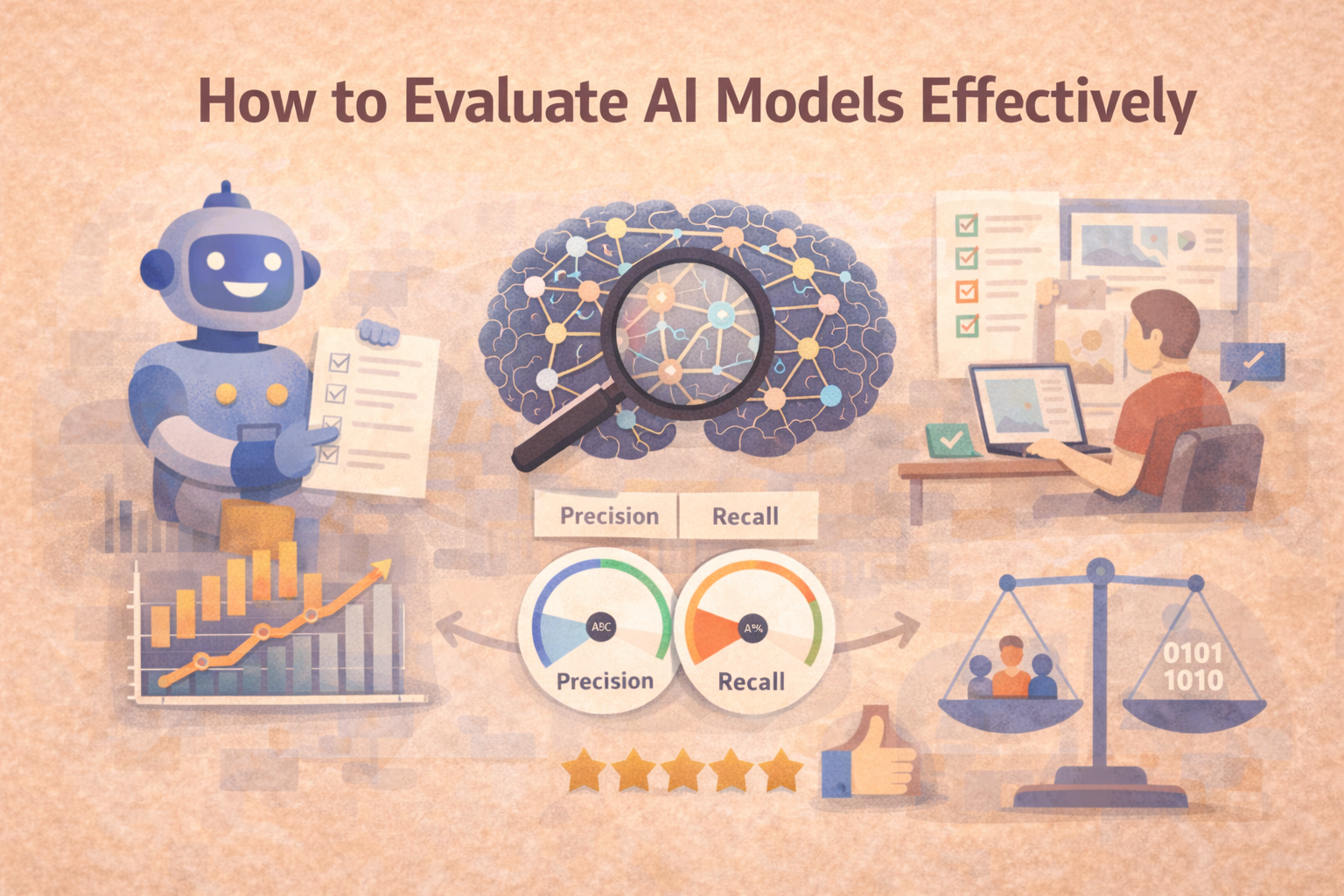
How to Evaluate AI Models Effectively
AI model evaluation isn’t just about accuracy. Learn how to evaluate your models across key dimensions like reliability, bias, and real-world performance.
-
The Complete Guide to Evaluations in AI
Evaluating an AI model isn’t just about checking accuracy, it’s about building trust. This guide explores the full spectrum of evaluation methods, from metrics to human-in-the-loop reviews and LLM-based scoring.
-
ReCode Robustness Evaluation of Code Generation Models: What It Is and Why It Matters
What happens when a code generation model sees slightly modified inputs? ReCode is a benchmark designed to evaluate exactly that—how robustly these models handle variation in the wild.
-
How to Choose Evaluation Metrics for Accuracy and Speed
The right evaluation metrics make accuracy–speed tradeoffs visible so you can optimize for what actually matters in production.
-
Why Explainability Matters in AI Evaluation
This blog explores how explainability and interpretability fit into AI evaluations, helping teams build trust, spot hidden flaws, and ensure ethical performance.
-
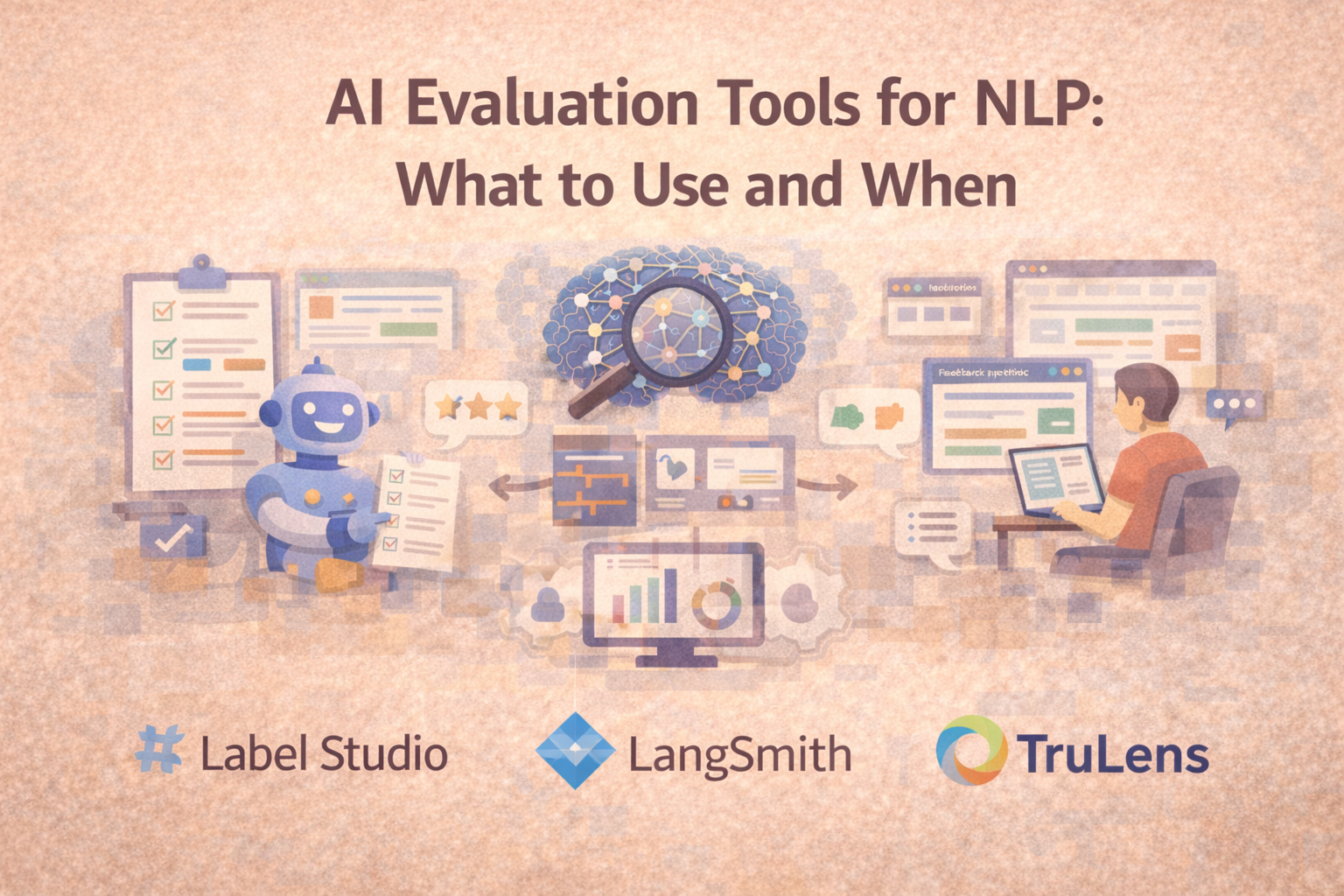
AI Evaluation for NLP: What to Use (and When)
NLP evaluation often needs more than automated scores. This guide explains three common tool paths—structured human review, app-layer LLM evaluation, and programmable scoring—and when each fits best.
-
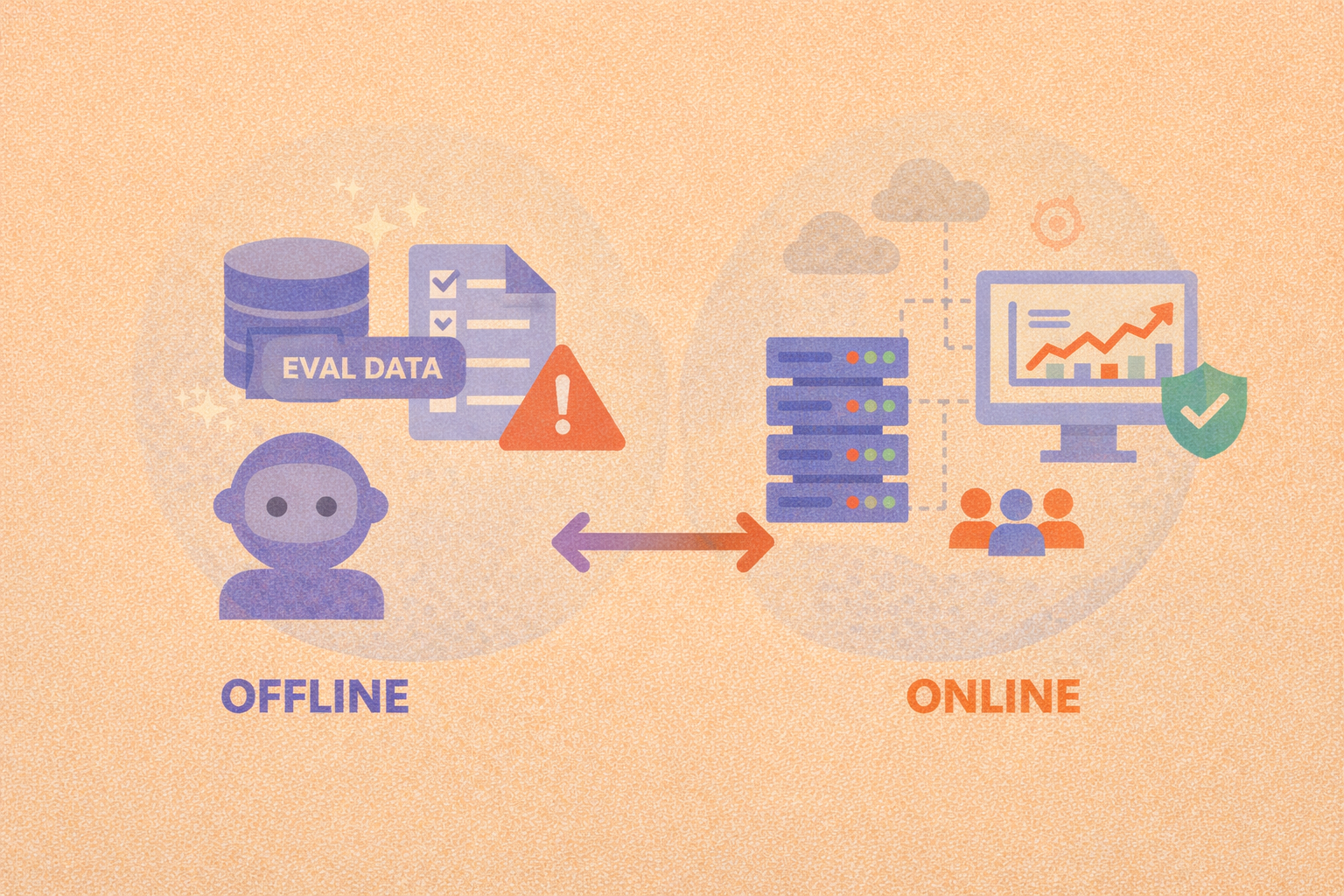
Offline evaluation vs online evaluation: when to use each
Offline evaluation enables fast, repeatable model comparison, while online evaluation confirms whether those gains hold up under real-world conditions.
-
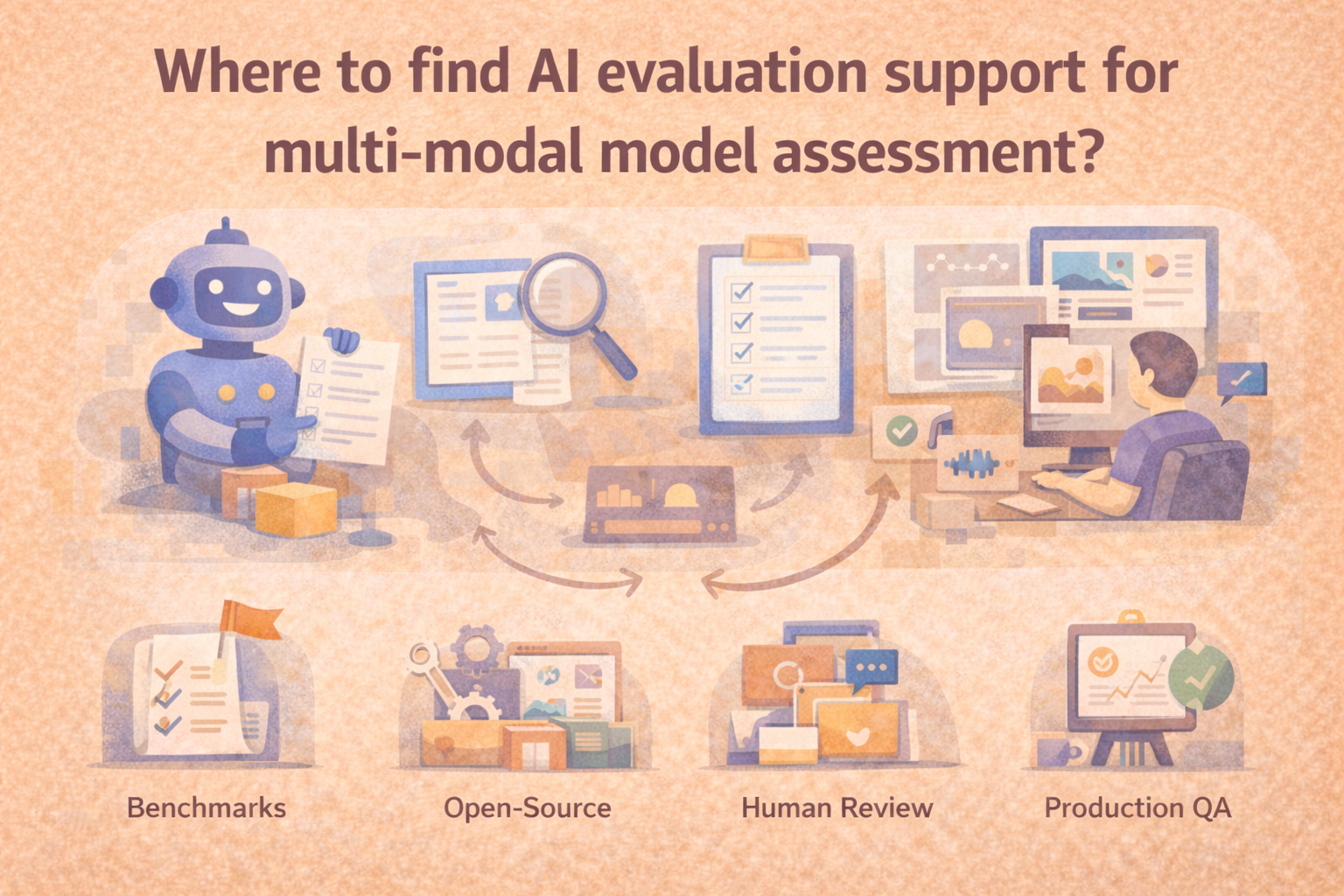
Where to find AI evaluation support for multi-modal model assessment
The right starting point depends on whether you need offline benchmarking, structured human review, regression testing, or real-world monitoring.
-
Human-in-the-Loop Evaluations: Why People Still Matter in AI
Human-in-the-loop (HITL) evaluations bring expert oversight into AI workflows. Learn where humans add value, how to scale review, and when it matters most.
Let me know if you'd like a hero image or a CTA linking this to your evaluations pillar page.
-
How to Automatically Catch Mistakes from Large Language Models
Evaluating the quality of large language model (LLM) outputs isn't one-size-fits-all. This guide breaks down four key methods, reference comparison, LLM-as-a-judge, rule-based checks, and classifiers, to help you automatically detect common errors like hallucinations, bias, and off-topic responses. Learn when and how to apply each method effectively.
-
AI Governance and Compliance: Why Evaluations Are the Missing Link
Without strong evaluation workflows, compliance with ethical and legal standards is impossible to verify, let alone enforce. Here’s how to close the gap.
-
This hub explores the full spectrum of evaluation methods, from metrics to human-in-the-loop reviews and LLM-based scoring across multiple articles.
-
Machine Learning Evaluation Metrics: What Really Matters?
Accuracy isn’t everything. Learn how precision, recall, F1 score, and more help you measure what really matters in machine learning model performance.
-
Understanding Model Accuracy: How to Evaluate Your AI
Accuracy is one of the most common metrics in machine learning evaluation, but it’s also one of the most misunderstood. Here’s how to use it wisely.
-
How to Get Demos of AI Evaluation Software Before You Buy
This guide explains how to prepare the right sample outputs, define structured review criteria, ask the right integration questions, and compare tools clearly before you buy.
-
How to Monitor AI Performance in Production: A Guide to Continuous Evaluation and Drift Detection
AI models don’t stop learning after deployment, but that doesn’t mean their performance stays reliable. This guide covers how to monitor your models in the real world, detect drift, and maintain accuracy over time.
-
Popular AI evaluation APIs for developers
AI evaluation APIs make it easier to run repeatable tests, track results over time, and catch regressions, as long as you design the workflow around versioning, traceability, and meaningful metrics.
-
What AI evaluation platforms specialize in assessing generative AI models?
GenAI evaluation works best when teams can review multi-turn outputs with consistent rubrics, shared workflows, and reliable governance.