The Complete Guide to Evaluations in AI
Evaluating an AI model isn’t just a final checkbox before deployment—it’s the process that defines whether your system is useful, fair, and reliable. This guide breaks down the many layers of AI evaluations, from traditional metrics to cutting-edge hybrid strategies. Whether you’re building LLMs, computer vision pipelines, or data labeling platforms, understanding evaluation is non-negotiable.
What Is Model Evaluation in AI?
Model evaluation is the process of assessing how well an AI system performs on a specific task. It includes both quantitative measurements—such as accuracy or precision—and qualitative assessments, like human review. Evaluation informs how we interpret a model's predictions, how we compare different models, and whether we can trust those results in real-world applications.
Why Evaluation Matters
Evaluations are how we determine if a model is good enough to deploy, safe enough to use, or worth further investment. Without rigorous evaluation:
- We risk deploying models that work only in ideal test conditions.
- We may overlook bias or poor generalization.
- We can’t iterate effectively or explain outcomes to stakeholders.
Evaluation is also central to building trust in AI systems. If your stakeholders don’t understand how your model was tested or what the results mean, they won’t trust the output.
Types of Evaluations
Metric-Based Evaluation
Traditional metric-based evaluation remains foundational to model development. For structured prediction tasks, metrics like accuracy, precision, recall, F1 score, and ROC-AUC are standard. In text generation or summarization tasks, domain-specific metrics like BLEU or ROUGE provide automated scoring. These metrics are fast, consistent, and well understood, but they can fall short when evaluating nuanced or open-ended tasks.
Metric-based evaluation works best when “correct” is objective and stable, and when you need fast, repeatable regression checks across many runs. It tends to break down when quality depends on context (helpfulness, tone, policy compliance), when there are multiple valid outputs, or when a single score hides important failure modes like rare classes and edge cases. A practical approach is to keep metrics as your baseline and add targeted human review for the slices where automated scores are least reliable.
Human-in-the-Loop Evaluation
For many real-world use cases, especially in natural language generation, classification of subjective content, or complex domain-specific applications, human judgment is still the gold standard. Human-in-the-loop evaluation involves domain experts or trained annotators reviewing model outputs to provide qualitative feedback or ground truth comparisons. It’s costly and time-consuming, but essential for maintaining quality where machine metrics fall short.
Human evaluation scales more effectively when it’s structured. Common formats include rubric-based scoring (criteria like correctness, completeness, and safety), side-by-side comparisons between model versions, spot checks on representative samples, and escalation workflows for uncertain or high-stakes cases. Many teams focus review on targeted slices so they can surface failure modes and guide fixes without reviewing every output.
LLM-as-a-Judge
A newer, more scalable alternative is using large language models (LLMs) to evaluate other models' outputs. This method can reduce evaluation time and cost significantly, but it introduces its own set of risks. LLMs have known biases, and their judgments can be inconsistent or misleading. It’s critical to validate LLM-based evaluations against human benchmarks before using them at scale.
A practical safeguard is calibration: build a small, human-reviewed benchmark set and periodically compare judge scores against it. Track stability over time (judge prompt changes can shift results), and spot-check categories where the judge is likely to be overconfident, such as factual correctness or domain-specific compliance. LLM-as-a-judge can support scale, especially when it’s one signal among several in an evaluation workflow.
Agreement Metrics for Annotation Quality
Before evaluating model performance, you must ensure that the training and evaluation data is consistent and reliable. This is where inter-annotator agreement comes in. Metrics like Krippendorff’s alpha and Cohen’s kappa help assess the consistency of human-labeled data, accounting for chance agreement and incomplete annotations. They are especially useful in complex tasks with multiple raters and ambiguous label sets.
Low agreement can be a signal. It may indicate unclear label definitions, inconsistent guidelines, or a task with inherent ambiguity. Treat agreement analysis as a debugging tool: review disagreements, refine instructions, and run quick calibration rounds so the evaluation data is reliable before you use it to measure model performance.
Hybrid Evaluation Strategies
In practice, many teams use a hybrid of the methods above. You might combine automated metrics with periodic human reviews, or use an ensemble of LLMs to generate a "jury" score. These strategies help balance cost, scale, and accuracy. They also allow teams to scale evaluations while preserving reliability.
A common hybrid approach runs automated checks continuously, then routes a sample of outputs (especially edge cases, new intents, rare labels, or sensitive topics) to human review. Another pattern uses LLM judges for scale alongside periodic human calibration to keep scoring grounded and detect drift. If you’re unsure where to start, choose one baseline metric suite and one structured human review loop, then expand once you can consistently detect regressions.
Common Pitfalls in AI Evaluation
It’s easy to evaluate the wrong thing or to draw the wrong conclusions from your results. Common mistakes include:
- Using a metric that doesn’t align with the real-world goal of your system
- Relying on benchmarks that are too sanitized or outdated
- Overlooking annotator disagreement as noise, rather than a signal
- Trusting model-generated evaluations without cross-checking them
- Failing to revisit evaluation criteria post-deployment
Evaluation should evolve alongside your model. What was appropriate at prototype stage may no longer apply once your model is live.
Evaluation Tools and Platforms
Having the right tools can make or break your evaluation workflow. Label Studio, for example, allows for flexible human-in-the-loop reviews and structured evaluation workflows. Other tools like scikit-learn and Hugging Face Evaluate offer robust libraries for computing standard metrics. Many teams also build custom evaluation layers tailored to their application domain, especially in regulated or high-stakes environments.
Conclusion
Evaluation is not an afterthought, it’s a defining part of building AI systems that work in the real world. Whether you're relying on traditional metrics, tapping into human expertise, or experimenting with LLM-based reviewers, how you evaluate determines what you trust.
The most effective evaluation strategies are iterative, contextual, and grounded in the realities of your domain. They help you detect model failures early, surface data issues, and guide improvements that actually matter. As AI becomes more integrated into critical workflows, the demand for rigorous, transparent evaluation will only grow.
Make evaluation an active part of your model lifecycle, not just a final score at the end. Try Label Studio and start your free trial today.
Frequently Asked Questions
Frequently Asked Questions
What is model evaluation in AI?
Model evaluation is the process of assessing how well an AI system performs on a given task. It includes both quantitative metrics (like accuracy or F1 score) and qualitative methods (like human review), helping developers understand model effectiveness, reliability, and fairness.
Why is evaluation important in machine learning?
Evaluation helps determine if a machine learning model is accurate, safe, and useful. Without robust evaluation, models can perform well in development but fail in real-world applications. It also helps detect issues like bias, overfitting, or poor generalization.
What are the most common AI evaluation metrics?
Common metrics include accuracy, precision, recall, F1 score, AUC-ROC, BLEU (for text), ROUGE, and mean Average Precision (mAP) for images. The choice depends on your task type—classification, regression, generation, etc.
What is human-in-the-loop evaluation?
Human-in-the-loop evaluation involves real people—often domain experts—reviewing AI outputs to assess accuracy or relevance. It’s especially useful for subjective tasks, such as content moderation or summarization, where automated metrics fall short.
Related Content
-
How to build a red teaming dataset
Learn how to build a red teaming dataset with a reusable schema, three sourcing tiers, expert annotation, and a maintenance workflow that keeps your model's safety coverage current.
-
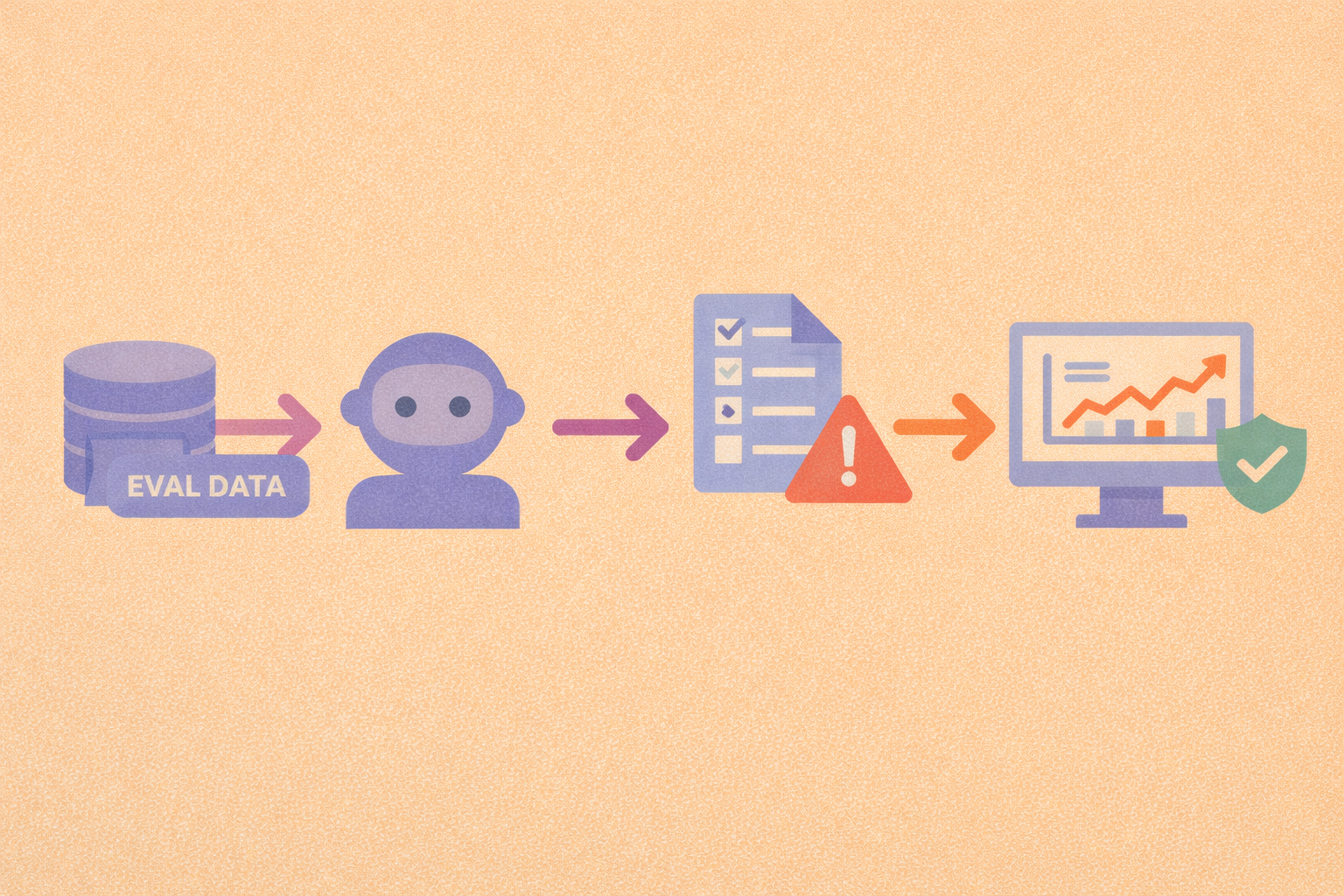
How to Set up AI Evaluation Pipelines in a Machine Learning Workflow
Evaluation pipelines turn model testing into a repeatable habit, making performance changes and failure patterns easier to catch early.
-
Few‑Shot Learning: Train AI with Just a Few Examples
Few‑shot learning empowers AI systems to generalize from only a handful of labeled samples. It's a game-changer for settings with limited data, slashing resource needs and accelerating deployment.
-
Step-by-step guide to AI evaluation in machine learning projects
A structured evaluation workflow helps you move from raw metrics to confident decisions about model quality, risk, and readiness.
-

Best AI evaluation platforms with collaboration features for teams
Once evaluation involves multiple reviewers and stakeholders, permissions, review workflows, and audit trails matter as much as the metrics.
-
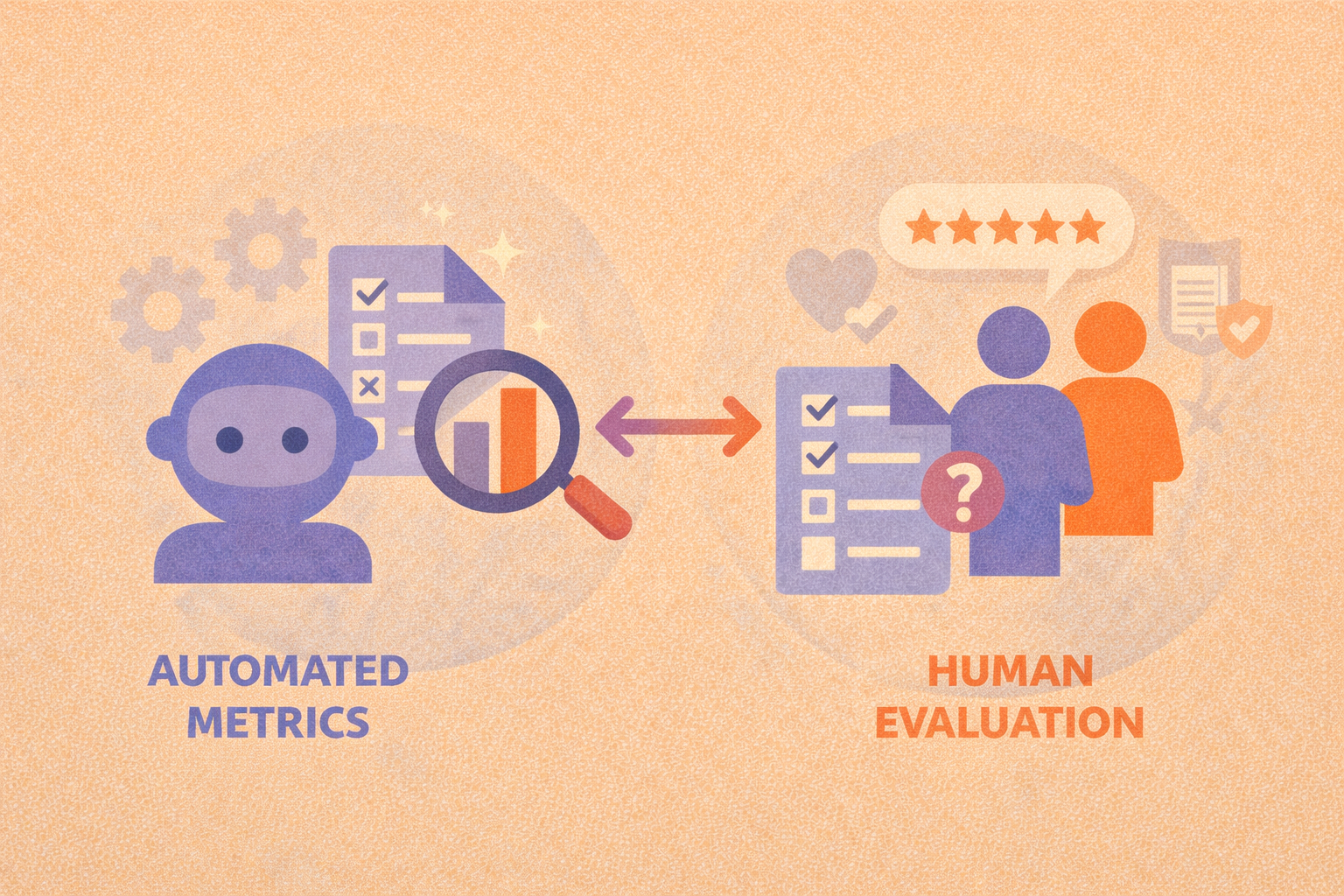
Automated metrics vs human evaluation: when each is the right choice
Automated metrics provide scale and consistency, while human evaluation captures nuance, effective AI evaluation programs rely on both.
-
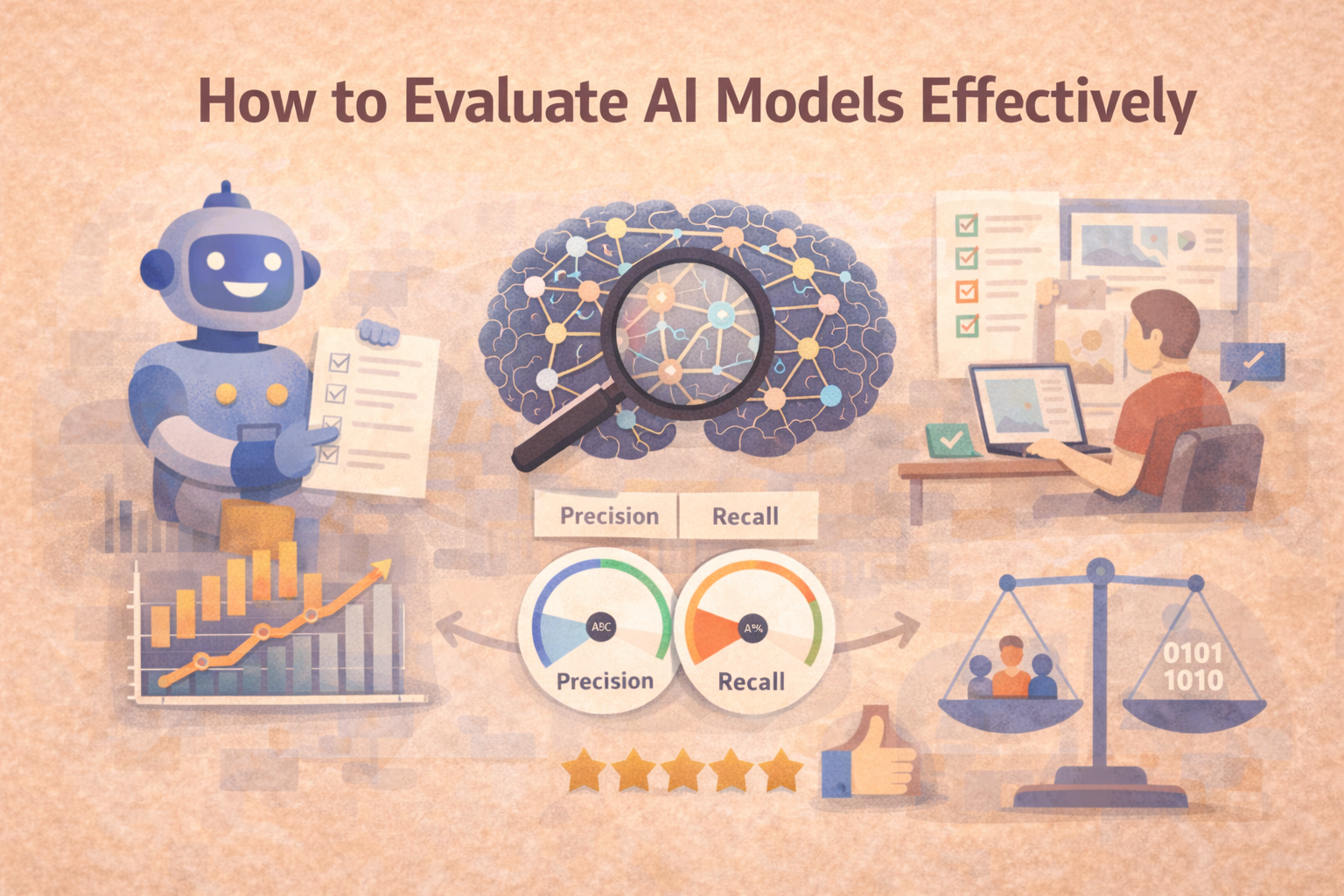
How to Evaluate AI Models Effectively
AI model evaluation isn’t just about accuracy. Learn how to evaluate your models across key dimensions like reliability, bias, and real-world performance.
-
ReCode Robustness Evaluation of Code Generation Models: What It Is and Why It Matters
What happens when a code generation model sees slightly modified inputs? ReCode is a benchmark designed to evaluate exactly that—how robustly these models handle variation in the wild.
-
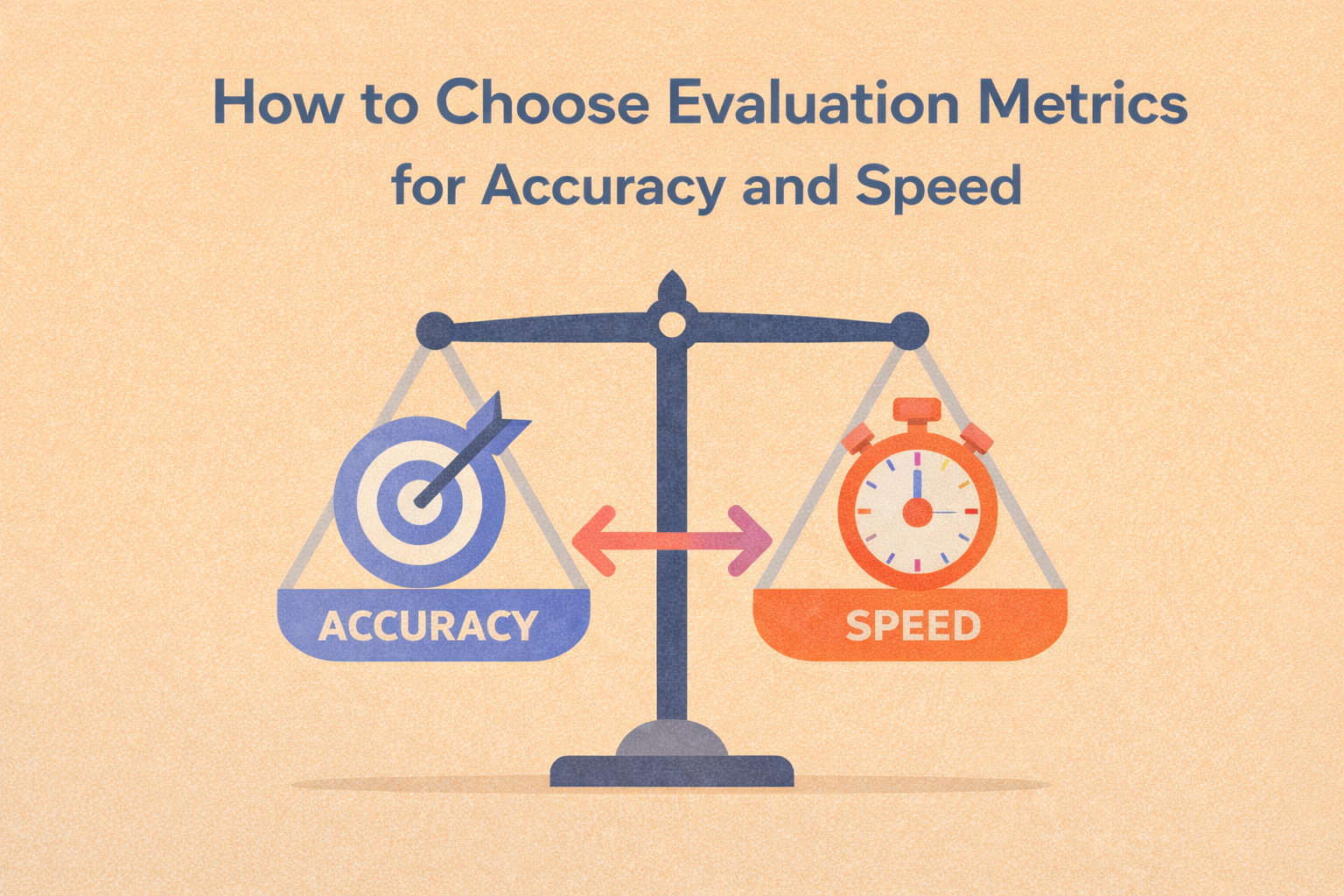
How to Choose Evaluation Metrics for Accuracy and Speed
The right evaluation metrics make accuracy–speed tradeoffs visible so you can optimize for what actually matters in production.
-

Why Explainability Matters in AI Evaluation
This blog explores how explainability and interpretability fit into AI evaluations, helping teams build trust, spot hidden flaws, and ensure ethical performance.
-
AI Evaluation for NLP: What to Use (and When)
NLP evaluation often needs more than automated scores. This guide explains three common tool paths—structured human review, app-layer LLM evaluation, and programmable scoring—and when each fits best.
-
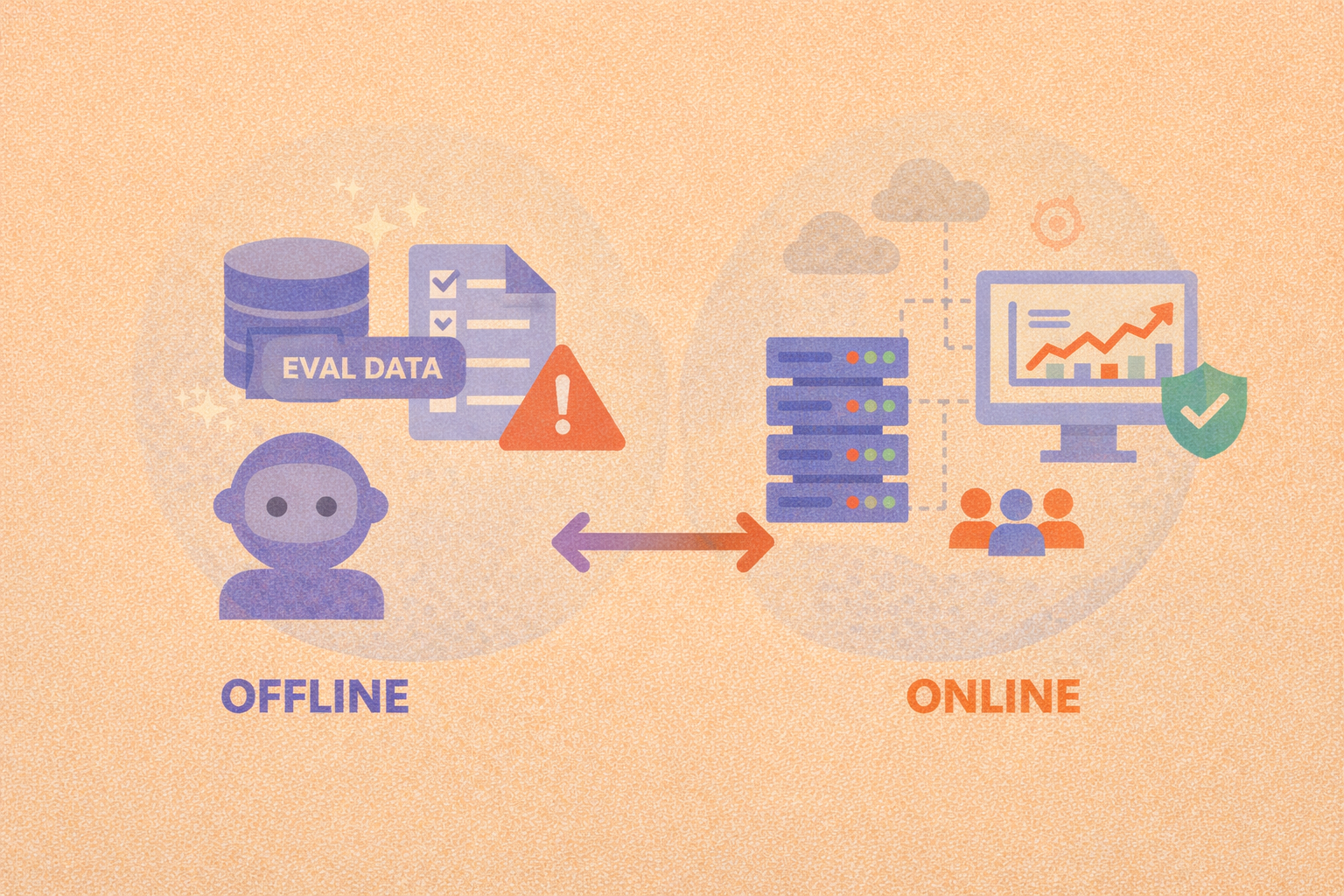
Offline evaluation vs online evaluation: when to use each
Offline evaluation enables fast, repeatable model comparison, while online evaluation confirms whether those gains hold up under real-world conditions.
-
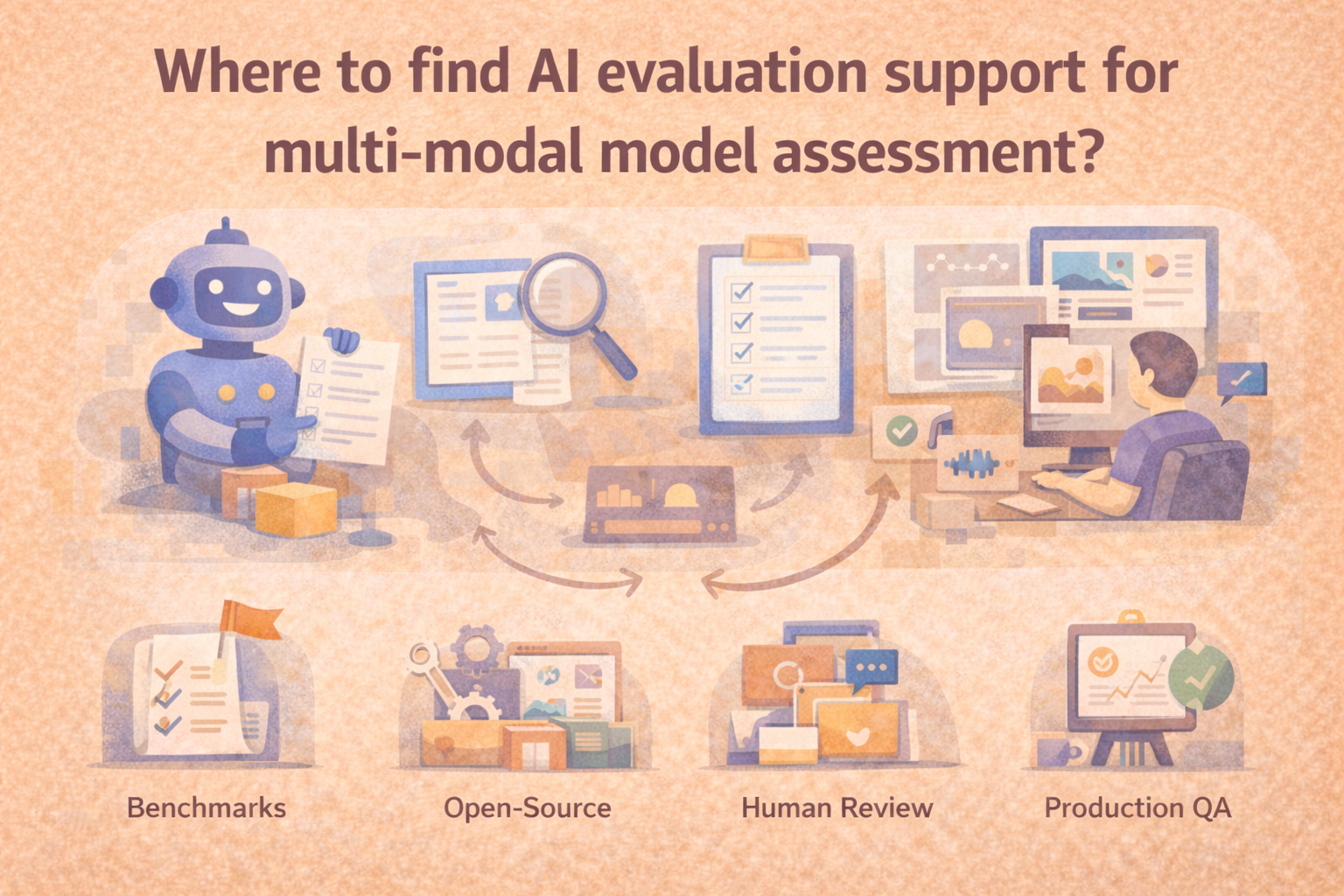
Where to find AI evaluation support for multi-modal model assessment
The right starting point depends on whether you need offline benchmarking, structured human review, regression testing, or real-world monitoring.
-
Human-in-the-Loop Evaluations: Why People Still Matter in AI
Human-in-the-loop (HITL) evaluations bring expert oversight into AI workflows. Learn where humans add value, how to scale review, and when it matters most.
Let me know if you'd like a hero image or a CTA linking this to your evaluations pillar page.
-
How to Automatically Catch Mistakes from Large Language Models
Evaluating the quality of large language model (LLM) outputs isn't one-size-fits-all. This guide breaks down four key methods, reference comparison, LLM-as-a-judge, rule-based checks, and classifiers, to help you automatically detect common errors like hallucinations, bias, and off-topic responses. Learn when and how to apply each method effectively.
-
AI Governance and Compliance: Why Evaluations Are the Missing Link
Without strong evaluation workflows, compliance with ethical and legal standards is impossible to verify, let alone enforce. Here’s how to close the gap.
-
This hub explores the full spectrum of evaluation methods, from metrics to human-in-the-loop reviews and LLM-based scoring across multiple articles.
-
Machine Learning Evaluation Metrics: What Really Matters?
Accuracy isn’t everything. Learn how precision, recall, F1 score, and more help you measure what really matters in machine learning model performance.
-
Understanding Model Accuracy: How to Evaluate Your AI
Accuracy is one of the most common metrics in machine learning evaluation, but it’s also one of the most misunderstood. Here’s how to use it wisely.
-

How to Get Demos of AI Evaluation Software Before You Buy
This guide explains how to prepare the right sample outputs, define structured review criteria, ask the right integration questions, and compare tools clearly before you buy.
-
How to Monitor AI Performance in Production: A Guide to Continuous Evaluation and Drift Detection
AI models don’t stop learning after deployment, but that doesn’t mean their performance stays reliable. This guide covers how to monitor your models in the real world, detect drift, and maintain accuracy over time.
-
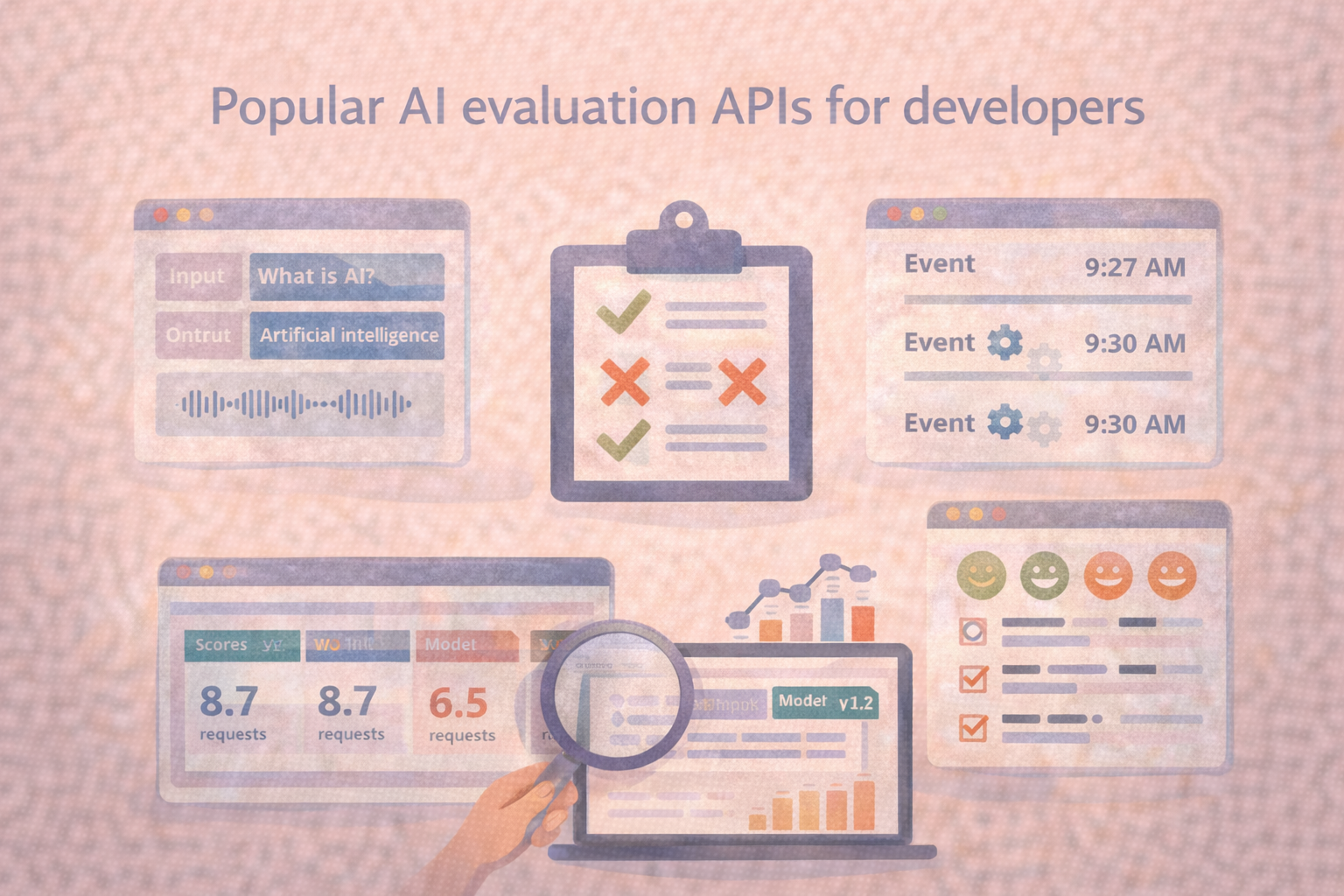
Popular AI evaluation APIs for developers
AI evaluation APIs make it easier to run repeatable tests, track results over time, and catch regressions, as long as you design the workflow around versioning, traceability, and meaningful metrics.
-
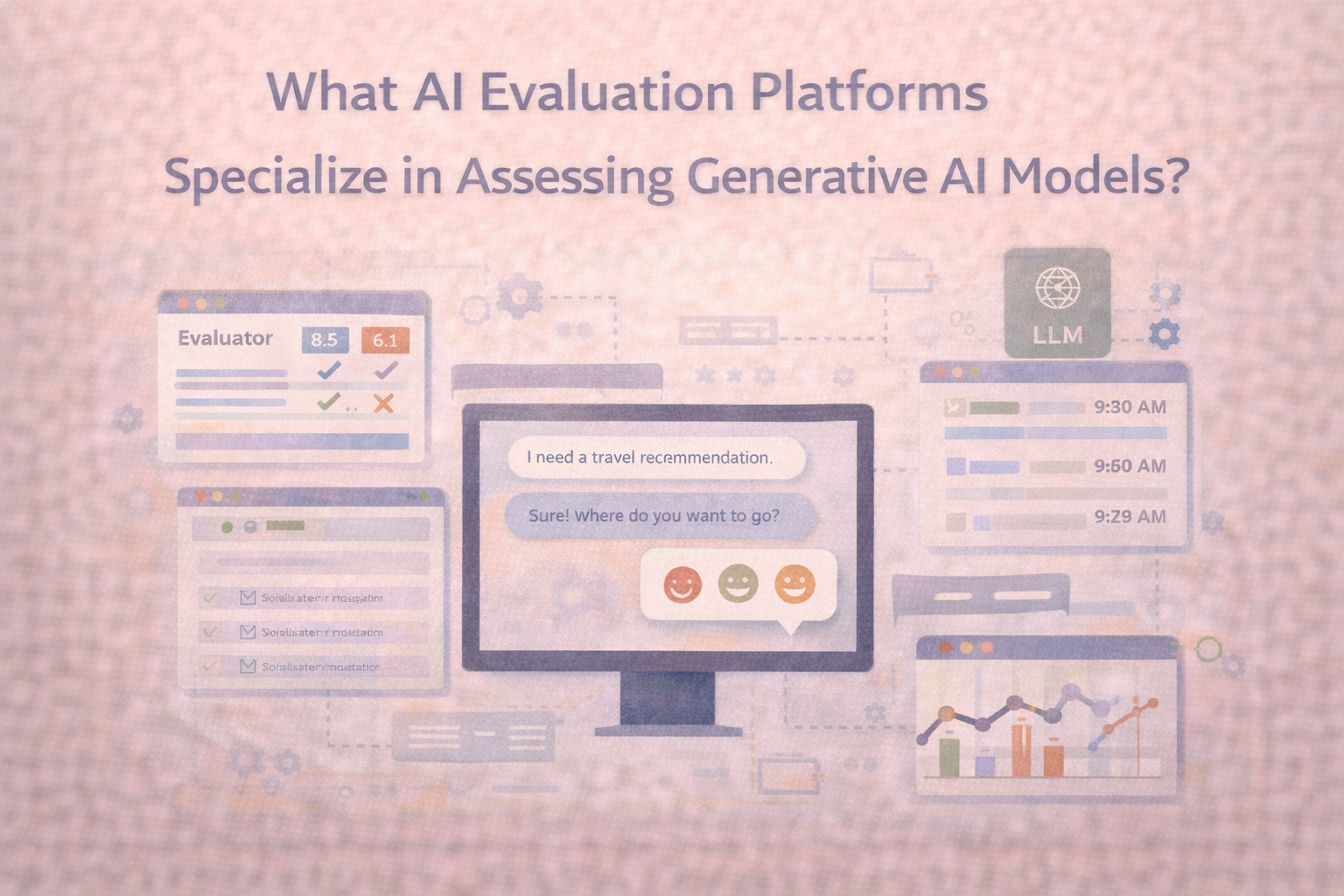
What AI evaluation platforms specialize in assessing generative AI models?
GenAI evaluation works best when teams can review multi-turn outputs with consistent rubrics, shared workflows, and reliable governance.