How do AI benchmarks compare across popular machine learning frameworks?
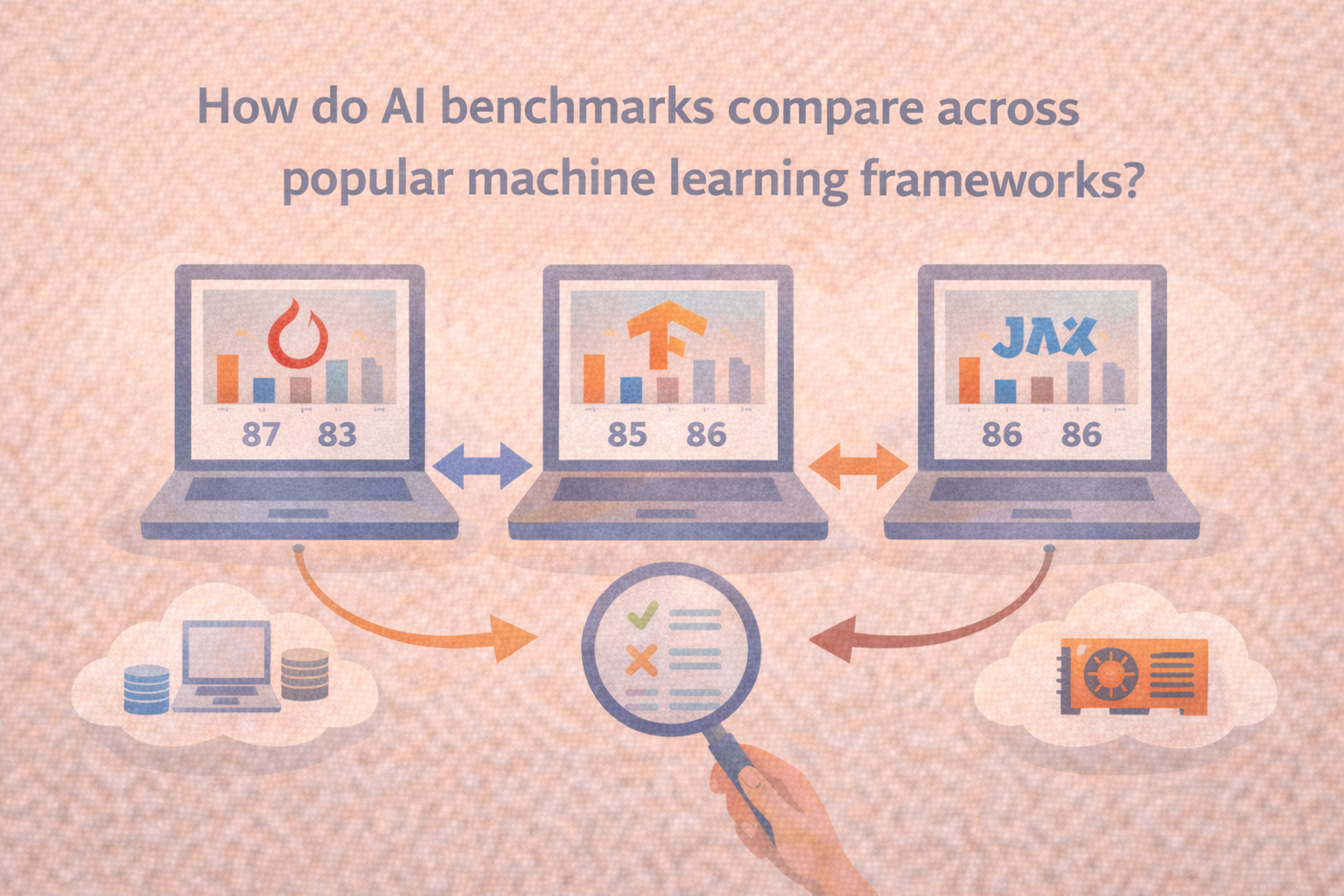
AI benchmarks can be comparable across frameworks when the model, dataset, preprocessing, precision, and evaluation settings are truly aligned. In practice, scores and speed often diverge because frameworks differ in default preprocessing, numeric precision, kernel implementations, determinism, and how training and inference are executed on the same hardware.
Why the “same benchmark” can produce different results
Benchmark results are a product of the full stack, not just the model architecture. Even if two teams claim they ran “the same benchmark,” small differences compound quickly.
Common sources of divergence include:
- Preprocessing differences: Resize method, crop strategy, normalization, tokenization rules, audio resampling, image color conversion.
- Evaluation definition: Top-1 vs top-5, micro vs macro averaging, thresholding rules, how invalid labels are handled.
- Precision and numerics: FP32 vs mixed precision, BF16 vs FP16, accumulation choices, loss scaling.
- Runtime kernels: Different fused ops, convolution and attention implementations, and library versions.
- Determinism and randomness: Seed handling, non-deterministic GPU kernels, shuffling behavior, dropout or augmentation toggles.
- Hardware and drivers: GPU model, CUDA/cuDNN versions, XLA versions, CPU threading.
Frameworks influence many of these settings through defaults. That is why a benchmark number should always be read alongside the configuration, not as a standalone fact.
What tends to vary by framework
Training speed and throughput
Throughput differences often come from how efficiently the framework compiles and executes the graph, how it schedules kernels, and how well it overlaps input pipelines with compute.
- PyTorch often benefits from a large ecosystem of optimized kernels and mature training loops, especially when the surrounding tooling is tuned carefully.
- TensorFlow often performs strongly when graph execution is stable and the input pipeline is optimized end to end.
- JAX often shines when compilation and batching are set up well, since XLA can generate highly optimized execution for fixed-shape workloads.
In real benchmarking, the fastest result is usually the one where the data pipeline and runtime settings were tuned most thoroughly, not the one tied to a framework brand.
Model quality metrics
Accuracy, F1, BLEU, WER, or other quality metrics can shift subtly due to numerical and preprocessing differences. Mixed precision can change optimization behavior. Different augmentation defaults can change generalization. Even evaluation-time preprocessing can shift results, especially in vision and speech.
If two frameworks disagree on quality by a small margin, the most likely explanation is not that one is inherently “more accurate.” It is usually configuration drift.
A fairness checklist for comparing benchmark results
Use this checklist before you interpret a cross-framework comparison.
Match the evaluation definition
Start by confirming that the metric is calculated the same way. This includes label mapping, thresholds, averaging strategy, and any post-processing.
Lock down the input pipeline
Preprocessing is a common source of accidental differences. Confirm the exact steps, including libraries and versions used for transforms.
Align precision settings
Compare FP32 to FP32, or compare mixed precision to mixed precision with the same format and accumulation settings. Precision mismatches can affect both speed and final accuracy.
Control randomness and determinism
Set seeds consistently, disable stochastic layers at evaluation, and document whether deterministic kernels are enabled. Some kernels remain non-deterministic on certain hardware even when seeds match.
Compare on the same hardware and software stack
Benchmarking across different GPUs, drivers, or kernel libraries can swamp framework effects. Even minor changes in CUDA, cuDNN, or XLA versions can move results.
Two practical comparison tables you can reuse
Table 1: What to standardize for a fair comparison
| Area | What to standardize | Why it matters |
| Dataset | Exact version, split IDs, shuffling | Prevents hidden data leakage or distribution shifts |
| Preprocessing | Transform order and parameters | Changes inputs and can alter accuracy materially |
| Metric definition | Averaging, thresholds, label mapping | Avoids “same metric name, different math” |
| Precision | FP32 vs BF16/FP16, accumulation | Affects speed and sometimes final quality |
| Runtime versions | CUDA/cuDNN/XLA and framework version | Kernel changes can move results between runs |
| Batch and shapes | Batch size, padding, static vs dynamic shapes | Impacts throughput and compilation behavior |
| Determinism | Seeds and deterministic kernel settings | Ensures differences are real, not noise |
Table 2: Interpreting different types of benchmark gaps
| Observed difference | Most likely cause | What to check first |
| Speed differs, quality matches | Runtime and kernel efficiency | Batch size, compilation mode, data loader bottlenecks |
| Quality differs slightly | Preprocessing or precision drift | Normalization, resizing, tokenization, mixed precision settings |
| Quality differs a lot | Different evaluation or label mapping | Metric computation, label set alignment, test split integrity |
| Results are unstable run to run | Non-determinism or seed issues | Deterministic settings, shuffling, dropout, data ordering |
| Only one framework “wins” on one GPU | Hardware-specific kernels | Driver versions, library versions, kernel selection |
What a good cross-framework benchmark report includes
If you are reading third-party results, the best reports include enough detail to reproduce the run:
- Exact dataset and split information
- Preprocessing steps and libraries
- Model configuration and checkpoint details
- Precision settings and batch size
- Hardware specs and driver versions
- Full metric definitions and any post-processing
- Multiple runs or confidence intervals for stability
Without this context, the benchmark is closer to a marketing claim than an engineering signal.
Frequently Asked Questions
Frequently Asked Questions
Can I trust benchmark leaderboards that compare frameworks directly?
They can be useful, but only when the report is explicit about preprocessing, metric definitions, precision, and hardware. Without those details, the comparison may not be apples to apples.
Why do I see different accuracy across frameworks for the same model?
Small configuration differences are common: preprocessing defaults, mixed precision behavior, or evaluation scripts that compute metrics differently. These differences can shift results even when the model architecture is identical.
Is one framework always faster?
No. Performance depends heavily on model type, input shapes, hardware, and runtime settings. Many apparent “framework wins” are really pipeline tuning wins.
What is the fastest way to compare frameworks fairly in my environment?
Choose one fixed dataset split, freeze preprocessing, run inference first in FP32, then in the same mixed precision mode, and record throughput and metric outputs with full versioning of configs.
Related Content
-
Do you need a custom benchmark?
Learn why public AI leaderboards constantly fail enterprise deployments and how to scale a continuous evaluation maturity framework from proof-of-concept to production without wasting endless engineering hours.
-
Domain-specific vs. general benchmarks: What's the difference?
Learn the difference between domain-specific and general benchmarks. Understand how to measure artificial intelligence model performance effectively for your specific use case.
-

Where can I find AI benchmark scores for natural language processing models?
You can find NLP benchmark scores quickly on public leaderboards, but the comparisons only hold up when you verify versions, evaluation settings, and the exact model variant being scored.
-
Getting started with benchmark creation
A guide to creating effective benchmarks for evaluating machine learning models, covering data selection, annotation, and iteration.
-
How do benchmarks use ground truth data?
Learn how ground truth data serves as the foundation for evaluating machine learning models and tracking AI benchmark performance.
-
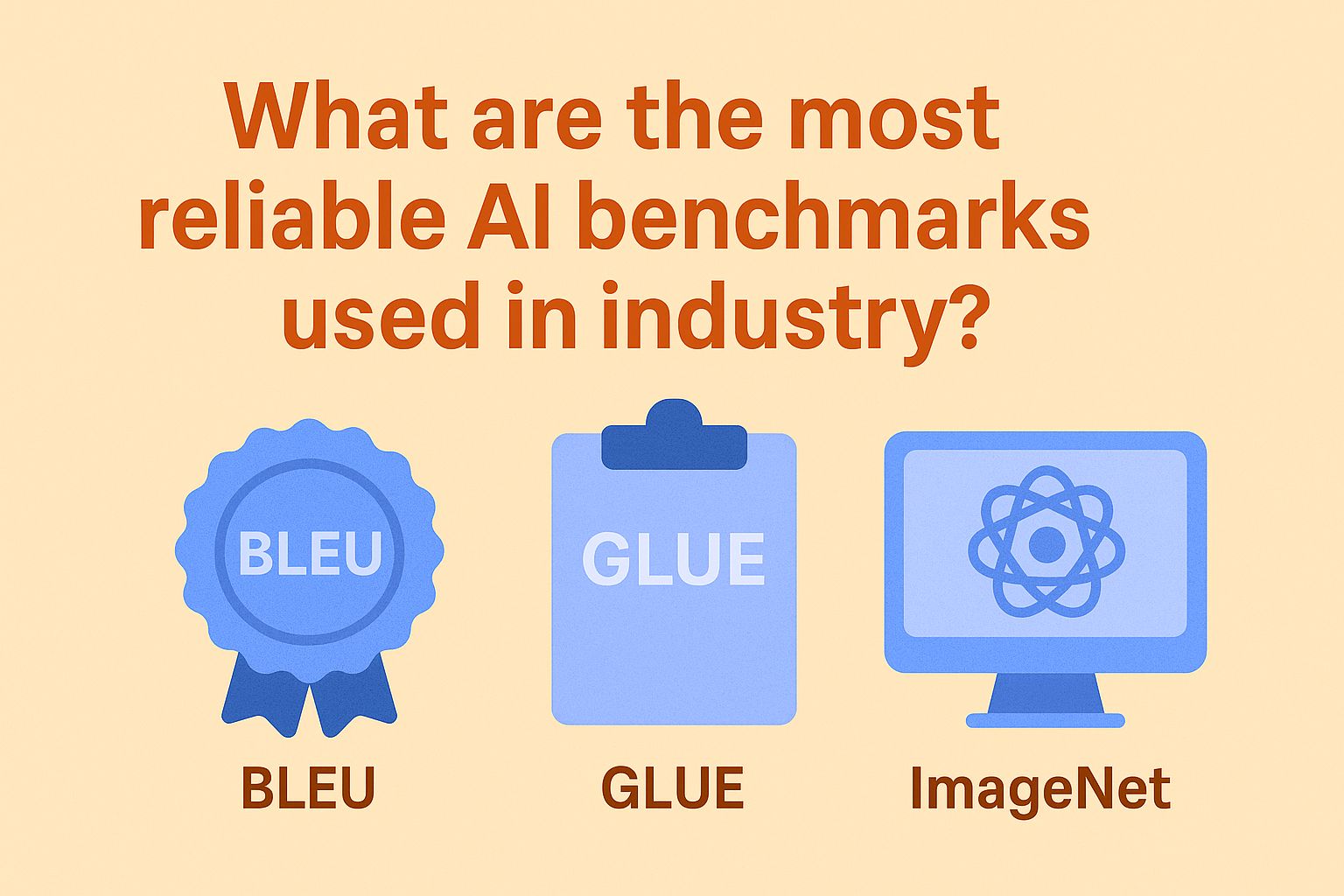
What are the most reliable AI benchmarks used in industry?
The core language, vision, speech, and system benchmarks that teams still rely on to compare models.
-
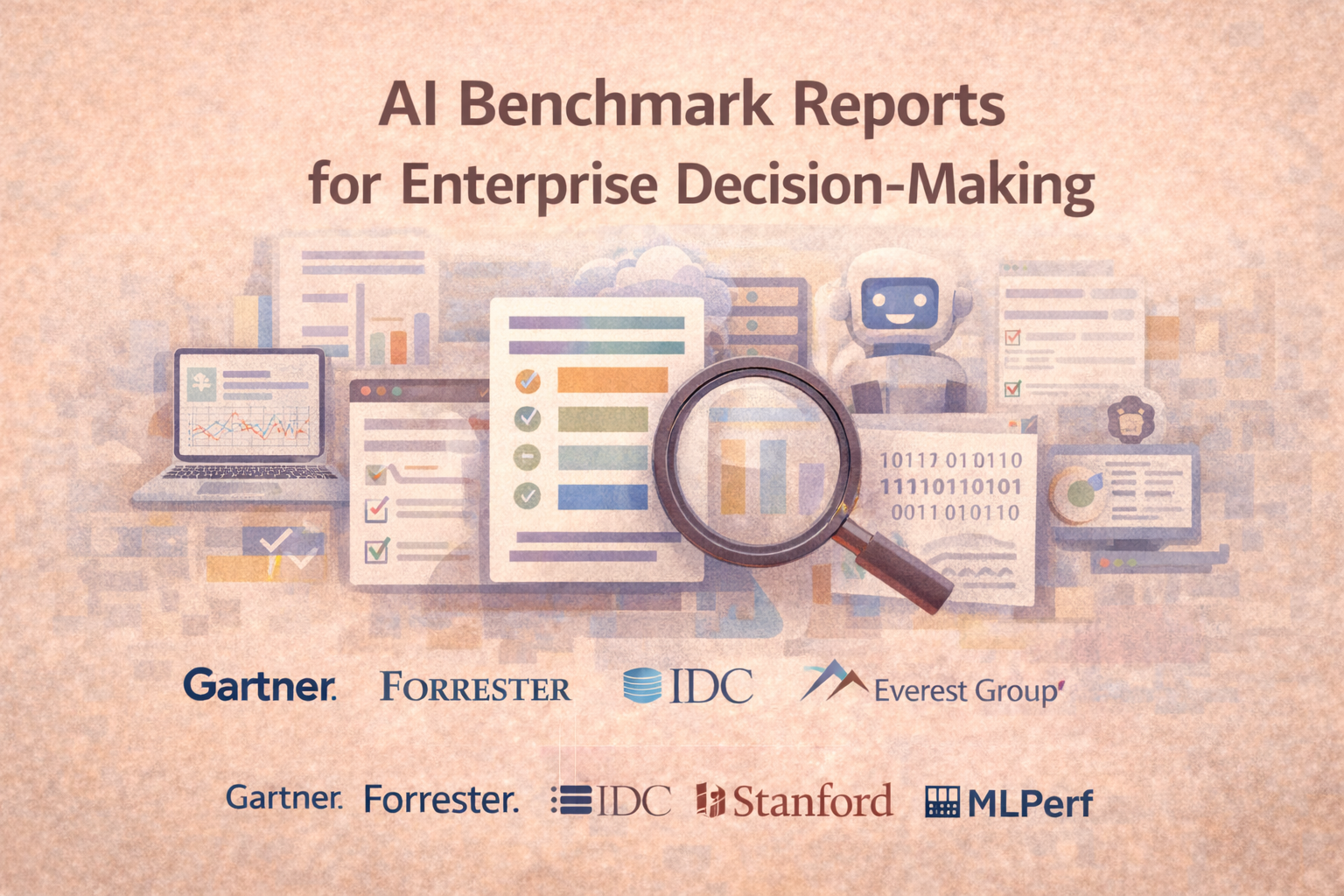
What services offer AI benchmark reports for enterprise decision-making?
A practical guide to the main sources of AI benchmark reports enterprises use to compare vendors, platforms, and model performance.
-

Which AI benchmark datasets are best for speech recognition tasks?
The best ASR benchmarks depend on your target audio conditions, so the most reliable approach is to pair a standard baseline with a dataset that reflects how people actually speak in your product.
-
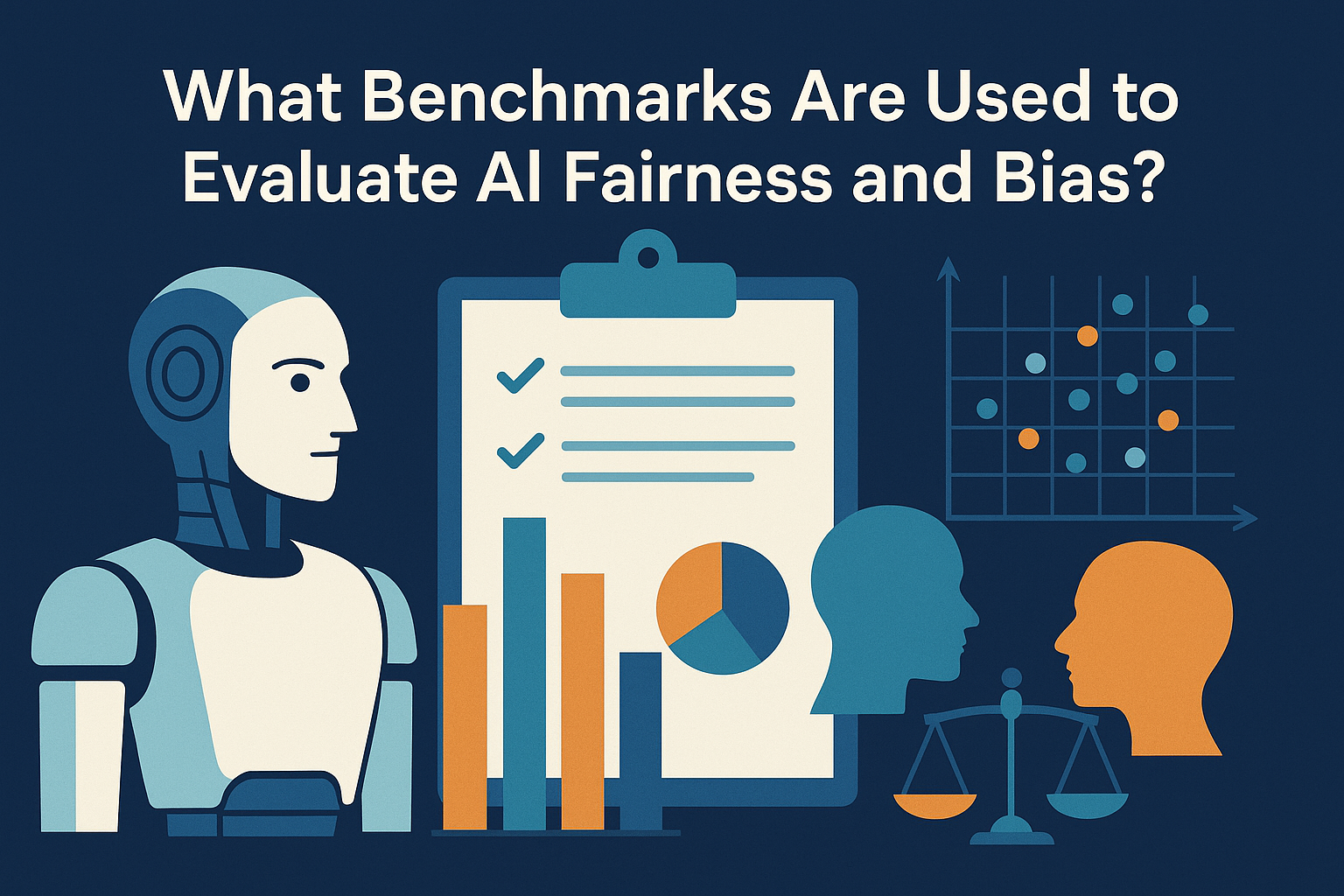
What Benchmarks are Used to Evaluate AI fairness and Bias?
AI fairness and bias benchmarks help teams measure whether model performance or behavior changes across groups, identities, or contexts
-
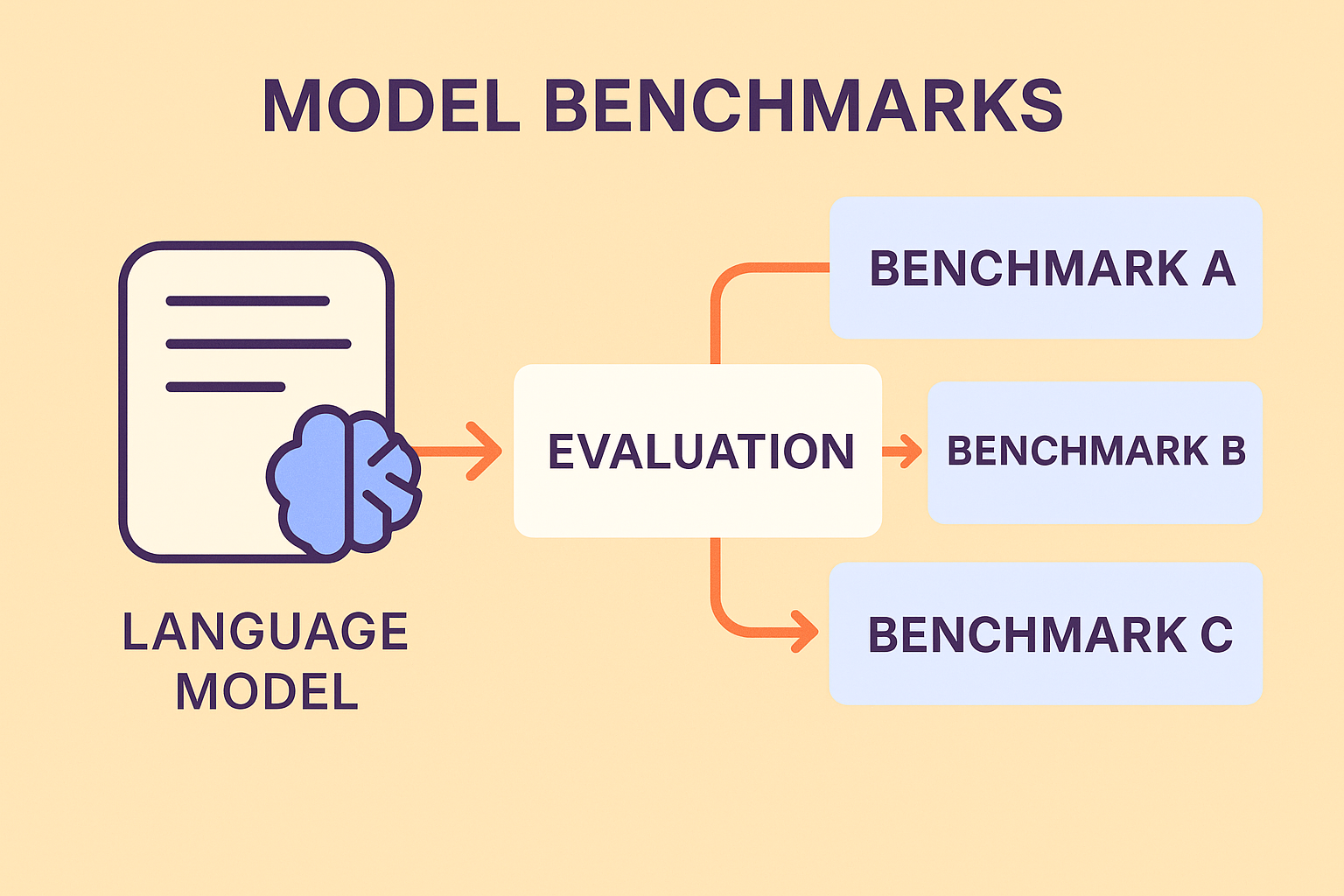
Benchmarks are the measuring sticks of machine learning. They provide a way to evaluate models consistently, compare progress, and understand whether performance holds up in real-world conditions.
-

What are the differences between synthetic and real-world AI benchmarks?
Synthetic benchmarks offer control and scalability, while real-world benchmarks expose how AI systems behave under real conditions—and strong evaluation strategies rely on both.
-
Static vs. dynamic benchmarks: What's the difference?
Learn the structural differences between static and dynamic AI evaluations, why purely dynamic tests ruin version control, and how to build a hybrid pipeline.
-
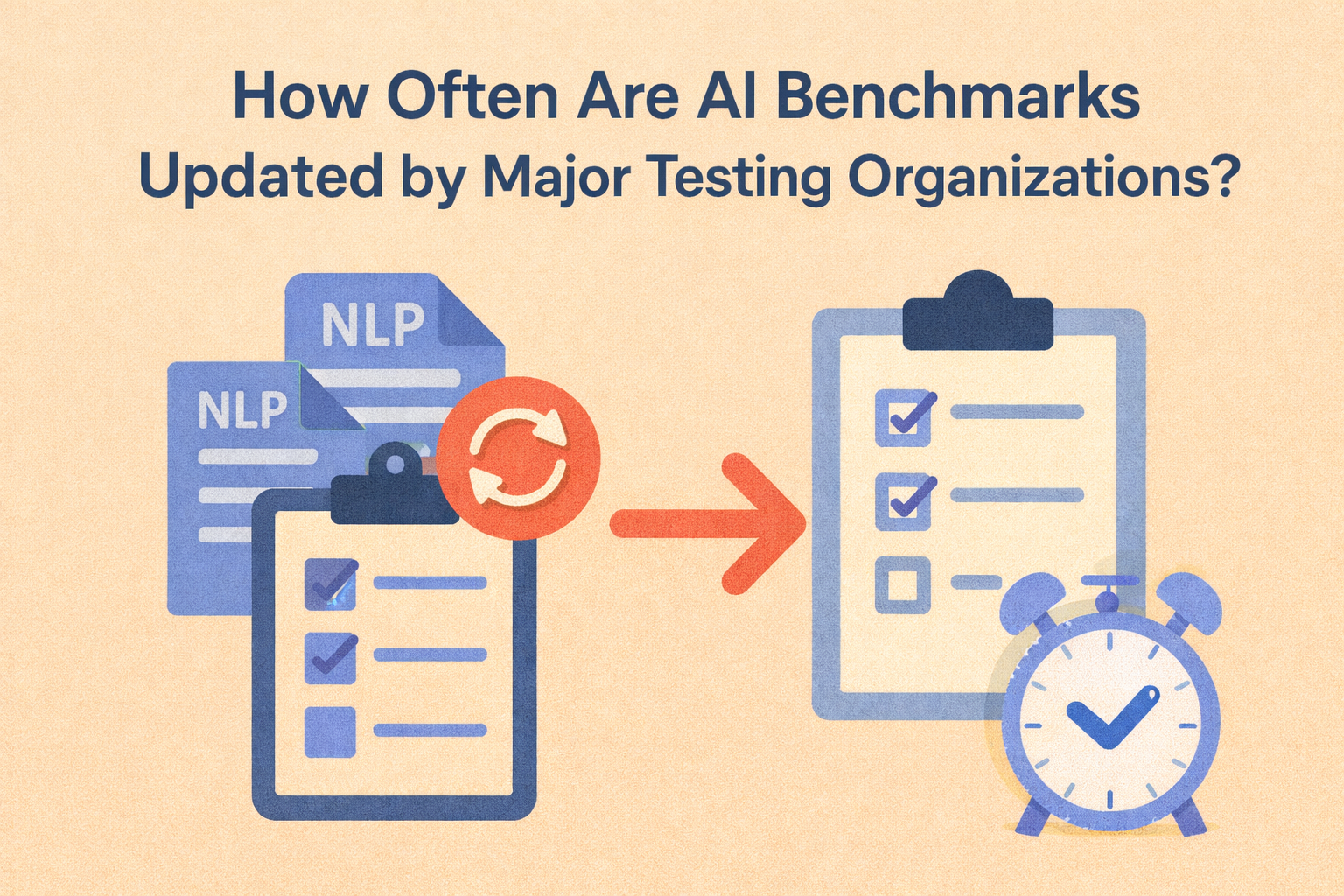
How often are AI benchmarks updated by major testing organizations
Benchmark results are time-bound, so the most reliable comparisons always include the benchmark version, evaluation method, and date.
-
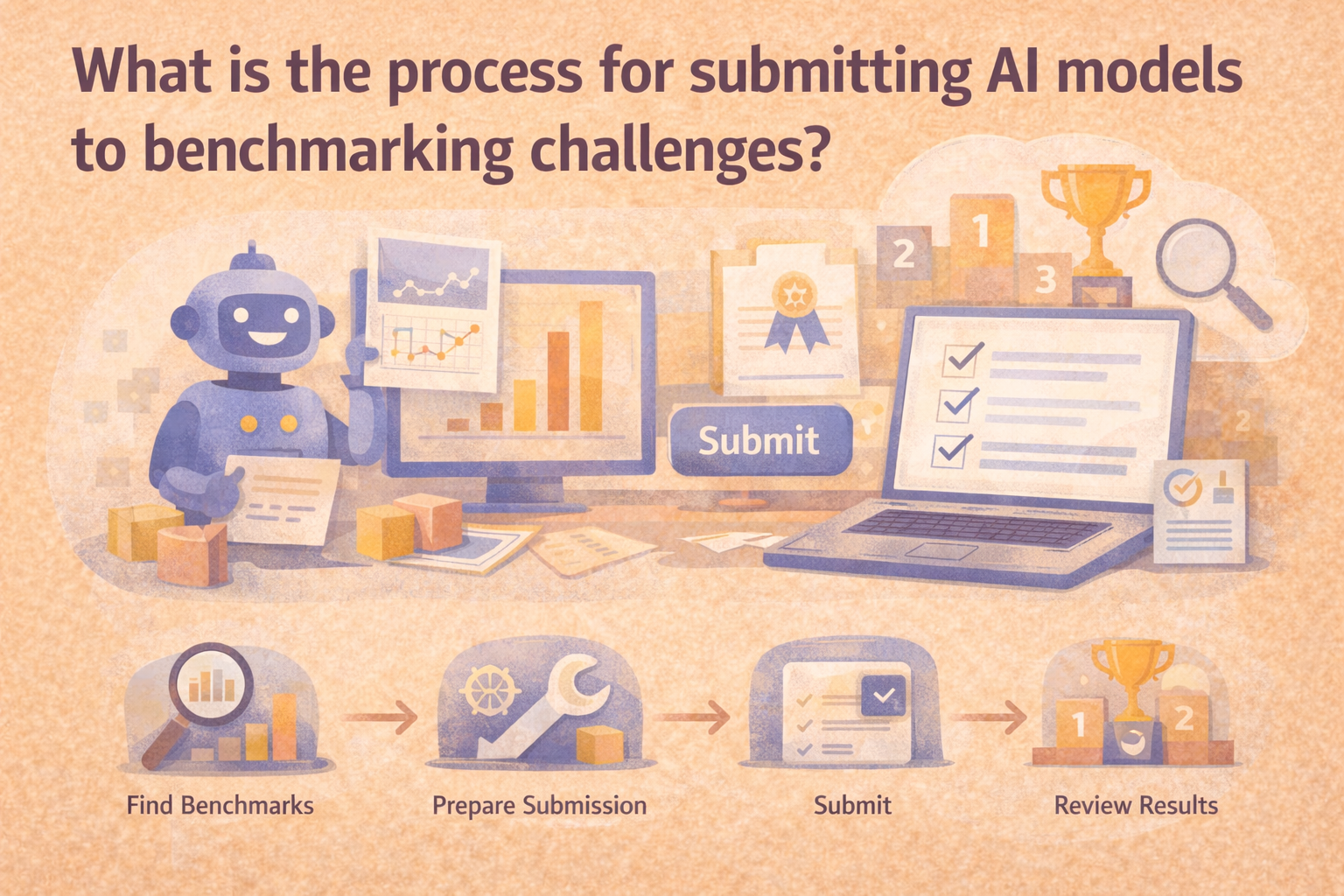
What is the process for submitting AI models to benchmarking challenges?
Submitting an AI model to a benchmarking challenge is less about “upload the model” and more about proving your system can be evaluated fairly.
-
How to interpret AI benchmark results from third-party testing services?
Benchmark scores can be helpful signals, but only if you understand the dataset, scoring method, evaluation setup, and version behind the number.
-
How to choose an LLM benchmark
Public leaderboards are helpful for shortlisting models, but production demands custom evaluation. Learn how to choose an LLM benchmark for your team.
-
Benchmarks provide a common ground for evaluating machine learning models, but their usefulness depends on how well they reflect real-world goals. This guide explains what benchmarks are, when to rely on them, and where they fall short.
-
What are the differences between synthetic and real-world AI benchmarks?
This article breaks down how synthetic and real-world AI benchmarks differ and why teams need both to understand true model performance.