Which AI benchmark datasets are best for speech recognition tasks?
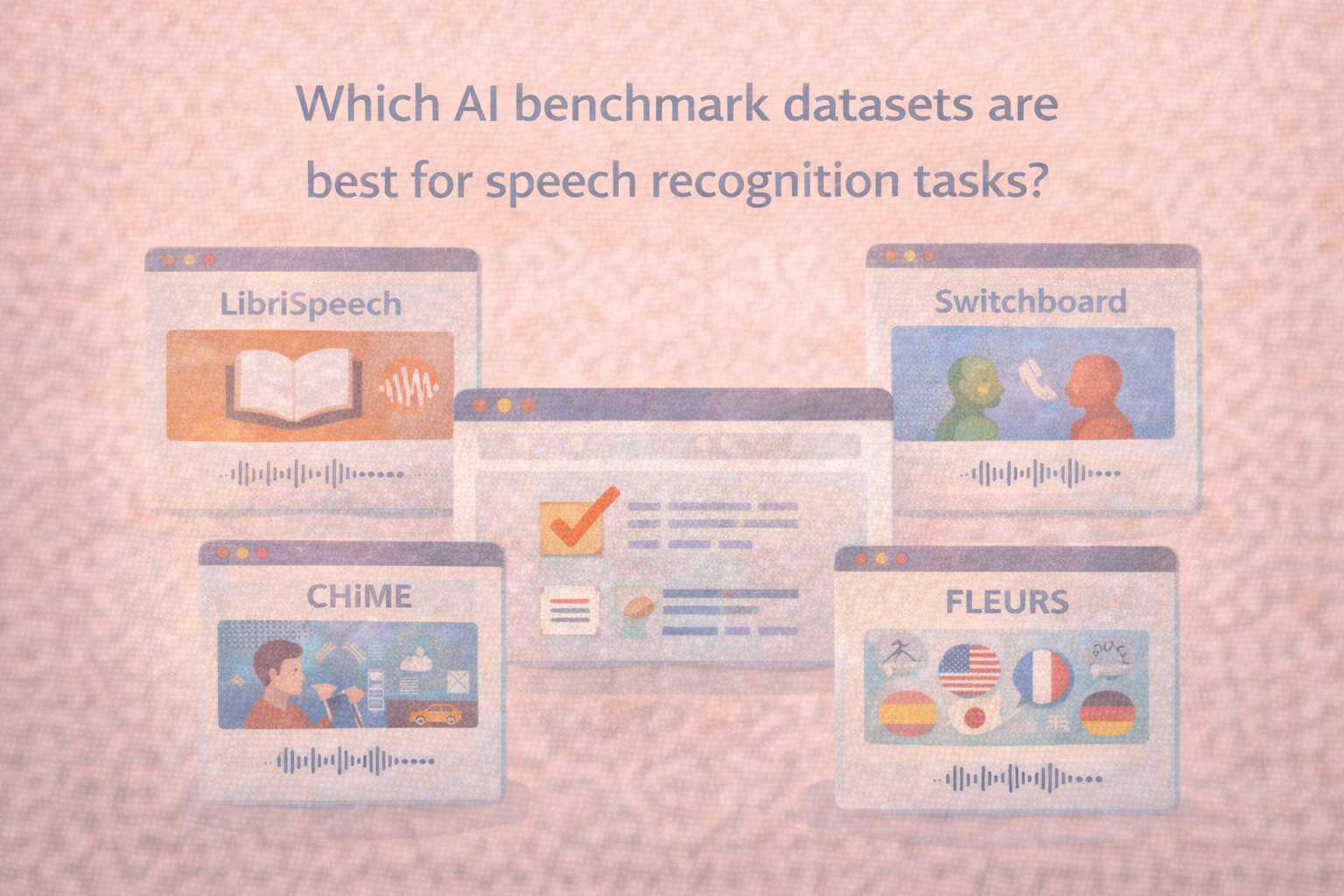
The “best” speech recognition benchmark depends on what you want to learn. Read-speech datasets are strong baselines for comparing models in controlled conditions, conversational datasets better reflect real dialogue, noisy and far-field datasets stress robustness, and multilingual datasets help you measure coverage beyond English. Most teams get the clearest signal by choosing one stable baseline plus one dataset that matches their deployment environment.
Start with a baseline you can compare against
If your goal is to understand whether your model is competitive in a widely reported setting, it helps to start with a benchmark that many other teams use. In speech recognition, LibriSpeech is the most common baseline because it is clean, well-curated, and frequently cited in research. It is a good choice when you want a consistent yardstick for model iteration, training changes, and architecture comparisons.
Another baseline that often feels closer to real product audio is TED-LIUM, which captures prepared speech with natural pacing and phrasing. It tends to be more varied than audiobook speech while still being relatively clean and structured, which makes it useful for teams that want an intermediate step between lab conditions and messier conversational data.
Use conversational datasets when dialogue is the real task
Read speech can make models look better than they will in a real conversation. People interrupt themselves, restart sentences, speak over each other, and rely on context that never appears in transcripts. If you build for calls, meetings, assistants, or any interactive experience, conversational datasets are often the most informative benchmarks.
The Switchboard corpus is one of the classic datasets for conversational telephone speech, and it is still widely referenced when evaluating dialogue-style ASR. Many teams also use related conversational collections such as Fisher English Training Speech to expand coverage and variability. These datasets come through the Linguistic Data Consortium (LDC), so licensing can be a practical consideration, but they remain useful when you want a benchmark that includes real disfluencies and turn-taking.
Benchmark robustness with noisy and far-field audio
A model that performs well on clean audio can fail quickly when the microphone is distant, the room has echo, or background noise competes with the speaker. If your system runs in homes, offices, cars, or public settings, robustness benchmarks matter because they reflect how speech actually arrives at the model.
The CHiME Challenge benchmarks are well known for evaluating ASR under noisy, real-world conditions and far-field setups. For meeting transcription, the AMI Meeting Corpus is commonly used because it captures multi-speaker dynamics and more realistic room acoustics. Even if you ultimately build your own internal “noisy audio” evaluation set, these benchmarks help you understand how models behave when conditions stop being ideal.
Use multilingual datasets to test language coverage
When your product supports multiple languages, benchmarks need to reflect that reality. English-only results will not tell you whether your model handles different scripts, phonetics, and accent variation, and averages can hide weak performance in lower-resource languages.
Mozilla Common Voice is often used for multilingual benchmarking because it spans many languages and encourages broad participation, which can surface accent diversity. For multilingual evaluation in a more standardized format, FLEURS is widely used in research settings to compare models across many languages using a consistent dataset structure. If you have a specific language focus, it can also be valuable to include a language-specific benchmark such as AISHELL-1 for Mandarin.
A practical way to pick your benchmark set
In practice, the best benchmark choice comes down to matching the audio conditions you expect in production. A simple, reliable strategy is to pair one widely cited baseline with one “reality check” dataset that matches your environment. For example, a team building call transcription might pair LibriSpeech with Switchboard, while a team building meeting transcription might pair a baseline with AMI or a CHiME-style noisy benchmark. If multilingual support is part of the requirement, adding a multilingual dataset like FLEURS or Common Voice makes gaps visible early.
Benchmark selection is also an opportunity to define what “good” means for your product. If proper nouns, numbers, or domain terminology matter, you will learn more by building a small internal test set that stresses those cases than by chasing a leaderboard score on a general dataset.
Frequently Asked Questions
Frequently Asked Questions
Do I need more than one benchmark dataset?
Often, yes. A single dataset usually reflects a single audio regime, and speech recognition performance can change dramatically between clean read speech and real conversations or noisy recordings.
Is LibriSpeech enough if I only need English ASR?
It’s a strong baseline, but it is not representative of many real environments. If your audio includes interruptions, background noise, or multiple speakers, you’ll get a more realistic picture by adding a conversational or noisy benchmark alongside it.
What should I report besides Word Error Rate (WER)?
WER is the standard metric, but it helps to look at error patterns too, especially whether mistakes concentrate around names, numbers, or domain-specific terms. Those patterns often matter more than small differences in overall WER.
How should I benchmark multilingual ASR?
Report results per language rather than relying on an average. A single average score can mask major failures in languages that matter to your users.
Related Content
-
Do you need a custom benchmark?
Learn why public AI leaderboards constantly fail enterprise deployments and how to scale a continuous evaluation maturity framework from proof-of-concept to production without wasting endless engineering hours.
-
Domain-specific vs. general benchmarks: What's the difference?
Learn the difference between domain-specific and general benchmarks. Understand how to measure artificial intelligence model performance effectively for your specific use case.
-
Where can I find AI benchmark scores for natural language processing models?
You can find NLP benchmark scores quickly on public leaderboards, but the comparisons only hold up when you verify versions, evaluation settings, and the exact model variant being scored.
-
Getting started with benchmark creation
A guide to creating effective benchmarks for evaluating machine learning models, covering data selection, annotation, and iteration.
-
How do benchmarks use ground truth data?
Learn how ground truth data serves as the foundation for evaluating machine learning models and tracking AI benchmark performance.
-
What are the most reliable AI benchmarks used in industry?
The core language, vision, speech, and system benchmarks that teams still rely on to compare models.
-
What services offer AI benchmark reports for enterprise decision-making?
A practical guide to the main sources of AI benchmark reports enterprises use to compare vendors, platforms, and model performance.
-
What Benchmarks are Used to Evaluate AI fairness and Bias?
AI fairness and bias benchmarks help teams measure whether model performance or behavior changes across groups, identities, or contexts
-
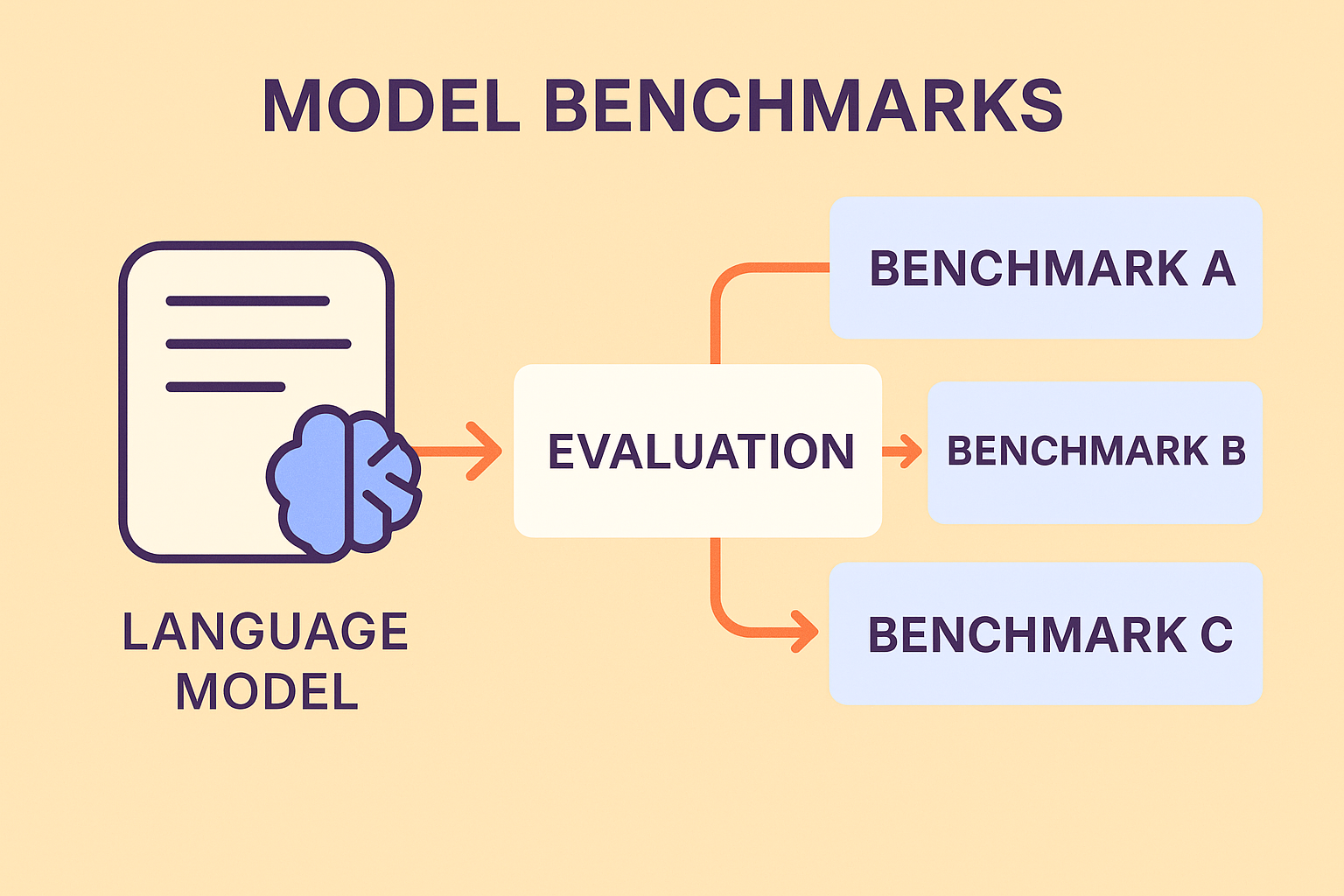
Benchmarks are the measuring sticks of machine learning. They provide a way to evaluate models consistently, compare progress, and understand whether performance holds up in real-world conditions.
-
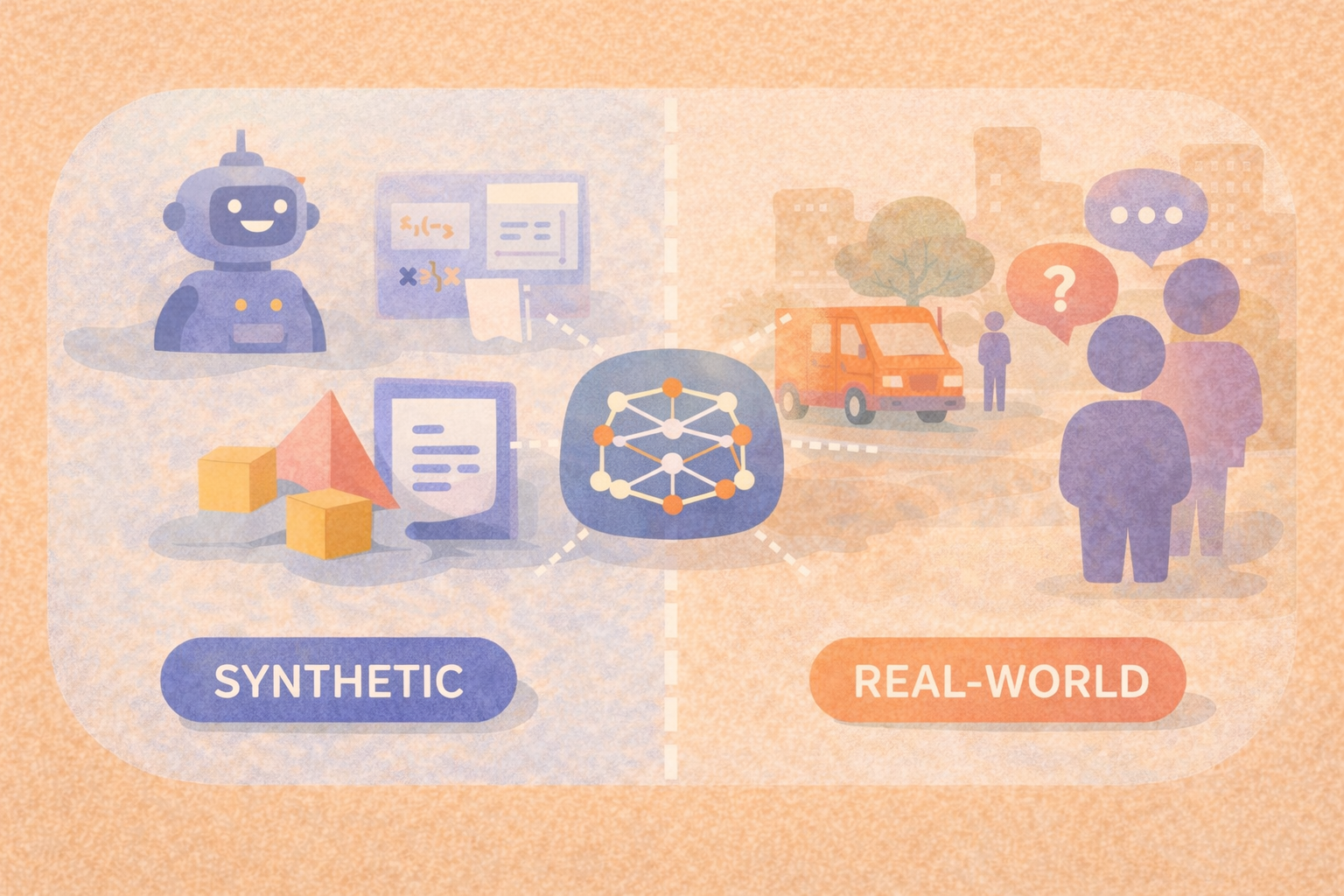
What are the differences between synthetic and real-world AI benchmarks?
Synthetic benchmarks offer control and scalability, while real-world benchmarks expose how AI systems behave under real conditions—and strong evaluation strategies rely on both.
-
Static vs. dynamic benchmarks: What's the difference?
Learn the structural differences between static and dynamic AI evaluations, why purely dynamic tests ruin version control, and how to build a hybrid pipeline.
-
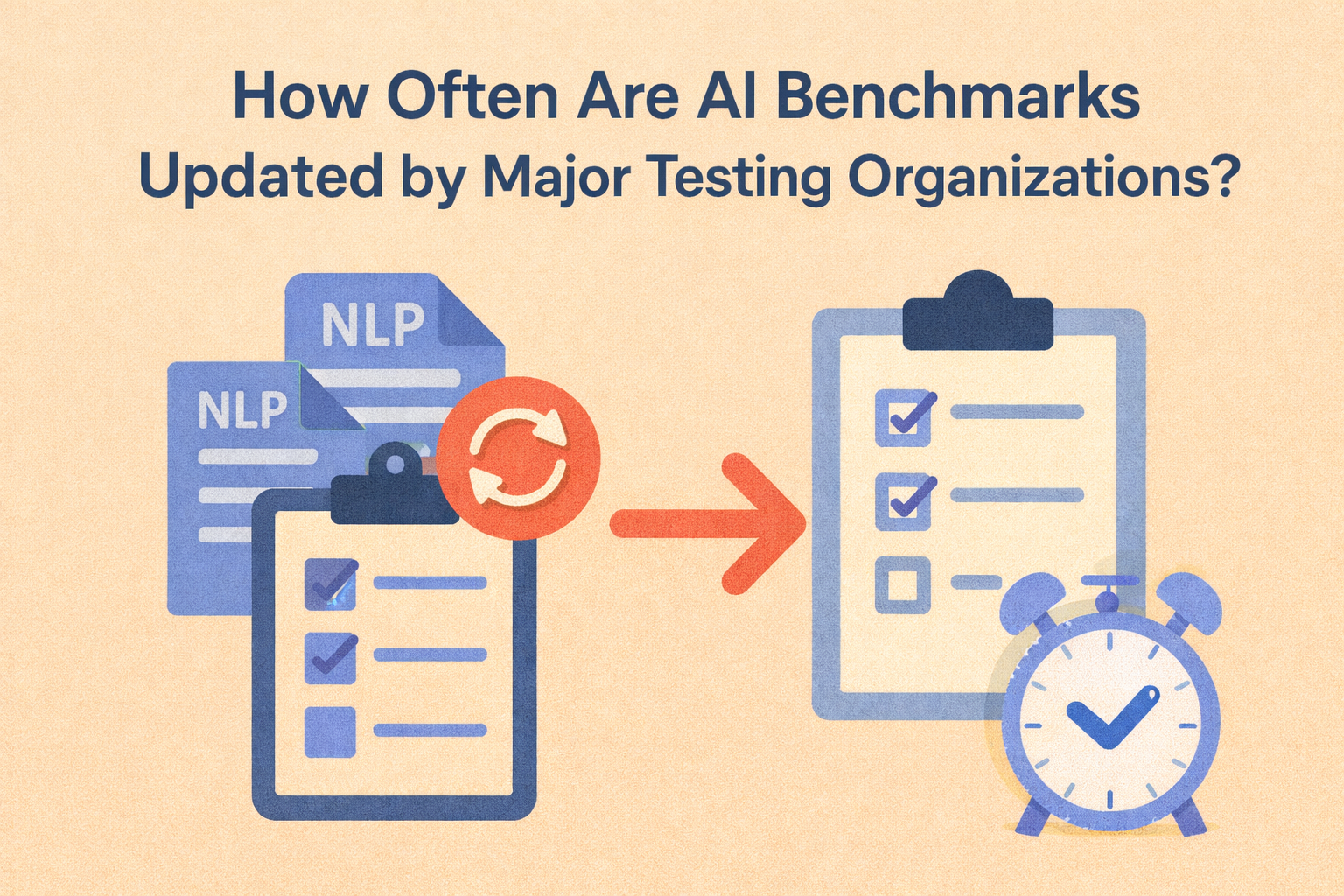
How often are AI benchmarks updated by major testing organizations
Benchmark results are time-bound, so the most reliable comparisons always include the benchmark version, evaluation method, and date.
-
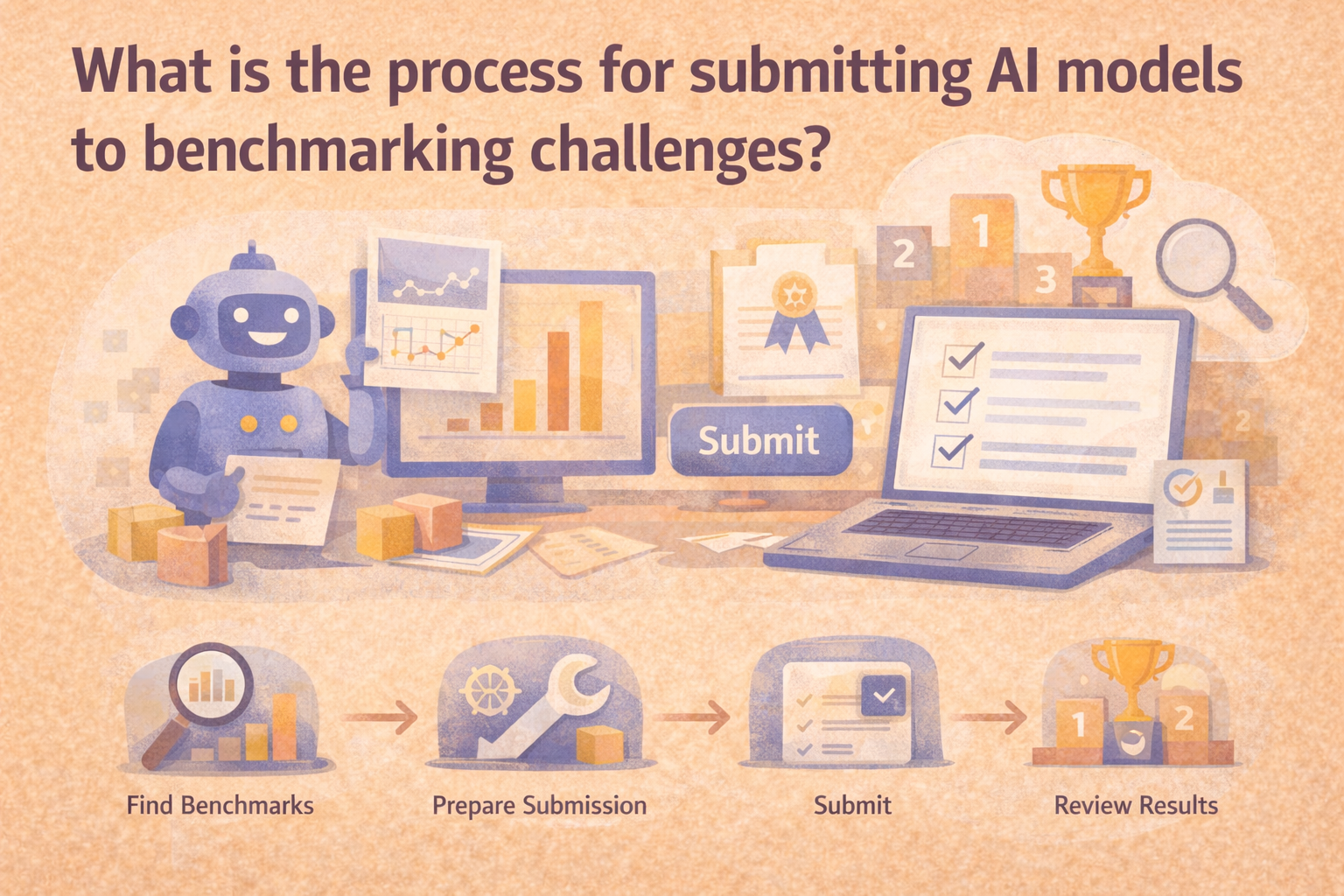
What is the process for submitting AI models to benchmarking challenges?
Submitting an AI model to a benchmarking challenge is less about “upload the model” and more about proving your system can be evaluated fairly.
-
How to interpret AI benchmark results from third-party testing services?
Benchmark scores can be helpful signals, but only if you understand the dataset, scoring method, evaluation setup, and version behind the number.
-
How to choose an LLM benchmark
Public leaderboards are helpful for shortlisting models, but production demands custom evaluation. Learn how to choose an LLM benchmark for your team.
-
Benchmarks provide a common ground for evaluating machine learning models, but their usefulness depends on how well they reflect real-world goals. This guide explains what benchmarks are, when to rely on them, and where they fall short.
-
What are the differences between synthetic and real-world AI benchmarks?
This article breaks down how synthetic and real-world AI benchmarks differ and why teams need both to understand true model performance.