What are the most reliable AI benchmarks used in industry?
When people talk about “reliable” AI benchmarks, they usually mean benchmarks that are:
- Widely adopted by both researchers and industry teams
- Transparent about their datasets and scoring
- Kept reasonably up to date as models improve
In practice, a small set of benchmarks shows up again and again in conversations about language, vision, and speech models.
Language benchmarks you’ll see everywhere
For language models, a few names come up constantly:
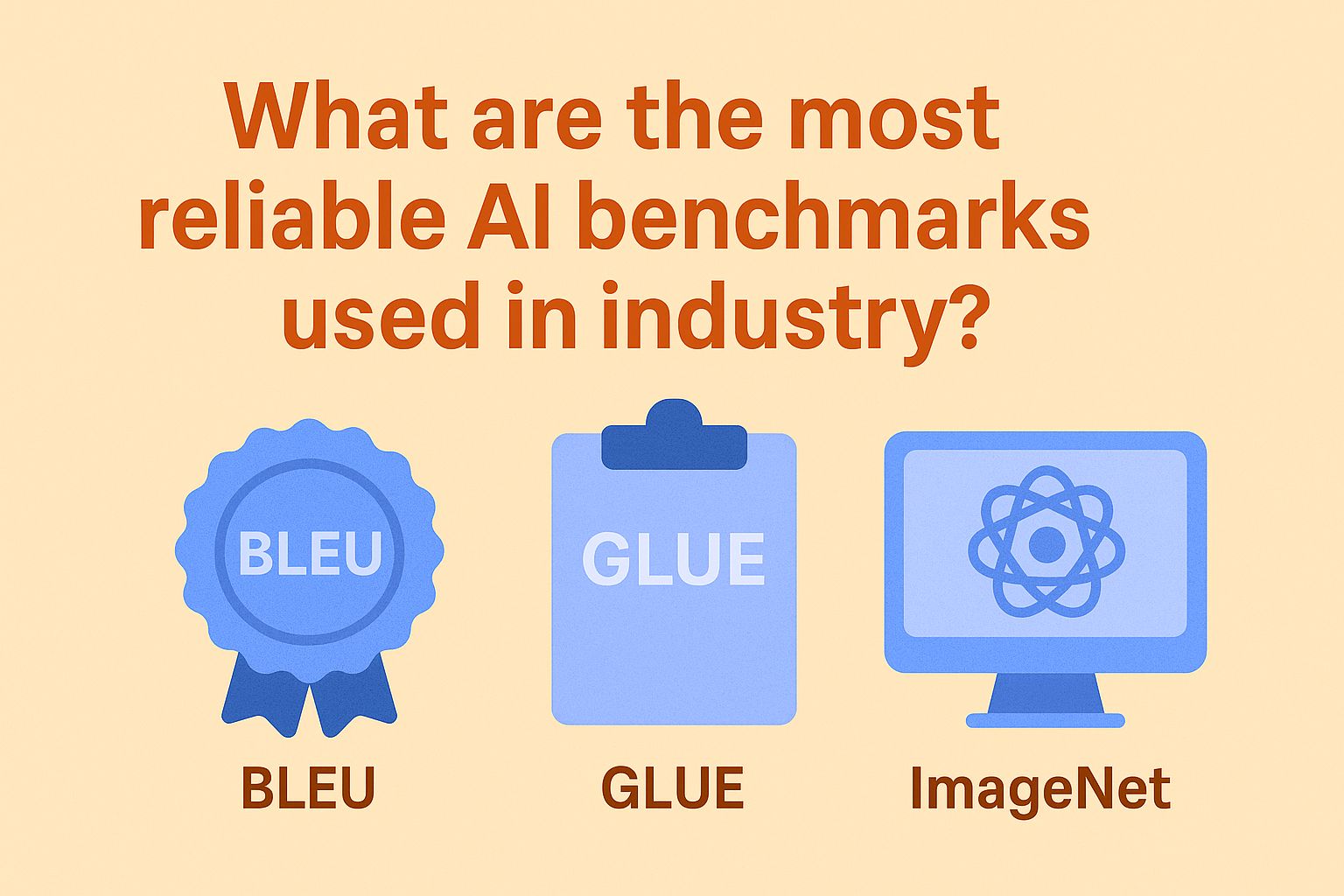
- GLUE evaluates general language understanding across tasks like sentiment, textual entailment, and similarity. It’s one of the first broad “NLU” benchmarks and still appears in papers and comparisons.
- SuperGLUE builds on GLUE with harder tasks and a public leaderboard, and it is often used for stronger, more modern language models.
- MMLU (Massive Multitask Language Understanding) measures performance across dozens of subjects, from history to computer science, and shows up a lot in “general intelligence” comparisons for large models.
On top of those individual benchmarks, you see “umbrella” efforts that try to evaluate models across many tasks and metrics:
- HELM (Holistic Evaluation of Language Models) from Stanford CRFM is a living benchmark that spans multiple scenarios and metrics like accuracy, robustness, fairness, and efficiency, with an open-source framework and public leaderboards.
These have become reliable anchors because they are transparent, well-documented, and widely discussed in papers, blog posts, and product announcements.
Vision benchmarks that shaped deep learning
In computer vision, a few benchmarks essentially defined the field:
- ImageNet, and specifically the ImageNet Large Scale Visual Recognition Challenge (ILSVRC), is the classic dataset and competition that drove early deep learning progress on image classification.
- COCO (Common Objects in Context) is the go-to dataset and benchmark for object detection, instance segmentation, and captioning. It includes hundreds of thousands of images and standardized evaluation metrics like mean Average Precision (mAP).
If you read any serious paper or product spec about detection, there is a good chance you’ll see COCO numbers.
Speech and audio
For speech recognition, LibriSpeech shows up almost everywhere as the default word-error-rate benchmark for English read speech.
There are many other speech benchmarks, but LibriSpeech is still the “common language” for quick comparisons.
System and hardware benchmarks
On the systems side, MLPerf (run by MLCommons) is the closest thing to an industry standard. It measures how fast hardware and software stacks can train and run a set of reference models, and it’s used heavily by chip vendors and cloud providers.
When vendors talk about “record-setting performance” on AI workloads, they are often citing MLPerf numbers.
How to think about “reliable”
A benchmark can be popular and still be a poor fit for your use case. As a rule of thumb:
- Use GLUE, SuperGLUE, MMLU, HELM for a shared baseline on language models
- Use ImageNet, COCO, LibriSpeech for a shared baseline in vision and speech
- Use MLPerf when you care about system-level training and inference performance
Then layer your own domain-specific tests on top. The “reliability” comes from combining widely recognized benchmarks with evaluations that reflect your real-world data and constraints.
Frequently Asked Questions
Frequently Asked Questions
Do I need to use all of these benchmarks?
No. Most teams pick one or two that match their domain and then add custom tests. For example, a chatbot team might focus on MMLU plus their own conversation logs.
Are these benchmarks still useful now that models are so large?
Yes. Some tasks are saturated, but the benchmarks still provide a shared reference point and historical context. Newer variants like MMLU-Pro and updated MLPerf suites continue to increase difficulty or reflect new workloads.
What if my use case doesn’t look like any of these datasets?
That’s common. Use the public benchmarks for rough comparison, then build a smaller, targeted benchmark that looks like your actual data and decisions.
Is there a single “best” benchmark?
No. Benchmarks are good at answering specific questions. “Best on COCO” is not the same as “best for radiology images” or “best for call-center transcripts.”
Related Content
-
Do you need a custom benchmark?
Learn why public AI leaderboards constantly fail enterprise deployments and how to scale a continuous evaluation maturity framework from proof-of-concept to production without wasting endless engineering hours.
-
Domain-specific vs. general benchmarks: What's the difference?
Learn the difference between domain-specific and general benchmarks. Understand how to measure artificial intelligence model performance effectively for your specific use case.
-
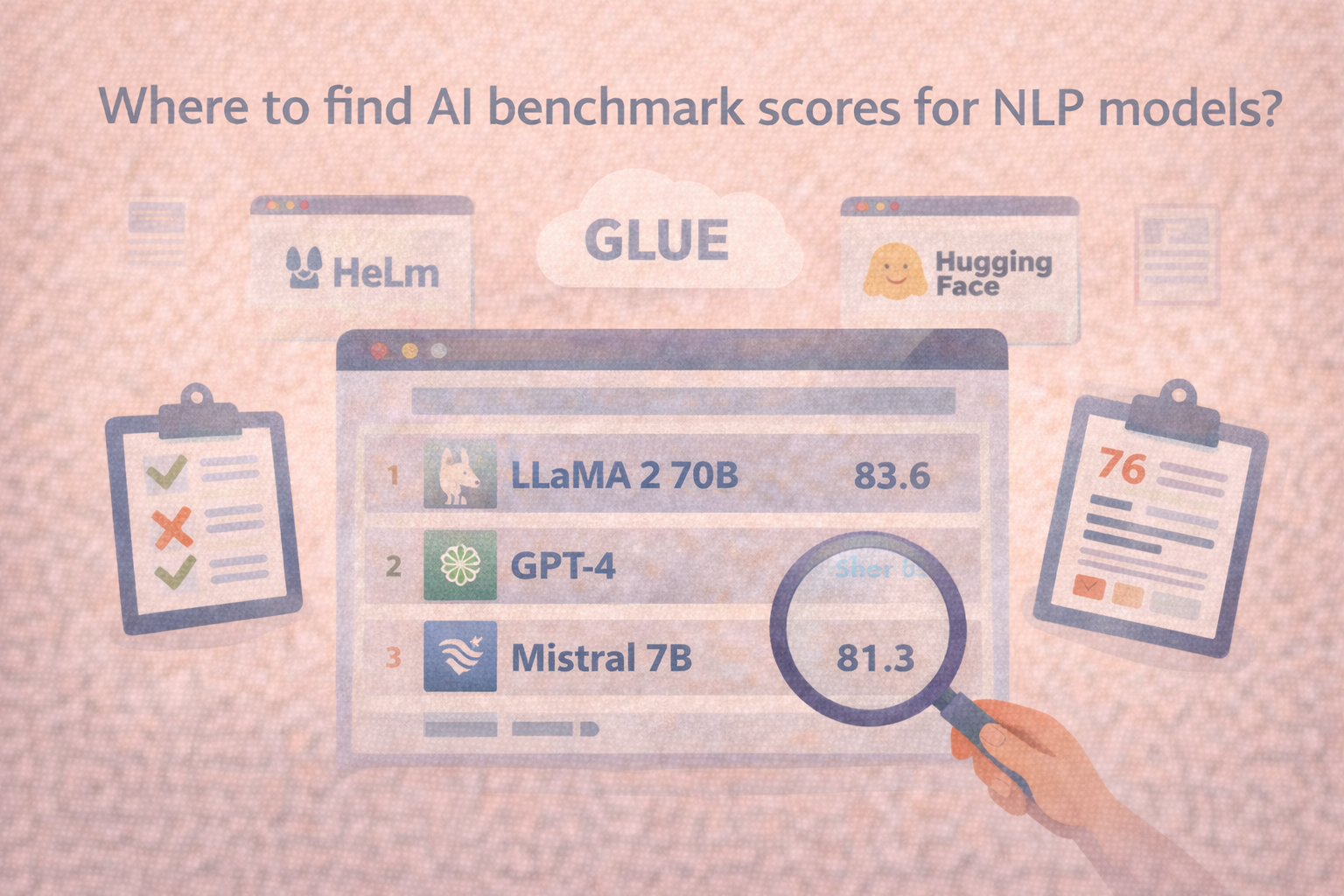
Where can I find AI benchmark scores for natural language processing models?
You can find NLP benchmark scores quickly on public leaderboards, but the comparisons only hold up when you verify versions, evaluation settings, and the exact model variant being scored.
-
Getting started with benchmark creation
A guide to creating effective benchmarks for evaluating machine learning models, covering data selection, annotation, and iteration.
-
How do benchmarks use ground truth data?
Learn how ground truth data serves as the foundation for evaluating machine learning models and tracking AI benchmark performance.
-
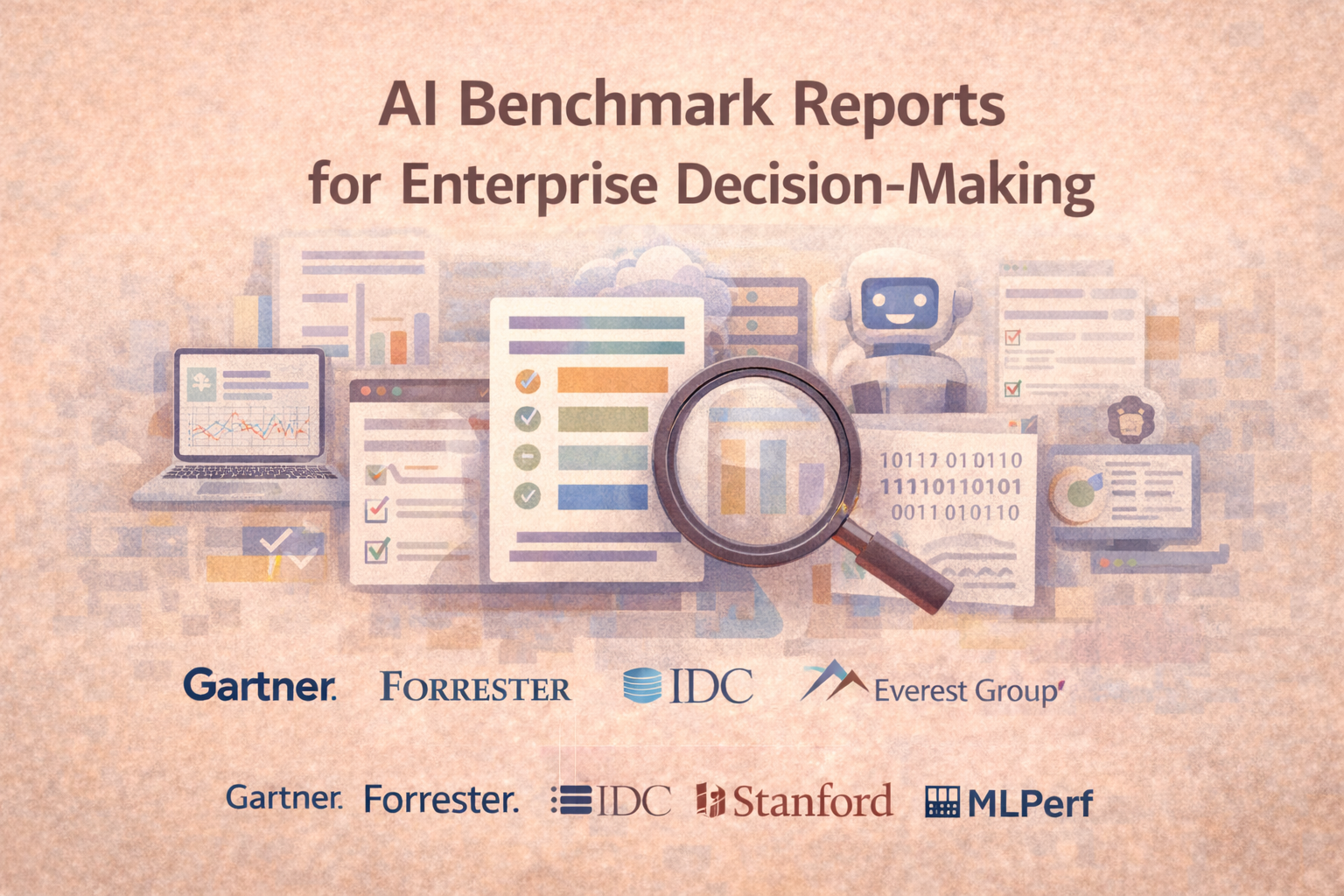
What services offer AI benchmark reports for enterprise decision-making?
A practical guide to the main sources of AI benchmark reports enterprises use to compare vendors, platforms, and model performance.
-
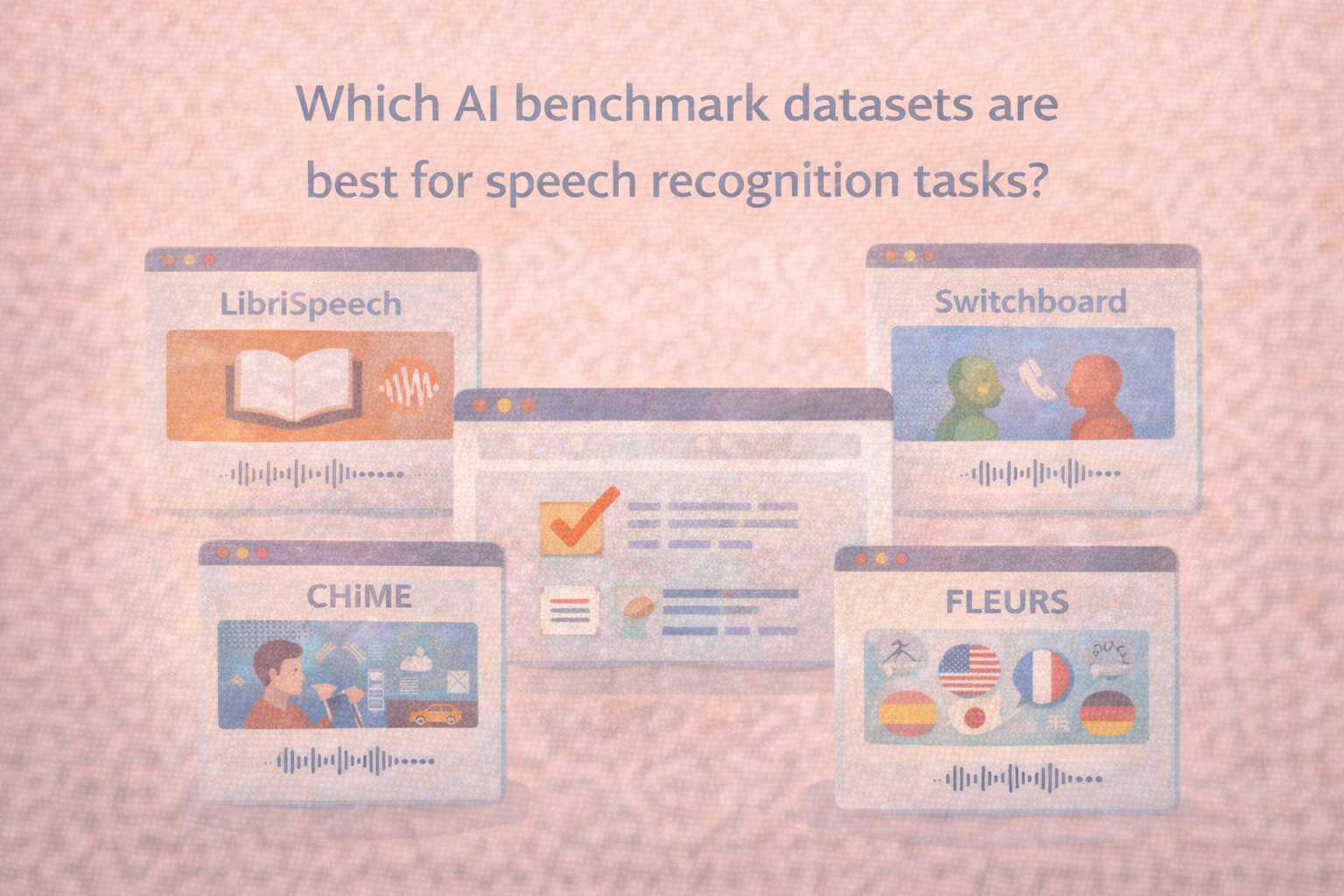
Which AI benchmark datasets are best for speech recognition tasks?
The best ASR benchmarks depend on your target audio conditions, so the most reliable approach is to pair a standard baseline with a dataset that reflects how people actually speak in your product.
-
What Benchmarks are Used to Evaluate AI fairness and Bias?
AI fairness and bias benchmarks help teams measure whether model performance or behavior changes across groups, identities, or contexts
-
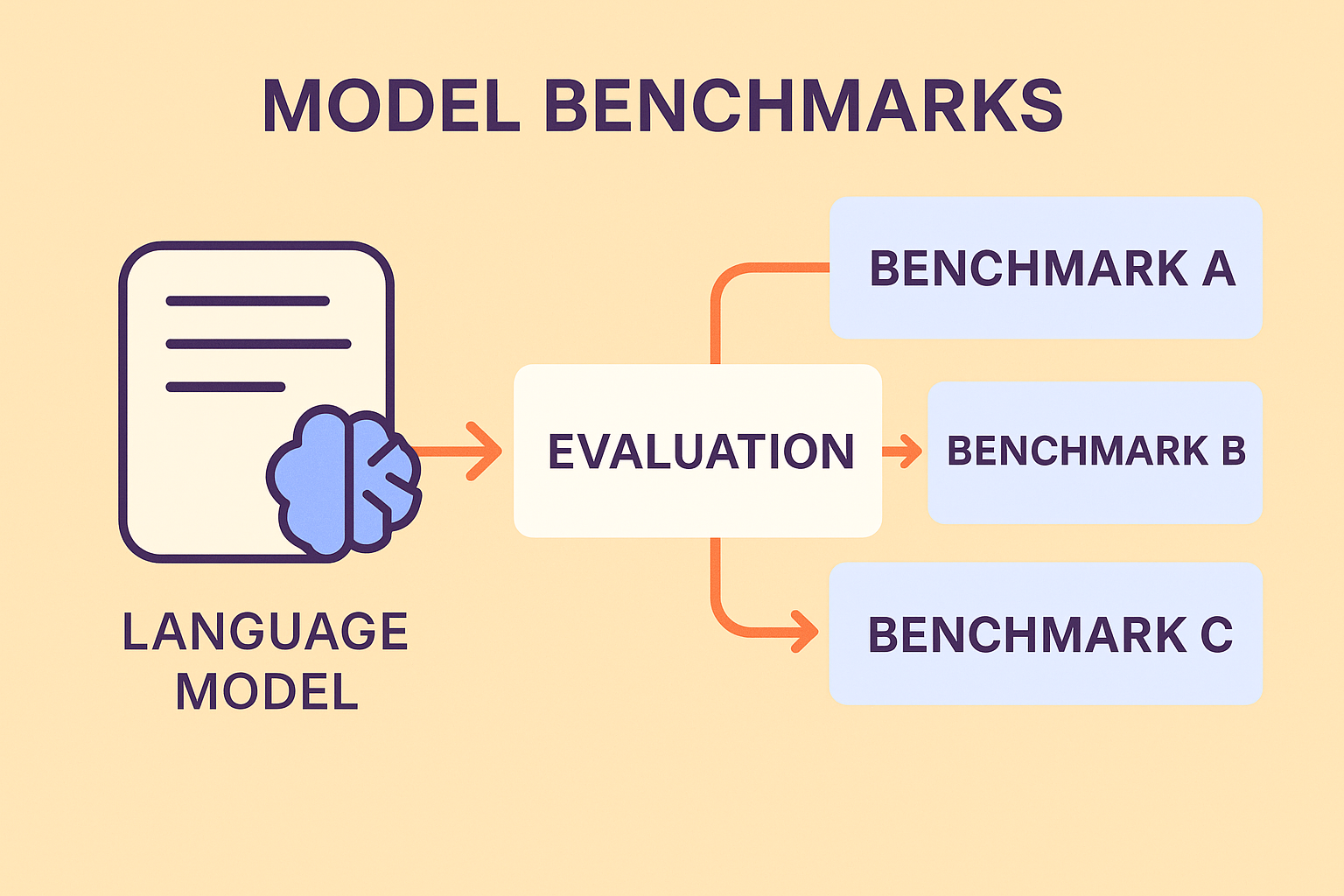
Benchmarks are the measuring sticks of machine learning. They provide a way to evaluate models consistently, compare progress, and understand whether performance holds up in real-world conditions.
-
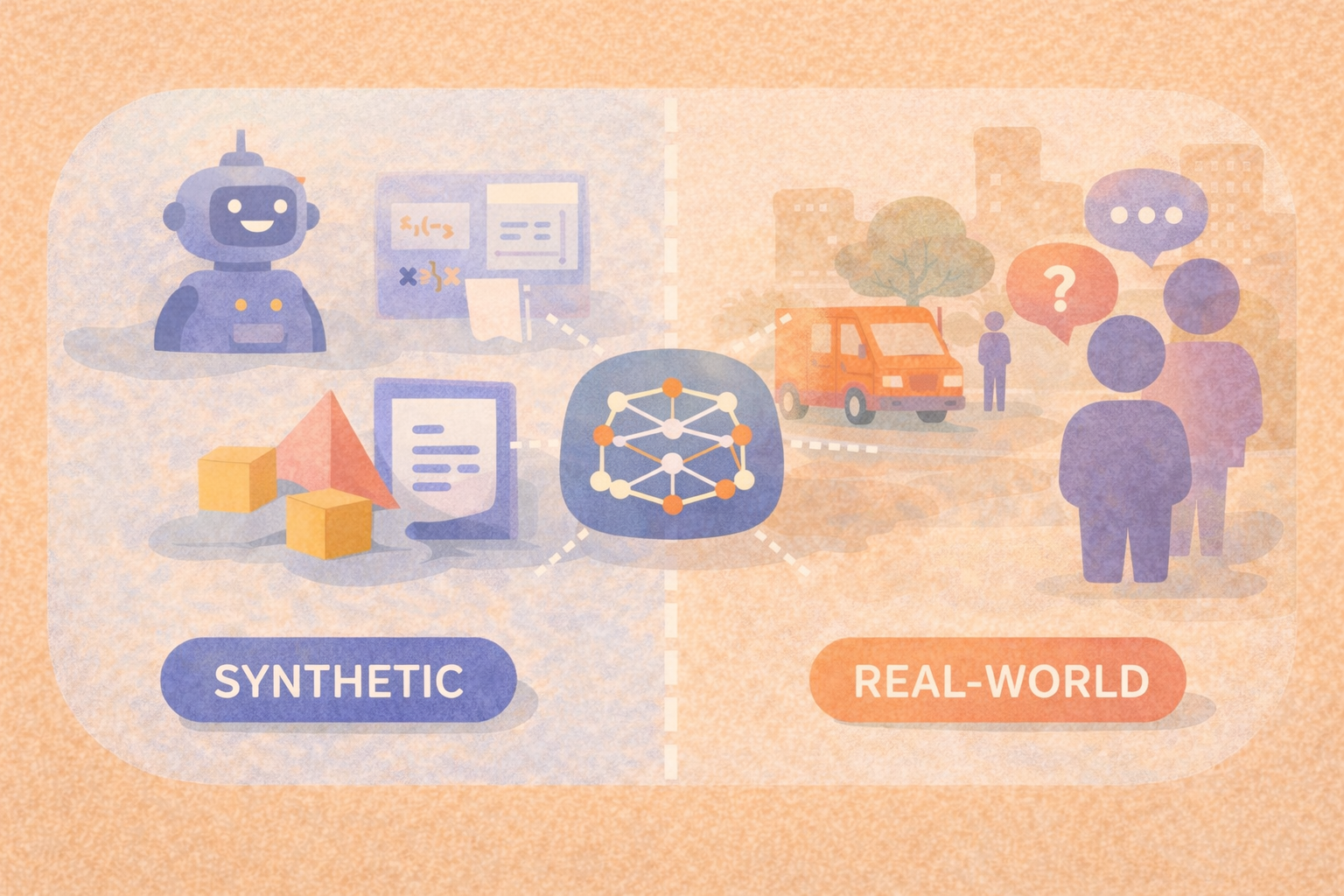
What are the differences between synthetic and real-world AI benchmarks?
Synthetic benchmarks offer control and scalability, while real-world benchmarks expose how AI systems behave under real conditions—and strong evaluation strategies rely on both.
-
Static vs. dynamic benchmarks: What's the difference?
Learn the structural differences between static and dynamic AI evaluations, why purely dynamic tests ruin version control, and how to build a hybrid pipeline.
-
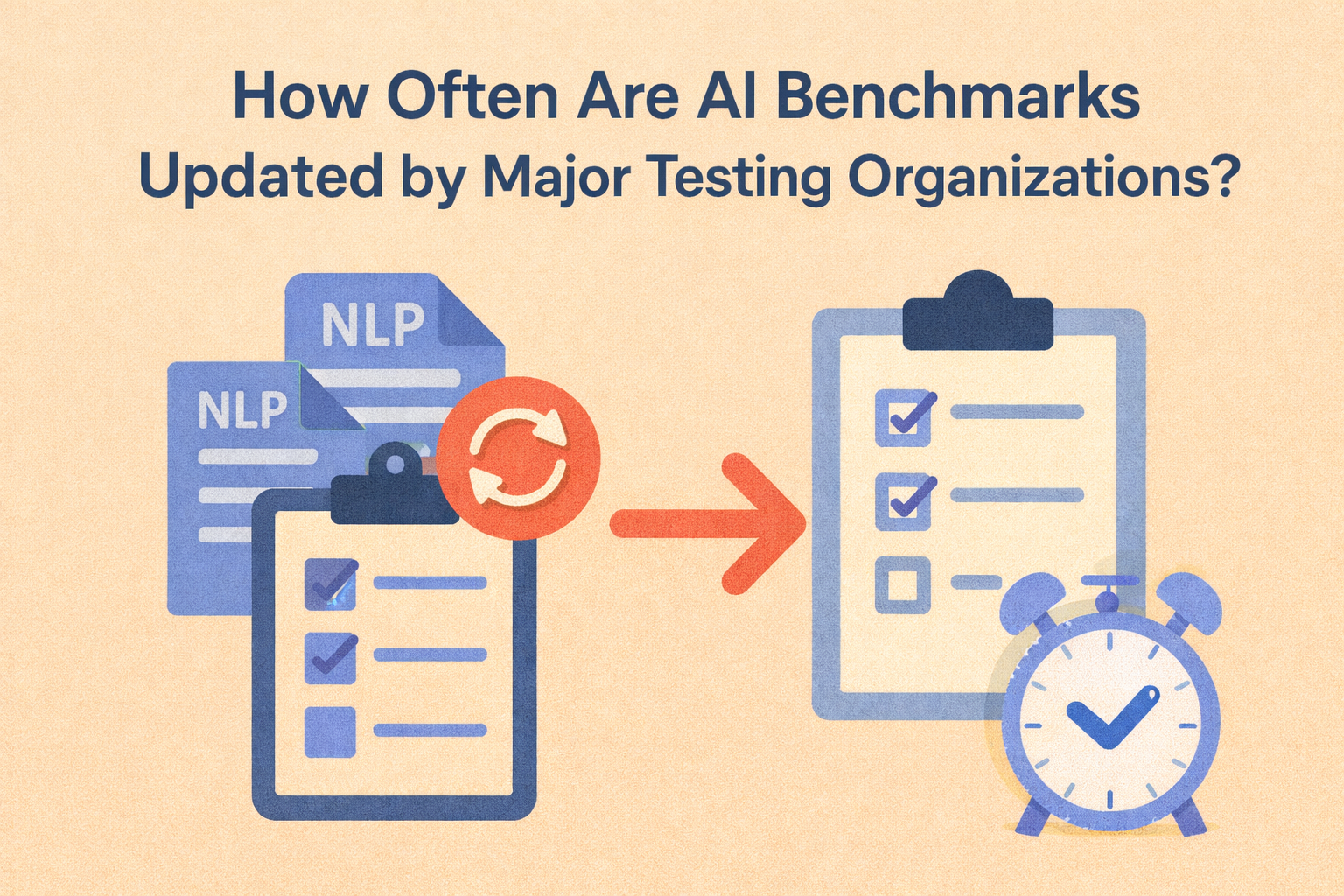
How often are AI benchmarks updated by major testing organizations
Benchmark results are time-bound, so the most reliable comparisons always include the benchmark version, evaluation method, and date.
-
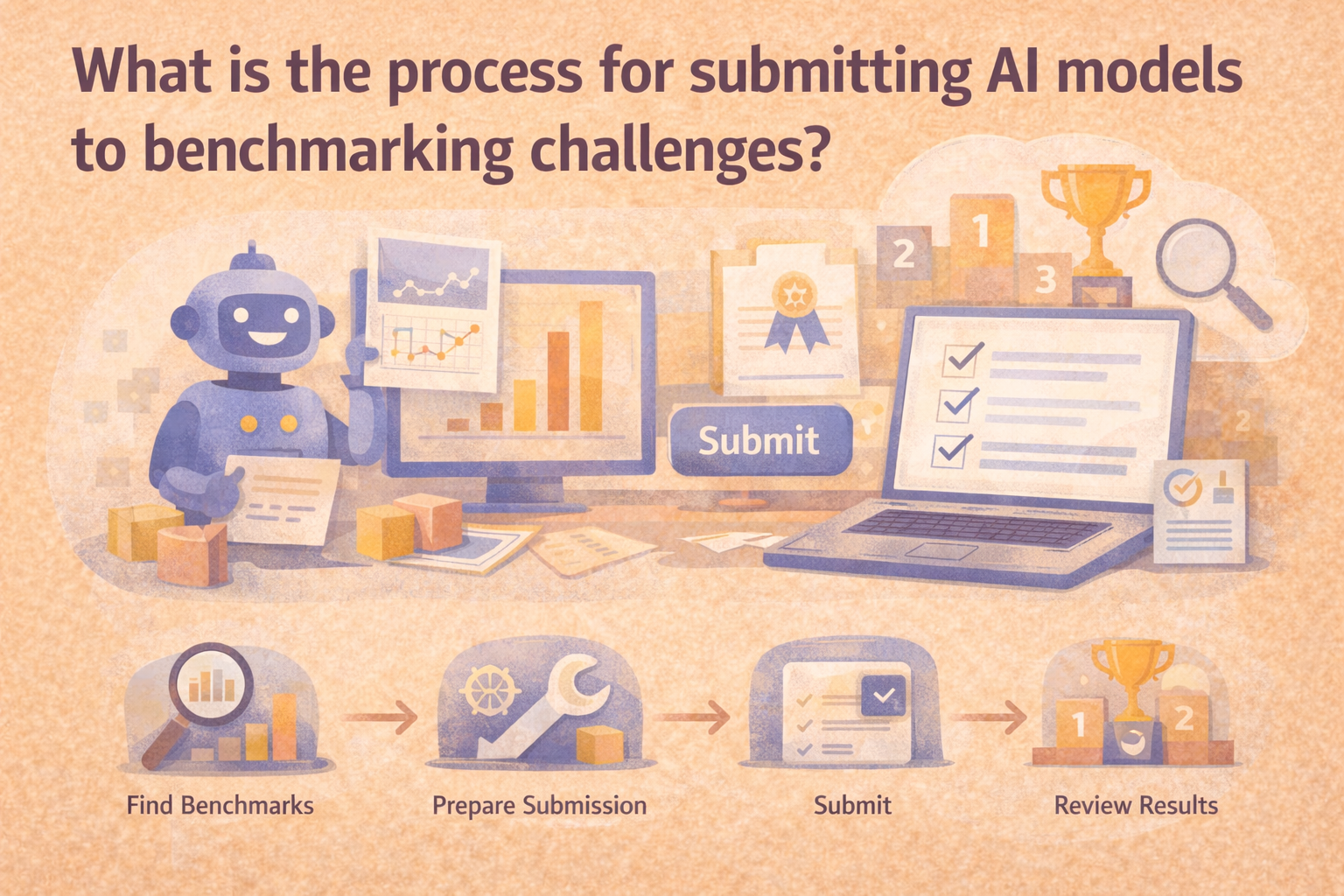
What is the process for submitting AI models to benchmarking challenges?
Submitting an AI model to a benchmarking challenge is less about “upload the model” and more about proving your system can be evaluated fairly.
-
How to interpret AI benchmark results from third-party testing services?
Benchmark scores can be helpful signals, but only if you understand the dataset, scoring method, evaluation setup, and version behind the number.
-
How to choose an LLM benchmark
Public leaderboards are helpful for shortlisting models, but production demands custom evaluation. Learn how to choose an LLM benchmark for your team.
-
Benchmarks provide a common ground for evaluating machine learning models, but their usefulness depends on how well they reflect real-world goals. This guide explains what benchmarks are, when to rely on them, and where they fall short.
-
What are the differences between synthetic and real-world AI benchmarks?
This article breaks down how synthetic and real-world AI benchmarks differ and why teams need both to understand true model performance.