How often are AI benchmarks updated by major testing organizations
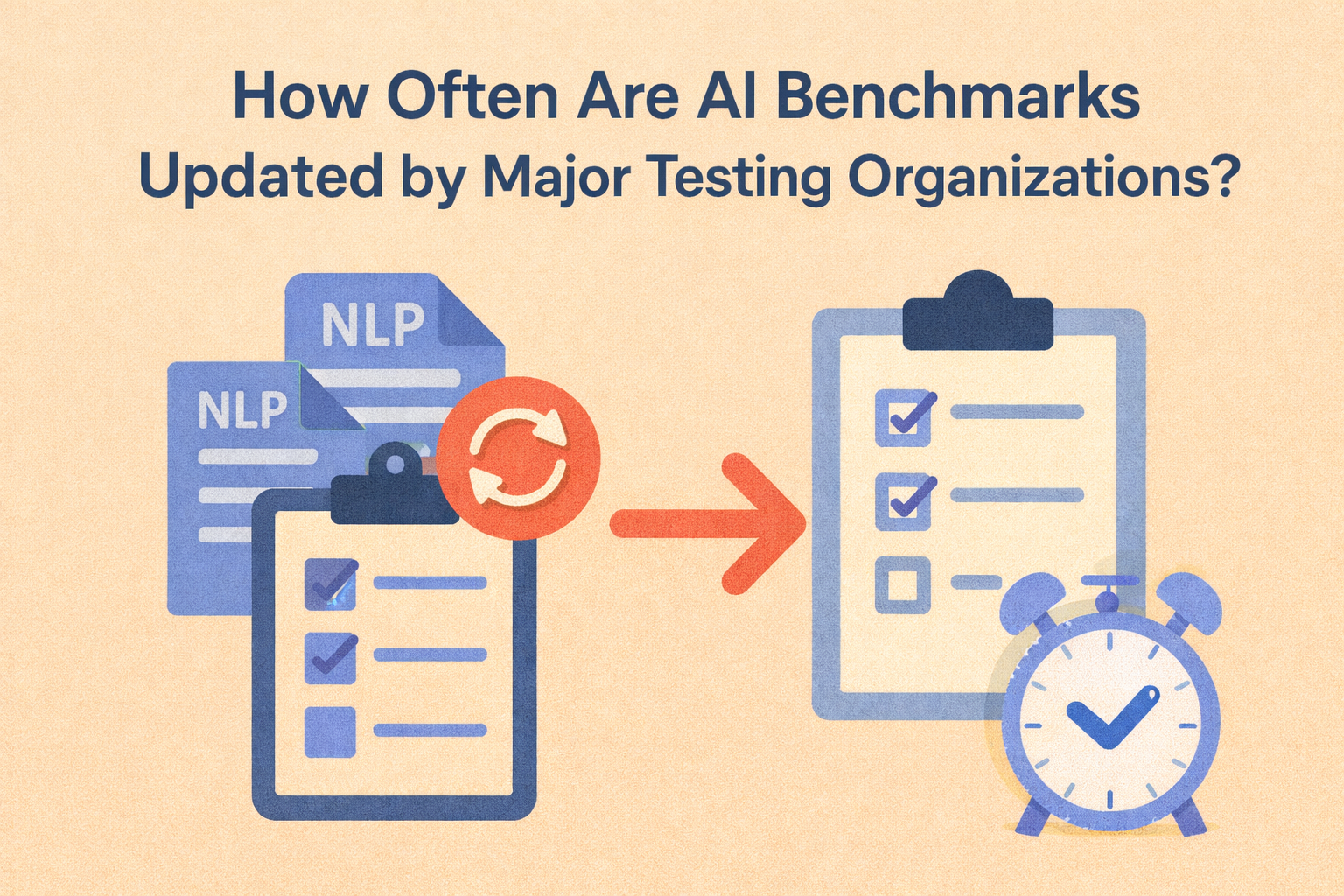
AI benchmarks are updated at very different cadences depending on their purpose. Some remain largely static for years, while others evolve frequently to prevent saturation, fix issues, and reflect new model capabilities. Understanding update frequency is critical for interpreting benchmark results correctly.
More details
Not all benchmarks are designed to change at the same pace. Update frequency is a deliberate design choice, and it shapes how results should be interpreted.
Some benchmarks are intended as stable reference points. These benchmarks change rarely so results remain comparable over long periods. This stability makes it easier to track historical progress, but it also creates a risk of saturation. As models improve, scores cluster near the top, and the benchmark loses its ability to differentiate meaningful improvements.
Other benchmarks are built as living evaluations. These are updated more regularly to stay relevant. Updates may introduce harder tasks, expand coverage, or add new evaluation dimensions like robustness or safety. Living benchmarks trade strict historical comparability for ongoing usefulness.
There are several common reasons benchmarks get updated. One is dataset saturation, where most models achieve near-perfect scores. Another is data leakage, where training data unintentionally overlaps with test sets. Benchmarks may also be updated to remove artifacts, rebalance categories, or correct annotation errors discovered over time.
Update frequency also reflects how fast a field is moving. Areas like large language models and generative AI tend to see faster benchmark evolution because model capabilities advance quickly. In contrast, some vision or speech benchmarks evolve more slowly once tasks are well understood.
For readers and practitioners, the key takeaway is that benchmark results are time-bound. A score without a date or version number is incomplete. Two results that look comparable may come from different benchmark versions with different difficulty levels or evaluation rules.
The same principles apply internally. Teams that maintain their own benchmarks need refresh strategies. Production data changes, user behavior shifts, and policies evolve. Internal evaluation sets should be versioned and periodically updated while preserving enough continuity to track trends over time.
Benchmarks don’t lose value when they change. They lose value when updates are ignored. Treating benchmarks as living artifacts rather than fixed truths leads to more accurate comparisons and better decisions.
Frequently Asked Questions
Frequently Asked Questions
Do benchmark updates invalidate older results?
Not necessarily, but they can make direct comparisons misleading without version context.
How often do benchmarks usually change?
It varies widely, from rarely updated static datasets to frequently refreshed evaluations.
Why do some benchmarks stay fixed for years?
Stability helps with long-term comparison, even if differentiation decreases over time.
How should benchmark results be cited responsibly?
Always include the benchmark name, version, evaluation method, and date.
Related Content
-
Do you need a custom benchmark?
Learn why public AI leaderboards constantly fail enterprise deployments and how to scale a continuous evaluation maturity framework from proof-of-concept to production without wasting endless engineering hours.
-
Domain-specific vs. general benchmarks: What's the difference?
Learn the difference between domain-specific and general benchmarks. Understand how to measure artificial intelligence model performance effectively for your specific use case.
-
Where can I find AI benchmark scores for natural language processing models?
You can find NLP benchmark scores quickly on public leaderboards, but the comparisons only hold up when you verify versions, evaluation settings, and the exact model variant being scored.
-
Getting started with benchmark creation
A guide to creating effective benchmarks for evaluating machine learning models, covering data selection, annotation, and iteration.
-
How do benchmarks use ground truth data?
Learn how ground truth data serves as the foundation for evaluating machine learning models and tracking AI benchmark performance.
-
What are the most reliable AI benchmarks used in industry?
The core language, vision, speech, and system benchmarks that teams still rely on to compare models.
-
What services offer AI benchmark reports for enterprise decision-making?
A practical guide to the main sources of AI benchmark reports enterprises use to compare vendors, platforms, and model performance.
-
Which AI benchmark datasets are best for speech recognition tasks?
The best ASR benchmarks depend on your target audio conditions, so the most reliable approach is to pair a standard baseline with a dataset that reflects how people actually speak in your product.
-
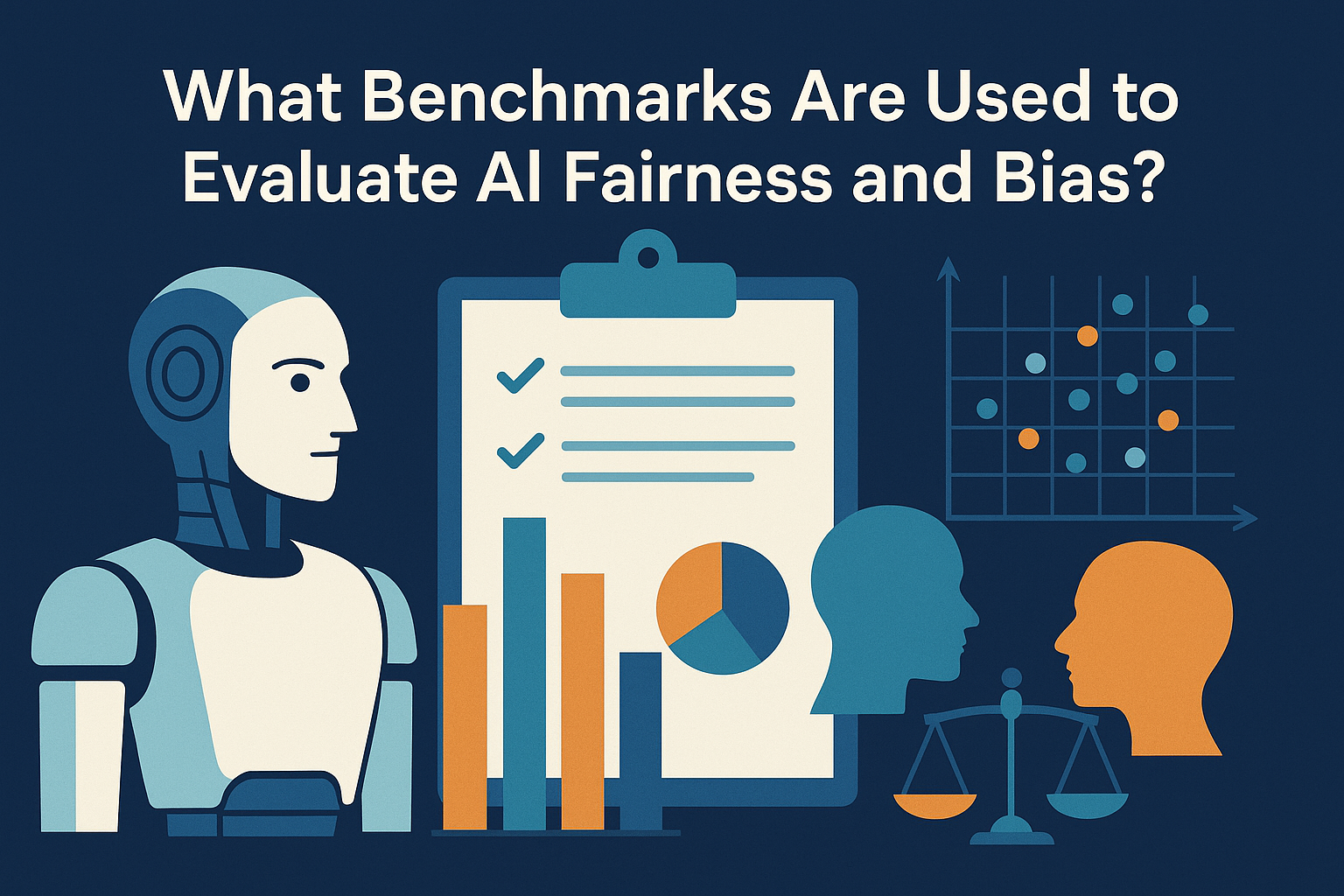
What Benchmarks are Used to Evaluate AI fairness and Bias?
AI fairness and bias benchmarks help teams measure whether model performance or behavior changes across groups, identities, or contexts
-
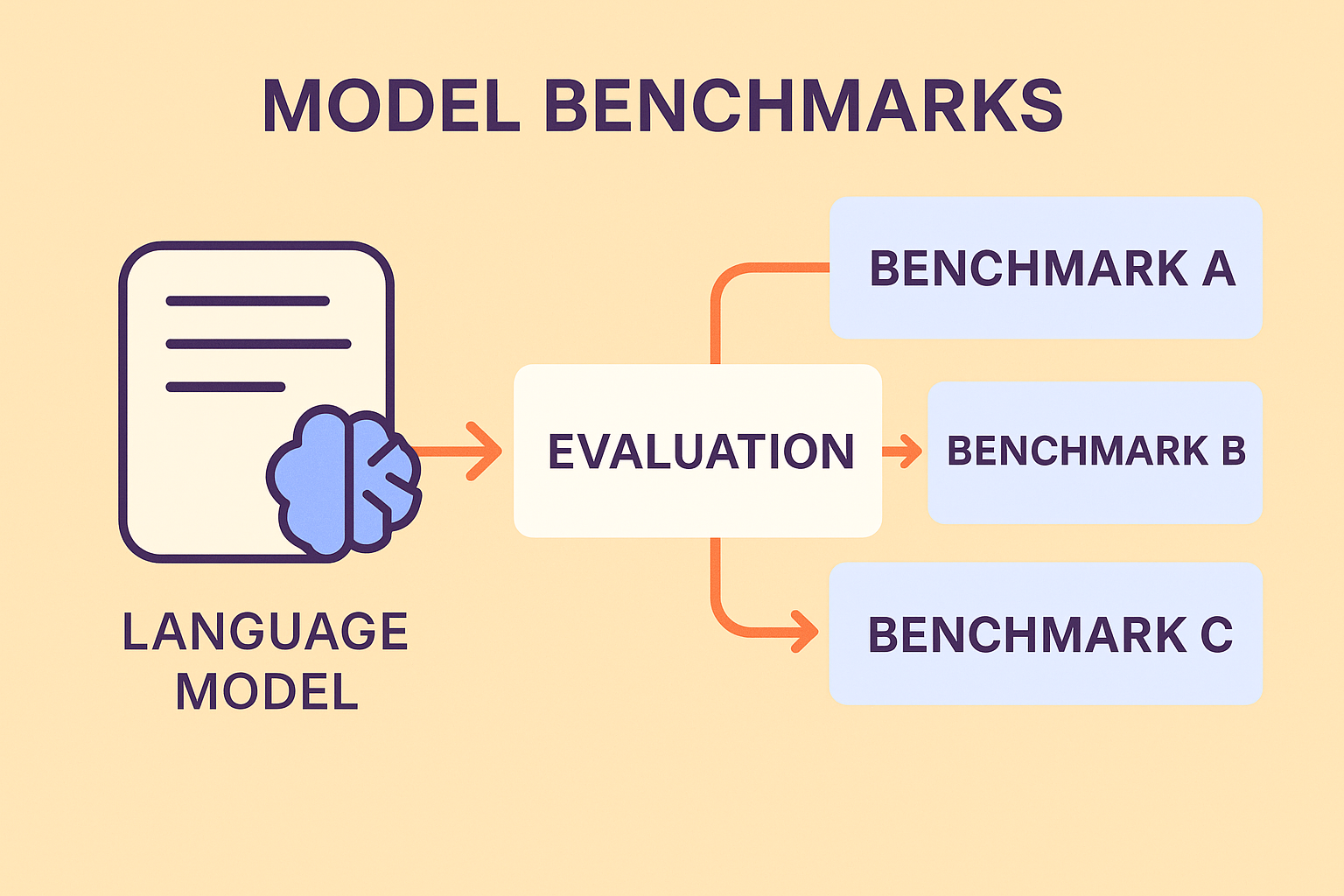
Benchmarks are the measuring sticks of machine learning. They provide a way to evaluate models consistently, compare progress, and understand whether performance holds up in real-world conditions.
-

What are the differences between synthetic and real-world AI benchmarks?
Synthetic benchmarks offer control and scalability, while real-world benchmarks expose how AI systems behave under real conditions—and strong evaluation strategies rely on both.
-
Static vs. dynamic benchmarks: What's the difference?
Learn the structural differences between static and dynamic AI evaluations, why purely dynamic tests ruin version control, and how to build a hybrid pipeline.
-
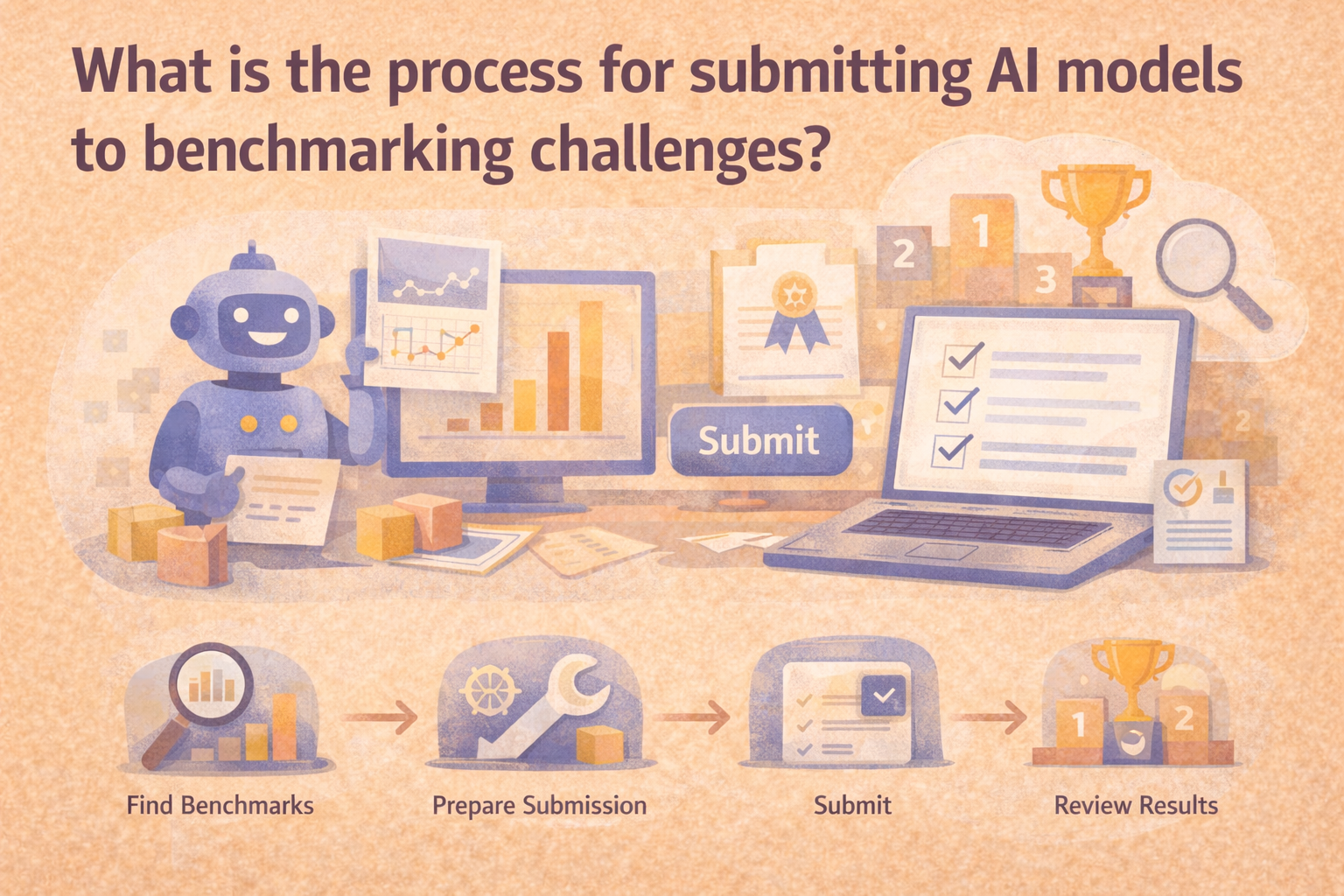
What is the process for submitting AI models to benchmarking challenges?
Submitting an AI model to a benchmarking challenge is less about “upload the model” and more about proving your system can be evaluated fairly.
-
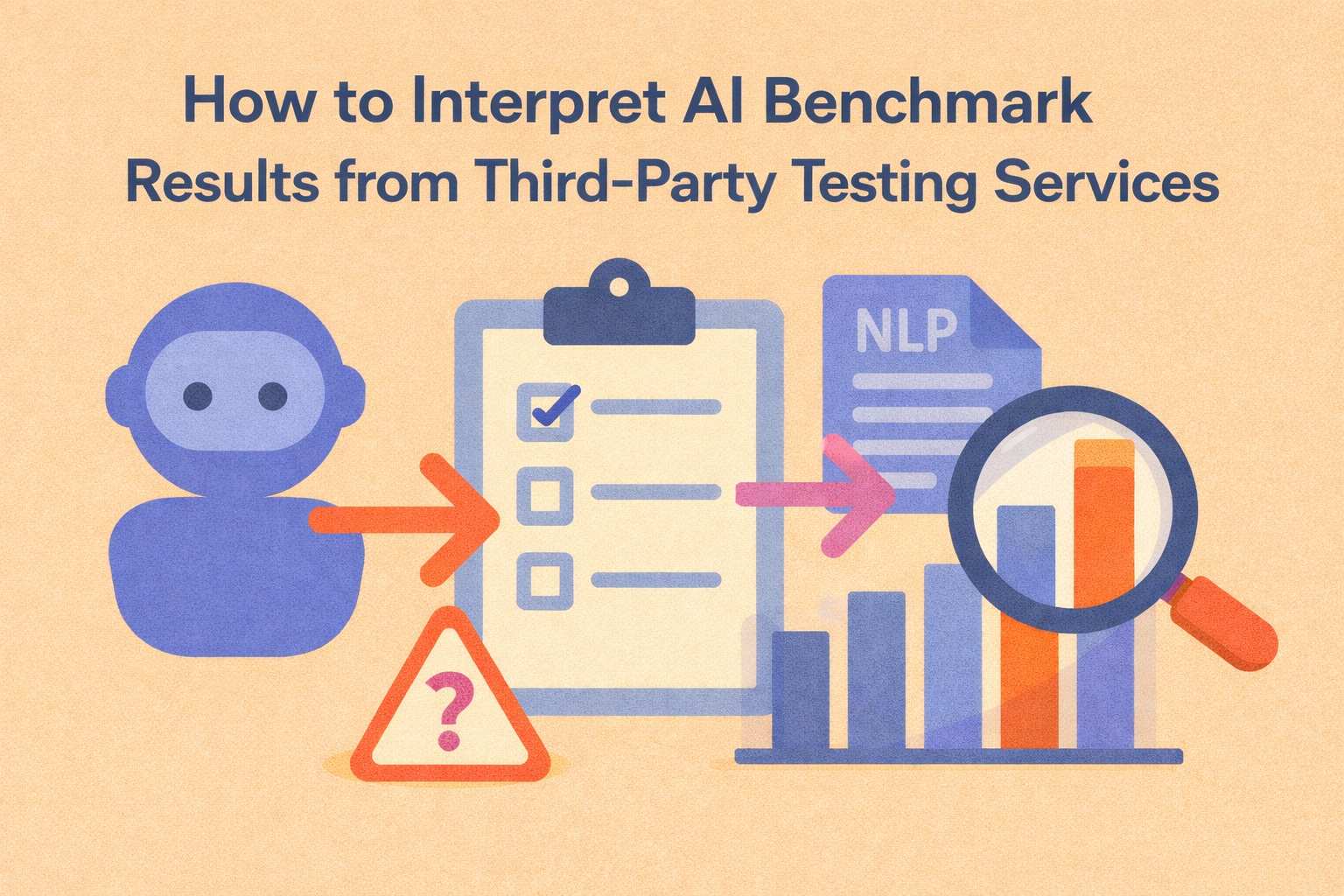
How to interpret AI benchmark results from third-party testing services?
Benchmark scores can be helpful signals, but only if you understand the dataset, scoring method, evaluation setup, and version behind the number.
-
How to choose an LLM benchmark
Public leaderboards are helpful for shortlisting models, but production demands custom evaluation. Learn how to choose an LLM benchmark for your team.
-
Benchmarks provide a common ground for evaluating machine learning models, but their usefulness depends on how well they reflect real-world goals. This guide explains what benchmarks are, when to rely on them, and where they fall short.
-
What are the differences between synthetic and real-world AI benchmarks?
This article breaks down how synthetic and real-world AI benchmarks differ and why teams need both to understand true model performance.