What is the process for submitting AI models to benchmarking challenges?
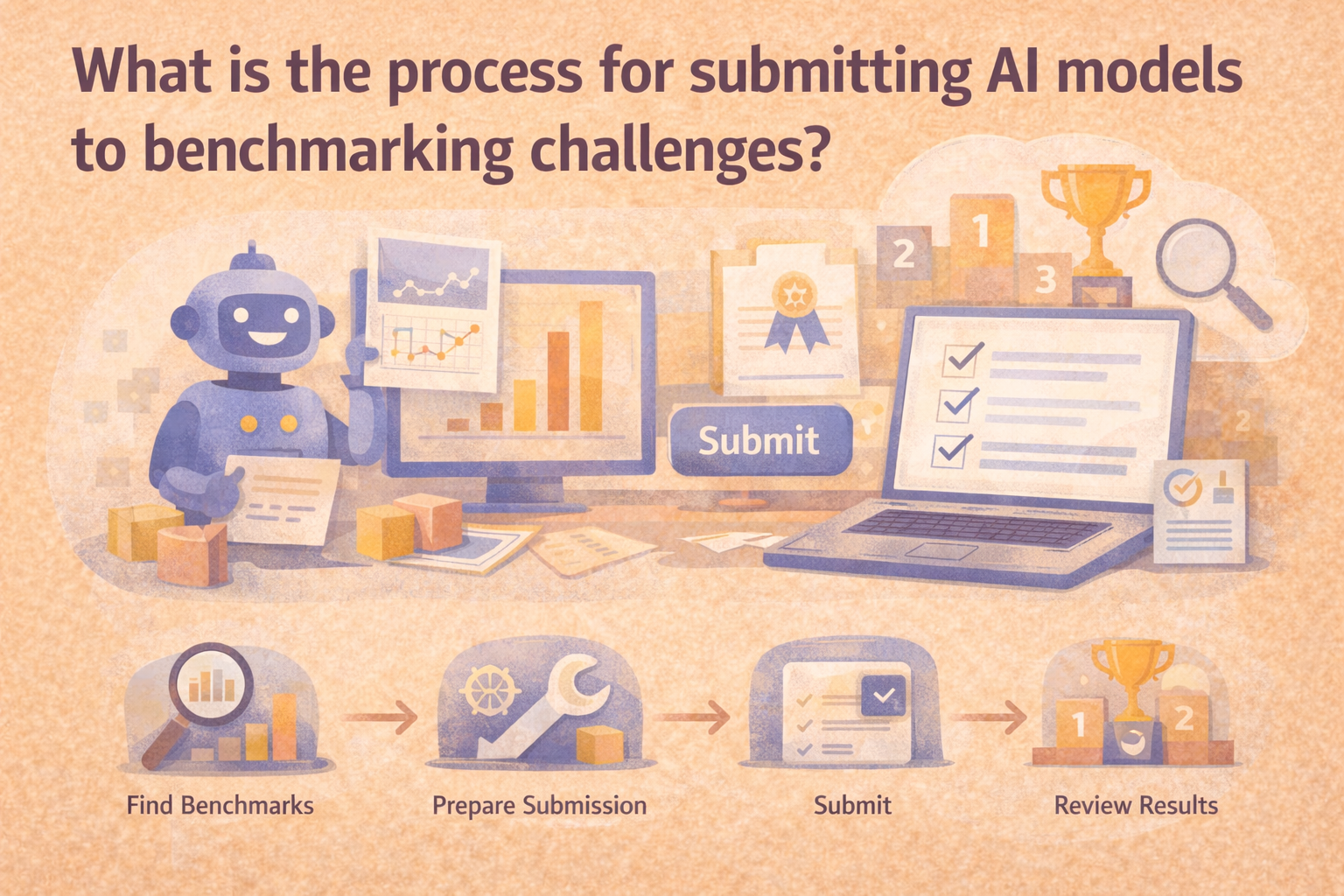
Submitting an AI model to a benchmarking challenge is less about “upload the model” and more about proving your system can be evaluated fairly. In most challenges, you pick a track, follow strict rules about what’s allowed, package your system in a required format (predictions file, container, or hosted endpoint), and submit results plus metadata so the organizers can score and verify your run.
Submitting AI models in practice
Start by choosing the right benchmark and track, because the rules define what the evaluation is actually measuring. Many challenges split submissions into tracks such as open versus closed (whether you can use external data or tools), or into domain-specific tracks with different constraints. If your system relies on retrieval, proprietary data, or third-party APIs, you need a track that explicitly permits those. This step matters because the fastest way to get disqualified is to build a great system that violates the track requirements.
Next, read the evaluation requirements like you’re integrating an API. Benchmarks typically require very specific input and output formats, and those details can shape your implementation. Some expect you to submit a predictions file with exact IDs and a strict schema. Others require a container or code package so the organizers can run your model in a controlled environment. Some evaluate by calling your hosted endpoint and measuring not just quality, but also response behavior under load. The “submission method” is not an afterthought—it determines what you need to ship and what can go wrong.
Once you know the submission style, you prepare your model or system so it’s reproducible and compliant. That usually means locking versions, capturing the exact configuration used (prompt template, decoding settings, retrieval parameters, or checkpoint hash), and keeping your data handling clean. Benchmarks often include hidden test sets, private evaluation splits, or rules meant to prevent leakage. Treat those constraints as part of the challenge: you’re demonstrating performance under conditions you can’t optimize against directly.
Then comes the part that trips up most first-time submissions: generating outputs that match the benchmark’s requirements perfectly. Even a strong model can fail if IDs don’t match, outputs aren’t normalized the expected way, or the file format is slightly off. A good habit is to validate your submission before you upload it—check the schema, confirm counts and IDs, and spot-check a handful of examples end to end. This is the difference between meaningful feedback and a wasted submission slot.
After you submit, you’ll typically get a score (sometimes multiple metrics) and a status. If the submission fails validation, fix formatting and compliance first. don’t tune the model until the pipeline is correct. Once your pipeline is stable, iteration becomes straightforward: make a change, run inference the same way, submit, and compare results. If there’s a public leaderboard plus a private final evaluation, avoid chasing tiny public score gains that might not hold up on the hidden set; aim for improvements that make sense across error categories.
Frequently Asked Questions
Frequently Asked Questions
Do I submit the model itself or just outputs?
It depends on the challenge. Some accept a predictions file, others require a container or code, and some evaluate a hosted endpoint.
What’s the most common reason submissions fail?
Formatting and compliance issues: wrong IDs, invalid schema, missing required metadata, or violating track constraints.
Can I use retrieval or external tools in my submission?
Only if the rules allow it. Many benchmarks have separate “open” tracks for systems that use external data or tools.
Related Content
-
Do you need a custom benchmark?
Learn why public AI leaderboards constantly fail enterprise deployments and how to scale a continuous evaluation maturity framework from proof-of-concept to production without wasting endless engineering hours.
-
Domain-specific vs. general benchmarks: What's the difference?
Learn the difference between domain-specific and general benchmarks. Understand how to measure artificial intelligence model performance effectively for your specific use case.
-

Where can I find AI benchmark scores for natural language processing models?
You can find NLP benchmark scores quickly on public leaderboards, but the comparisons only hold up when you verify versions, evaluation settings, and the exact model variant being scored.
-
Getting started with benchmark creation
A guide to creating effective benchmarks for evaluating machine learning models, covering data selection, annotation, and iteration.
-
How do benchmarks use ground truth data?
Learn how ground truth data serves as the foundation for evaluating machine learning models and tracking AI benchmark performance.
-
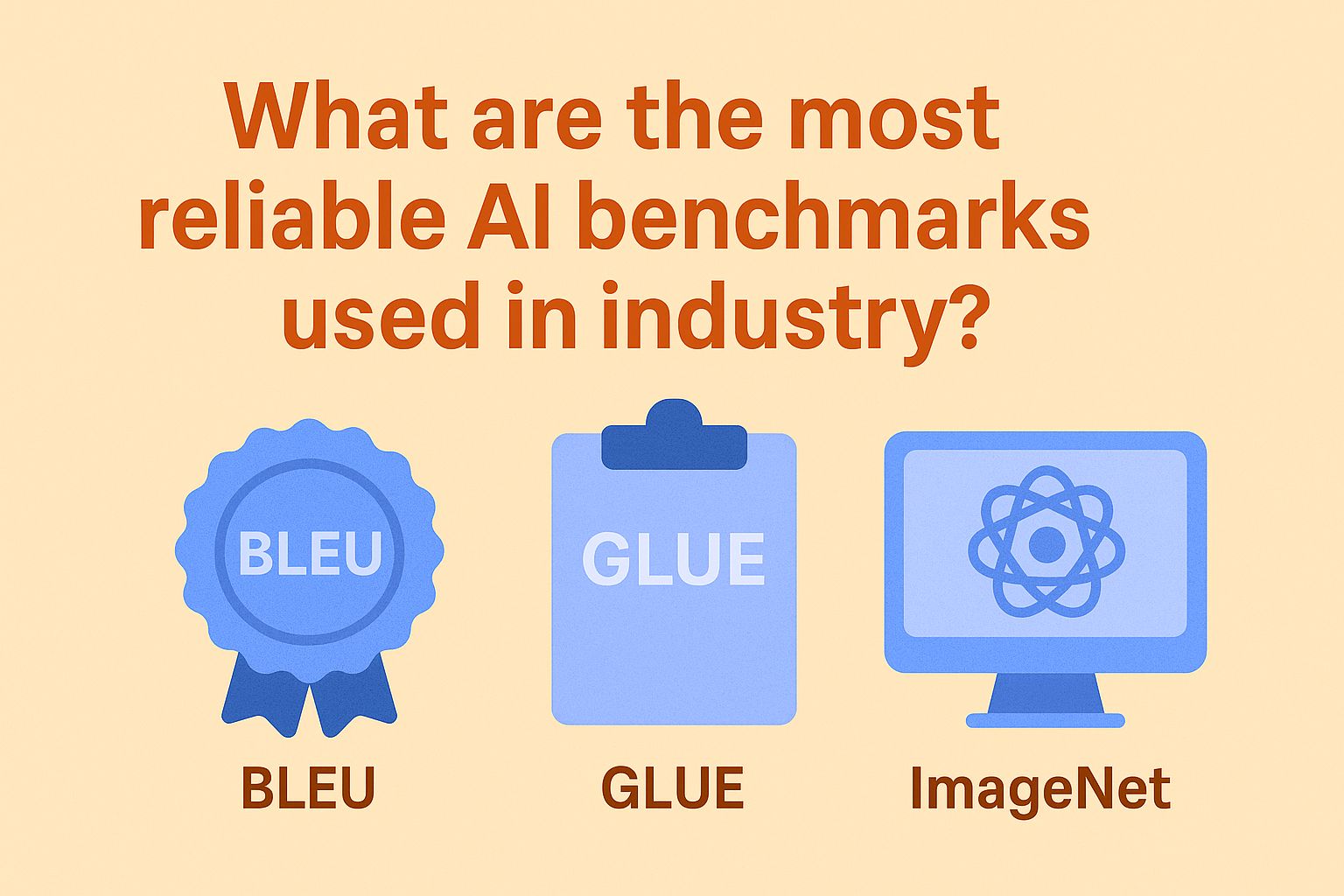
What are the most reliable AI benchmarks used in industry?
The core language, vision, speech, and system benchmarks that teams still rely on to compare models.
-
What services offer AI benchmark reports for enterprise decision-making?
A practical guide to the main sources of AI benchmark reports enterprises use to compare vendors, platforms, and model performance.
-
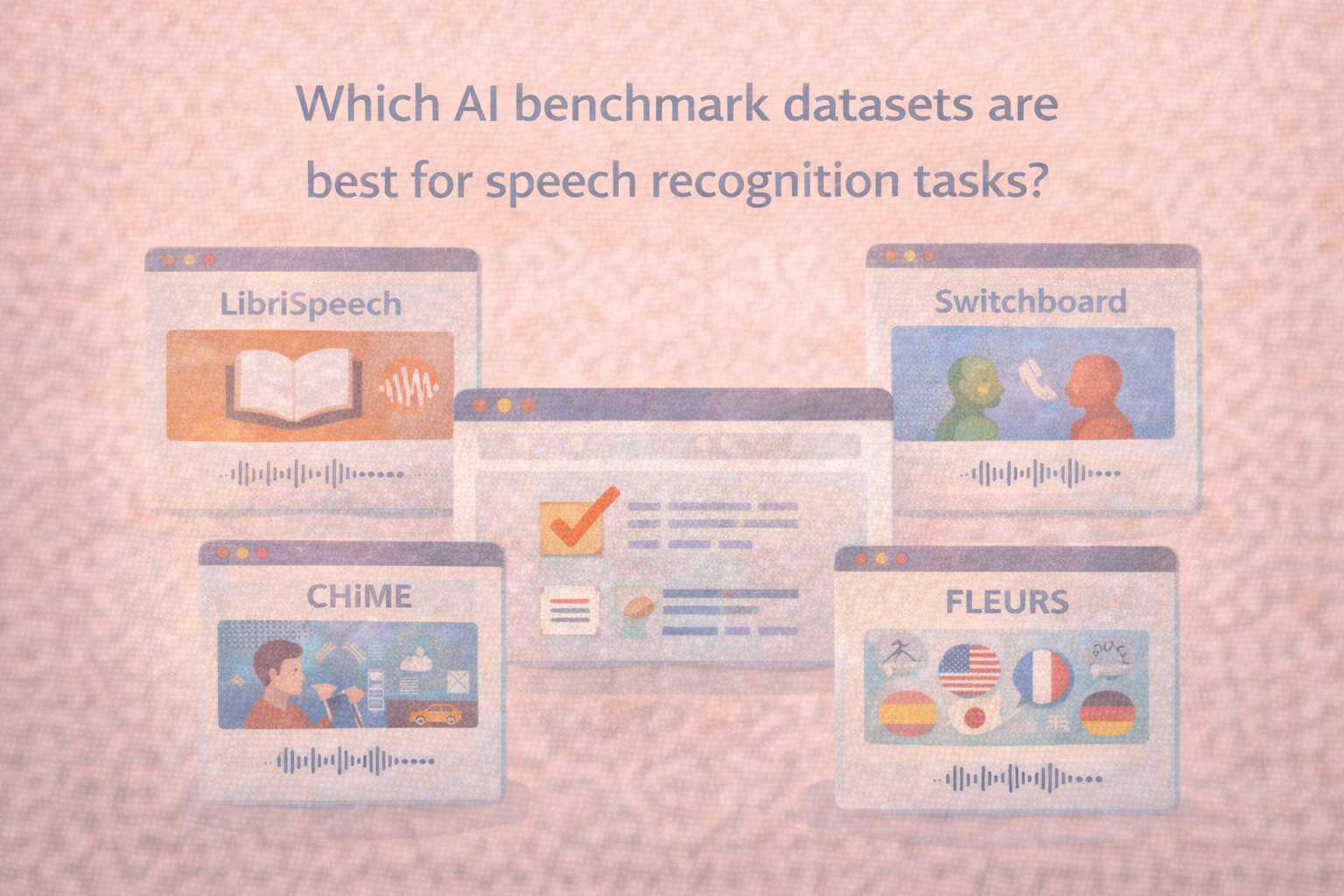
Which AI benchmark datasets are best for speech recognition tasks?
The best ASR benchmarks depend on your target audio conditions, so the most reliable approach is to pair a standard baseline with a dataset that reflects how people actually speak in your product.
-
What Benchmarks are Used to Evaluate AI fairness and Bias?
AI fairness and bias benchmarks help teams measure whether model performance or behavior changes across groups, identities, or contexts
-
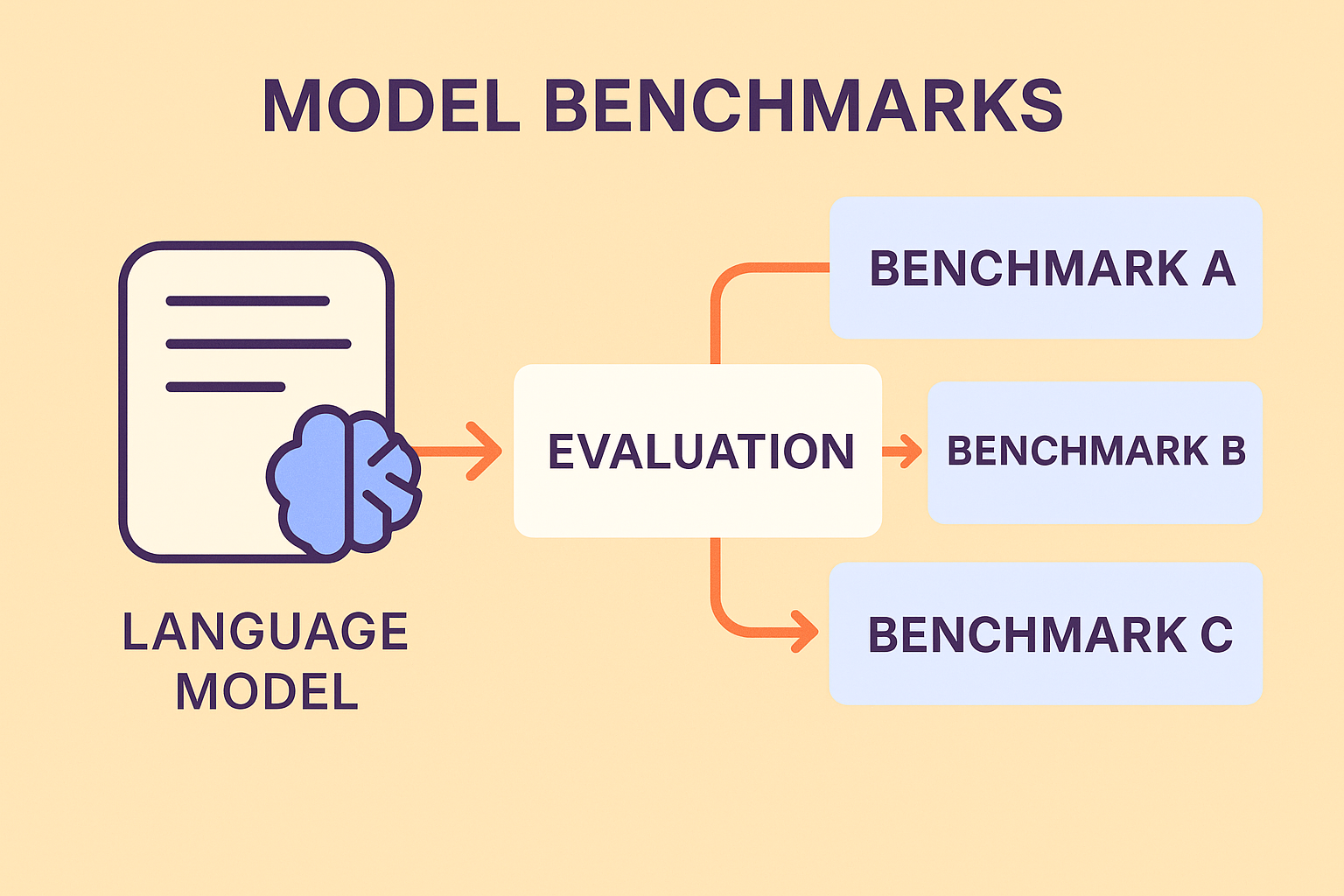
Benchmarks are the measuring sticks of machine learning. They provide a way to evaluate models consistently, compare progress, and understand whether performance holds up in real-world conditions.
-

What are the differences between synthetic and real-world AI benchmarks?
Synthetic benchmarks offer control and scalability, while real-world benchmarks expose how AI systems behave under real conditions—and strong evaluation strategies rely on both.
-
Static vs. dynamic benchmarks: What's the difference?
Learn the structural differences between static and dynamic AI evaluations, why purely dynamic tests ruin version control, and how to build a hybrid pipeline.
-
How often are AI benchmarks updated by major testing organizations
Benchmark results are time-bound, so the most reliable comparisons always include the benchmark version, evaluation method, and date.
-
How to interpret AI benchmark results from third-party testing services?
Benchmark scores can be helpful signals, but only if you understand the dataset, scoring method, evaluation setup, and version behind the number.
-
How to choose an LLM benchmark
Public leaderboards are helpful for shortlisting models, but production demands custom evaluation. Learn how to choose an LLM benchmark for your team.
-
Benchmarks provide a common ground for evaluating machine learning models, but their usefulness depends on how well they reflect real-world goals. This guide explains what benchmarks are, when to rely on them, and where they fall short.
-
What are the differences between synthetic and real-world AI benchmarks?
This article breaks down how synthetic and real-world AI benchmarks differ and why teams need both to understand true model performance.