What services offer AI benchmark reports for enterprise decision-making?
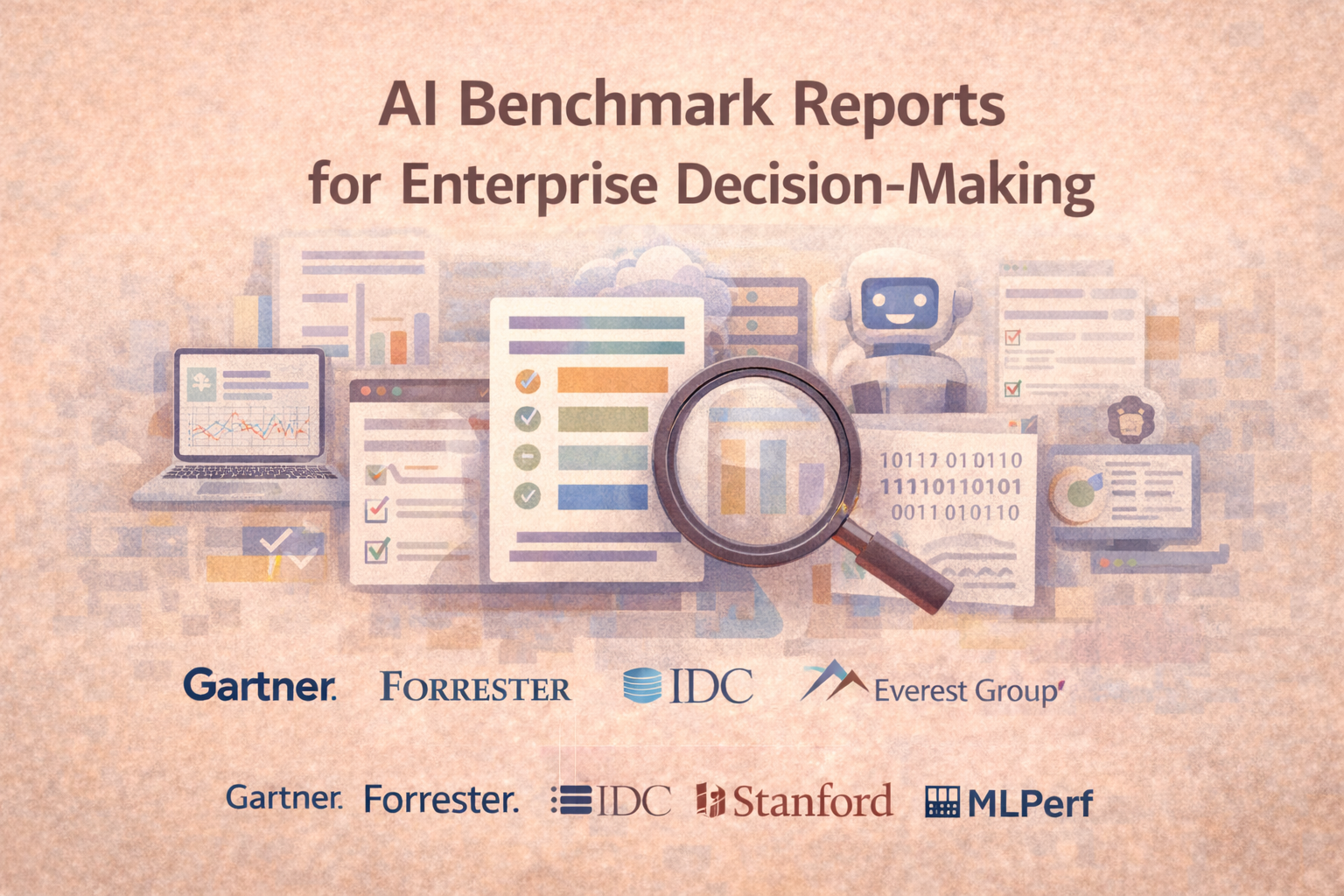
Enterprise AI decisions often come down to tradeoffs: performance, cost, risk, governance, and time to deploy. “Benchmark reports” can help, but they come in different forms—some are analyst-led vendor evaluations, others are standardized performance benchmarks, and others focus on model behavior and safety.
Below are the most common services enterprises use, what they’re best for, and how to choose the right report for the decision you’re making.
1) Analyst firms that publish vendor comparison reports
These reports are useful when the decision is “which vendor or platform should we shortlist?” They typically combine product capability scoring with market context, customer references, and a defined methodology.
Gartner (Magic Quadrant / Critical Capabilities and related research)
Gartner’s Magic Quadrant and companion research are widely used for competitive positioning, vendor shortlists, and stakeholder alignment across procurement, IT, and security teams. You can review the methodology here: Magic Quadrant Research Methodology.
Forrester (Wave reports)
Forrester Wave reports evaluate categories by scoring vendors against a defined set of criteria, then publishing results and narrative analysis. Methodology overview: The Forrester Wave™ Methodology.
IDC (IDC MarketScape)
IDC MarketScape reports provide vendor assessments using IDC’s evaluation model and are often used when buyers want structured comparisons and positioning for enterprise adoption. Overview: IDC MarketScape.
Everest Group (PEAK Matrix)
Everest Group’s PEAK Matrix is frequently used on the services side (AI services, GenAI services, data/AI service providers) and can be helpful when the decision involves implementation partners or managed services. Overview: PEAK Matrix® (Everest Group).
2) Standards bodies that publish performance benchmark results
These sources are best when the decision is infrastructure-focused: hardware, cloud instances, training speed, inference throughput, and systems performance.
MLCommons (MLPerf benchmarks)
MLPerf is an industry benchmark suite for measuring machine learning performance across training and inference, with results published by MLCommons. Enterprises use it to compare system-level performance in a more standardized way than vendor claims. Start here: MLPerf Training Benchmark and MLPerf Inference: Datacenter.
3) Research benchmarks and public leaderboards for model behavior
These sources are helpful when the decision is model-focused: “Which model is stronger for my use case?” They tend to emphasize transparency, scenario coverage, and evaluation dimensions beyond speed.
Stanford CRFM (HELM)
HELM (Holistic Evaluation of Language Models) is a public, living benchmark intended to evaluate language models across many scenarios and metrics, and it’s often referenced when teams want a broad view of model behavior. Overview: Holistic Evaluation of Language Models (HELM). If you want the framework itself: stanford-crfm/helm (GitHub).
4) Product-based evaluation reporting for enterprise teams (internal benchmark reports)
External benchmark reports help you narrow options and align stakeholders, but enterprise teams usually still need internal evaluation reporting to make decisions with their own data, prompts, and risk constraints. This is where evaluation tooling inside platforms can function like “benchmark reports,” producing repeatable results, error analysis, and distribution summaries that support release readiness and iteration.
Label Studio Enterprise (Prompts/Evals) includes evaluation-style reporting for prompt and LLM evaluation runs. In the UI, evaluation runs show status while running (for example, “Evaluating…”) and then switch to an overall results view once complete (run status + overall evaluation results).
It also includes an error analysis report pattern designed to help teams trace failures back to concrete examples. The implementation supports an index-based error report for a chosen evaluation schema and can optionally include prediction metadata to help reproduce issues inside Label Studio tasks (index-based error report with optional prediction metadata).
For distribution-level reporting, there is also a counts-only indicator for class distribution summaries (“Class Counts Report”), registered as class_counts_report (class counts report indicator).
Use this category of reporting when you need enterprise decision evidence that is tied to your real prompts, data slices, and evaluation schema—not only industry-wide benchmarks.
How to choose the right benchmark report for your decision
Pick the report type based on what you’re deciding:
- Shortlisting vendors or platforms: analyst reports like Gartner Magic Quadrant, Forrester Wave, and IDC MarketScape help you compare capabilities, positioning, and maturity.
- Selecting hardware, cloud, or systems performance: MLPerf results help compare training/inference performance using a standardized benchmark suite.
- Choosing an LLM or understanding model behavior: HELM provides broader coverage across tasks and evaluation dimensions than single-task benchmarks.
- Choosing an implementation partner: services evaluations like Everest Group PEAK Matrix are often relevant.
One practical note: many enterprise “benchmark reports” are directionally useful but still too general to finalize a decision. Most teams get the most value by using reports to narrow the field, then validating finalists with a short proof-of-concept using their own data and evaluation criteria.
Frequently Asked Questions
Frequently Asked Questions
What’s the difference between a benchmark report and a vendor evaluation?
A benchmark report usually measures performance or behavior on a defined test suite (for example, inference speed or training time). A vendor evaluation report compares providers across criteria like features, roadmap, market presence, and customer adoption, often using analyst scoring frameworks.
Are these reports free?
Some are public (for example, MLPerf results dashboards and HELM). Many analyst reports are paid or require subscriptions, and vendors sometimes sponsor limited-access copies.
Which reports are most useful for cloud or hardware decisions?
MLPerf is commonly used because it focuses on standardized training and inference benchmarks and publishes results across vendors and systems.
Which reports help with LLM selection for enterprise use cases?
HELM is a commonly referenced source for broad model evaluation across scenarios and metrics. Many teams still supplement it with internal evals that reflect their domain data and risk constraints.
Related Content
-
Do you need a custom benchmark?
Learn why public AI leaderboards constantly fail enterprise deployments and how to scale a continuous evaluation maturity framework from proof-of-concept to production without wasting endless engineering hours.
-
Domain-specific vs. general benchmarks: What's the difference?
Learn the difference between domain-specific and general benchmarks. Understand how to measure artificial intelligence model performance effectively for your specific use case.
-
Where can I find AI benchmark scores for natural language processing models?
You can find NLP benchmark scores quickly on public leaderboards, but the comparisons only hold up when you verify versions, evaluation settings, and the exact model variant being scored.
-
Getting started with benchmark creation
A guide to creating effective benchmarks for evaluating machine learning models, covering data selection, annotation, and iteration.
-
How do benchmarks use ground truth data?
Learn how ground truth data serves as the foundation for evaluating machine learning models and tracking AI benchmark performance.
-
What are the most reliable AI benchmarks used in industry?
The core language, vision, speech, and system benchmarks that teams still rely on to compare models.
-
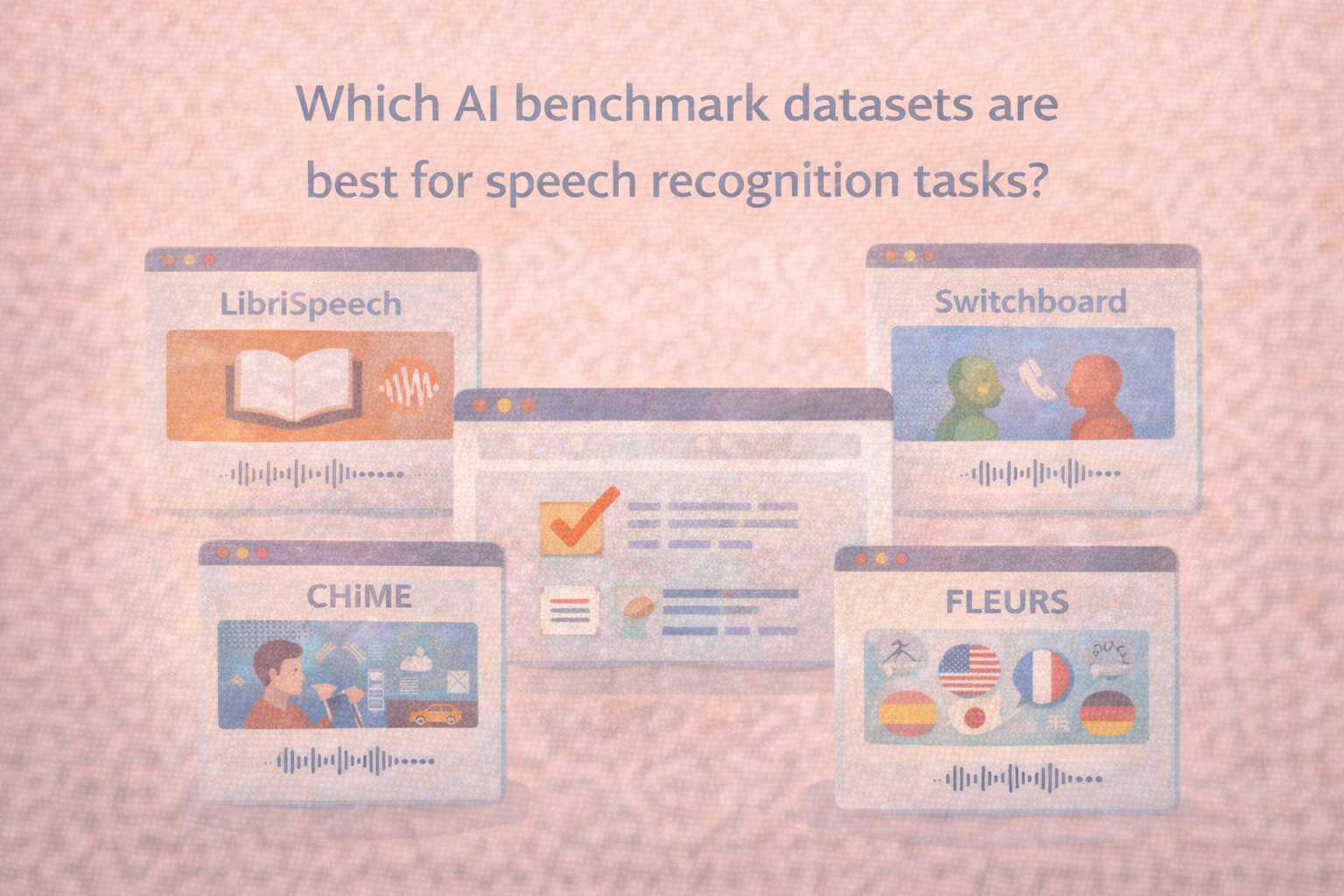
Which AI benchmark datasets are best for speech recognition tasks?
The best ASR benchmarks depend on your target audio conditions, so the most reliable approach is to pair a standard baseline with a dataset that reflects how people actually speak in your product.
-
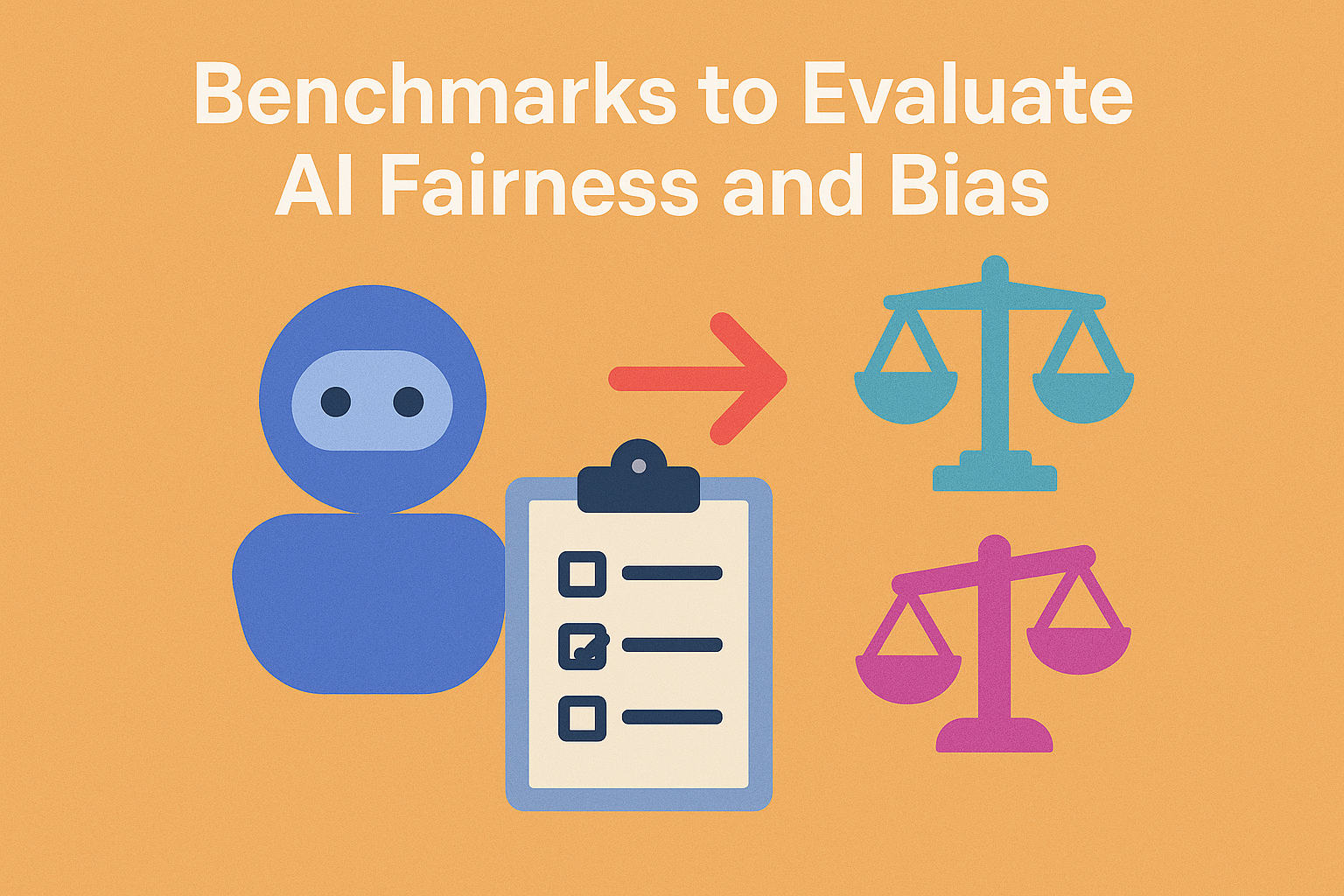
What Benchmarks are Used to Evaluate AI fairness and Bias?
AI fairness and bias benchmarks help teams measure whether model performance or behavior changes across groups, identities, or contexts
-
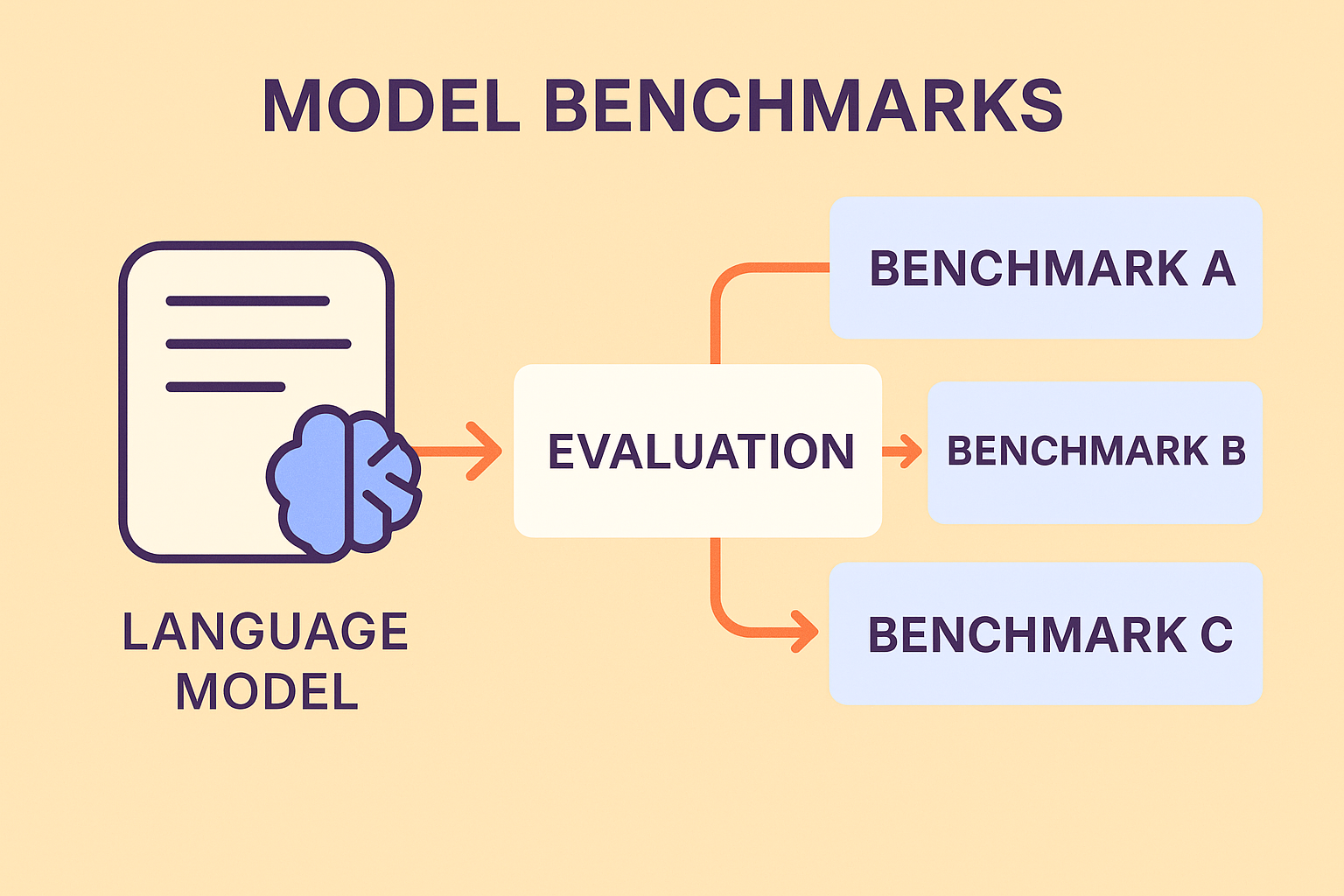
Benchmarks are the measuring sticks of machine learning. They provide a way to evaluate models consistently, compare progress, and understand whether performance holds up in real-world conditions.
-
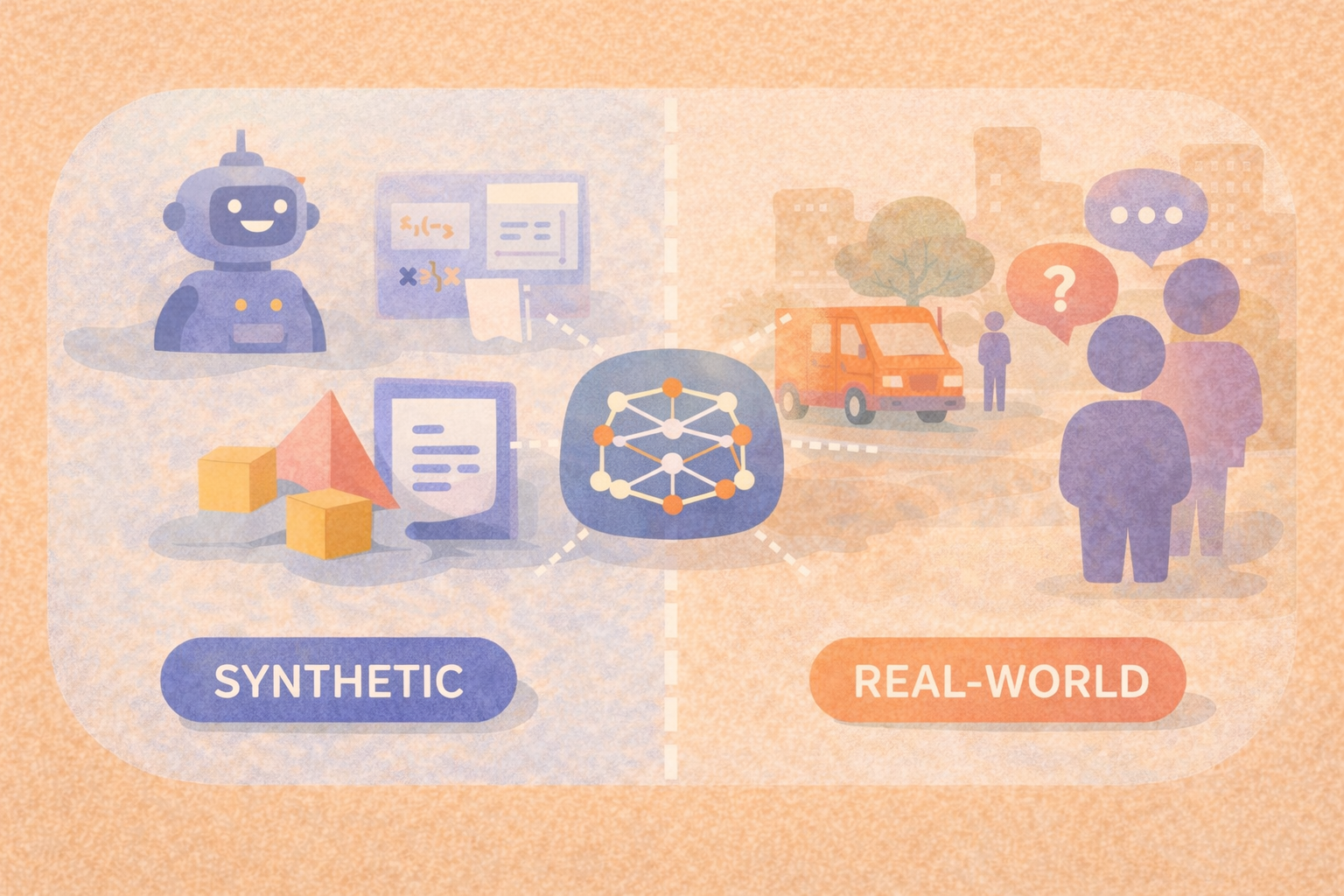
What are the differences between synthetic and real-world AI benchmarks?
Synthetic benchmarks offer control and scalability, while real-world benchmarks expose how AI systems behave under real conditions—and strong evaluation strategies rely on both.
-
Static vs. dynamic benchmarks: What's the difference?
Learn the structural differences between static and dynamic AI evaluations, why purely dynamic tests ruin version control, and how to build a hybrid pipeline.
-
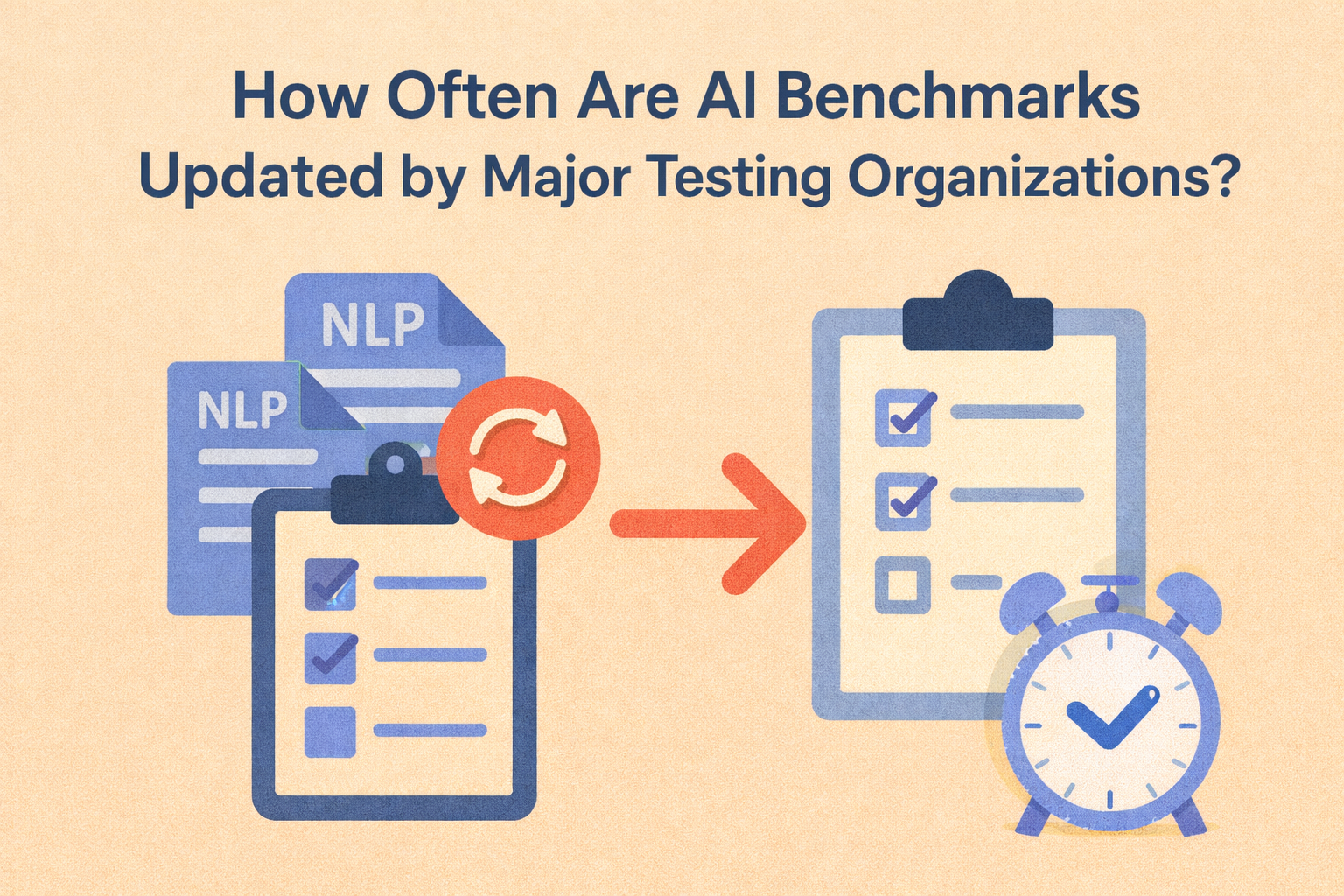
How often are AI benchmarks updated by major testing organizations
Benchmark results are time-bound, so the most reliable comparisons always include the benchmark version, evaluation method, and date.
-
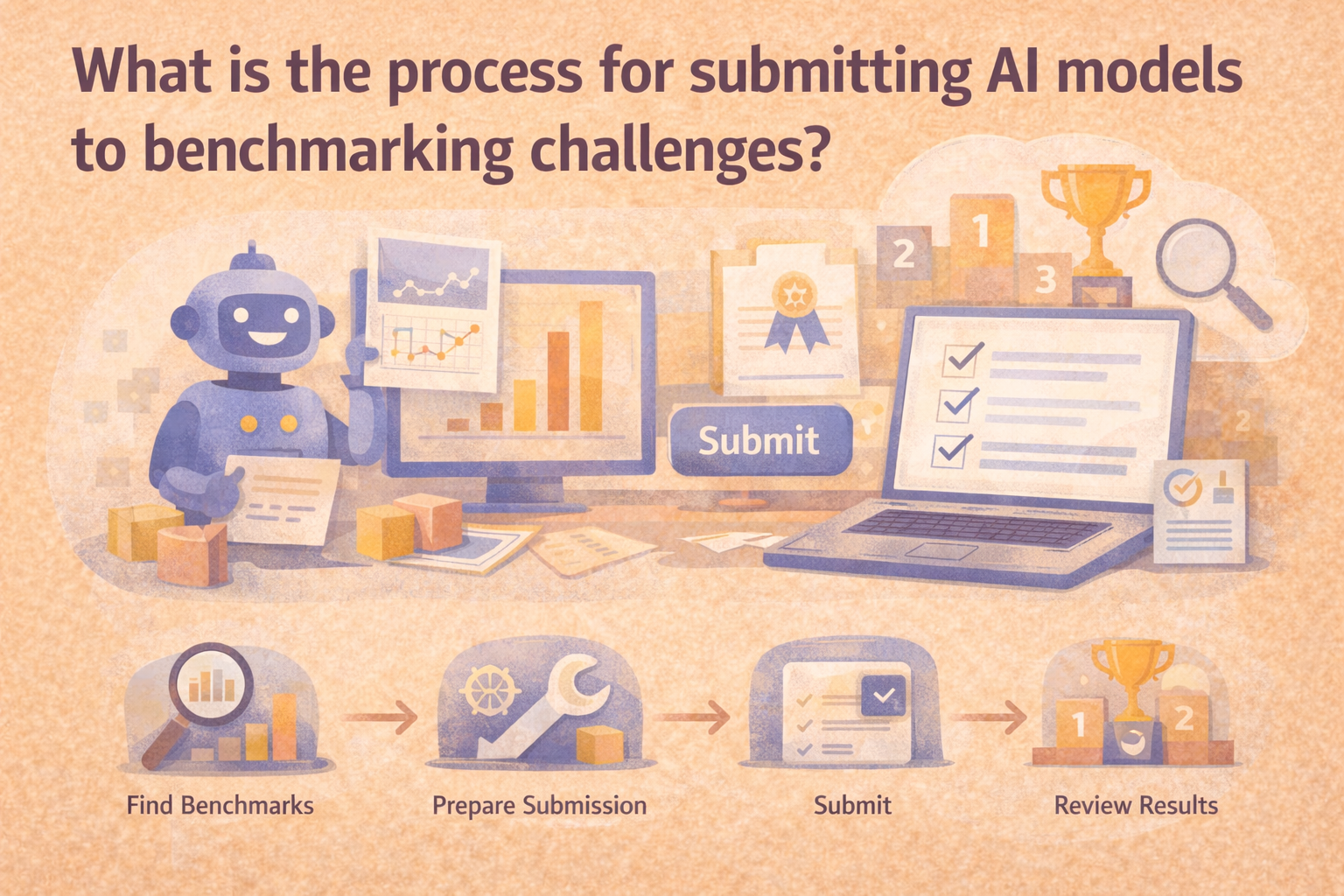
What is the process for submitting AI models to benchmarking challenges?
Submitting an AI model to a benchmarking challenge is less about “upload the model” and more about proving your system can be evaluated fairly.
-
How to interpret AI benchmark results from third-party testing services?
Benchmark scores can be helpful signals, but only if you understand the dataset, scoring method, evaluation setup, and version behind the number.
-
How to choose an LLM benchmark
Public leaderboards are helpful for shortlisting models, but production demands custom evaluation. Learn how to choose an LLM benchmark for your team.
-
Benchmarks provide a common ground for evaluating machine learning models, but their usefulness depends on how well they reflect real-world goals. This guide explains what benchmarks are, when to rely on them, and where they fall short.
-
What are the differences between synthetic and real-world AI benchmarks?
This article breaks down how synthetic and real-world AI benchmarks differ and why teams need both to understand true model performance.