Which AI benchmarks focus on energy efficiency of models?
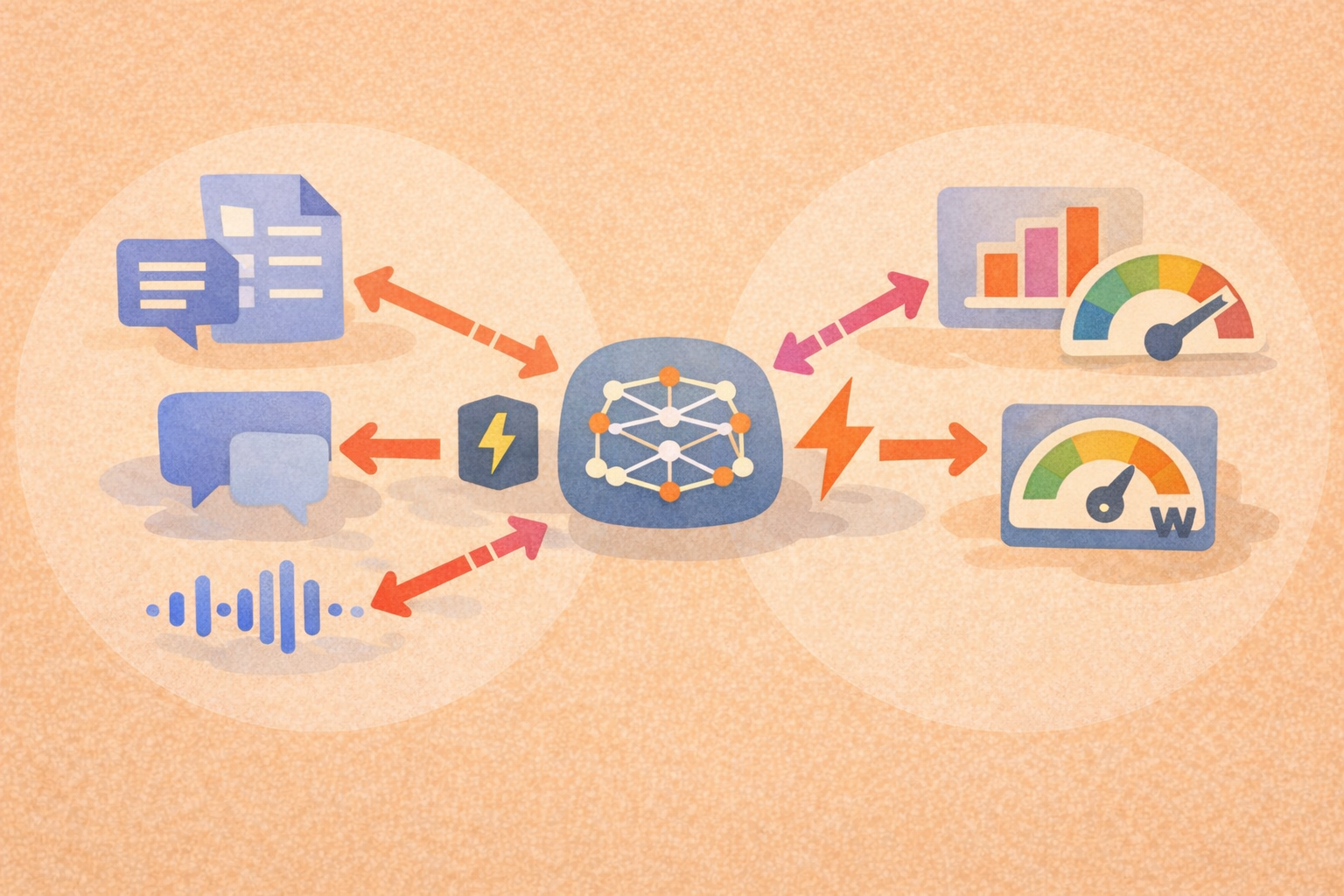
Energy-efficiency benchmarks measure how much useful AI work a system performs per unit of energy, not just how fast or accurate it is. These benchmarks help teams understand tradeoffs between performance, cost, and sustainability by pairing model results with power and energy measurements taken under controlled conditions.
More details
Why energy efficiency needs its own benchmarks
Traditional AI benchmarks emphasize accuracy, latency, or throughput. Those metrics matter, but they do not explain how much energy a model consumes to achieve that performance. As models grow larger and inference workloads scale, energy use becomes a limiting factor for cost, deployment, and environmental impact. Energy-focused benchmarks exist to make this dimension visible and comparable.
System-level benchmarks that include power measurement
One of the most widely referenced efforts is MLPerf, which includes power and energy measurements alongside performance results in several of its benchmark suites. These results report metrics such as performance per watt or total energy to complete a defined workload. The emphasis is on standardized measurement methods so results can be compared across hardware, software stacks, and model configurations.
Another long-standing example is the Green500, which ranks large-scale computing systems based on energy efficiency. While not limited to AI models, it is often cited when evaluating the efficiency of systems used for AI training and inference at scale.
Benchmarks that emphasize server and system efficiency
Some benchmarks focus on the efficiency of the underlying systems that run AI workloads rather than the models alone. For example, SPECpower_ssj2008 measures server performance per watt under different load levels. These results are frequently used as supporting evidence when discussing the energy efficiency of AI deployments in data centers, even though the benchmark itself is not model-specific.
How energy efficiency is typically reported
Energy-focused benchmarks usually combine workload definitions with power measurement protocols. Results may be reported as:
- Performance per watt
- Total energy consumed to complete a task
- Energy normalized by accuracy or throughput
This framing matters because a faster model is not always more energy-efficient, and a highly accurate model may consume significantly more power for marginal gains.
We put together a free guide on scaling benchmarking and evaluation in enterprise settings, including how to separate benchmarks from targeted evals, apply rubrics consistently across SMEs, and use calibrated automation to scale review without losing trust. Get the guide here.
Frequently Asked Questions
Frequently Asked Questions
Are there benchmarks that measure model energy efficiency directly?
Most benchmarks measure energy at the system or workload level rather than isolating the model alone, since models rarely run without supporting infrastructure.
Do energy-efficient benchmarks replace accuracy benchmarks?
No. They complement accuracy and performance benchmarks by adding visibility into cost and sustainability tradeoffs.
Can energy benchmarks be compared across different organizations?
Comparisons are most meaningful when measurement methods, workloads, and configurations are similar. Large differences in setup can distort results.
Are energy benchmarks relevant for inference as well as training?
Yes. Inference often runs continuously at scale, which makes energy efficiency especially important for long-term operational costs.
Why do some benchmarks report performance per watt instead of total energy?
Performance-per-watt metrics make it easier to compare systems that complete work at different speeds while still accounting for power usage.
Related Content
-
Do you need a custom benchmark?
Learn why public AI leaderboards constantly fail enterprise deployments and how to scale a continuous evaluation maturity framework from proof-of-concept to production without wasting endless engineering hours.
-
Domain-specific vs. general benchmarks: What's the difference?
Learn the difference between domain-specific and general benchmarks. Understand how to measure artificial intelligence model performance effectively for your specific use case.
-
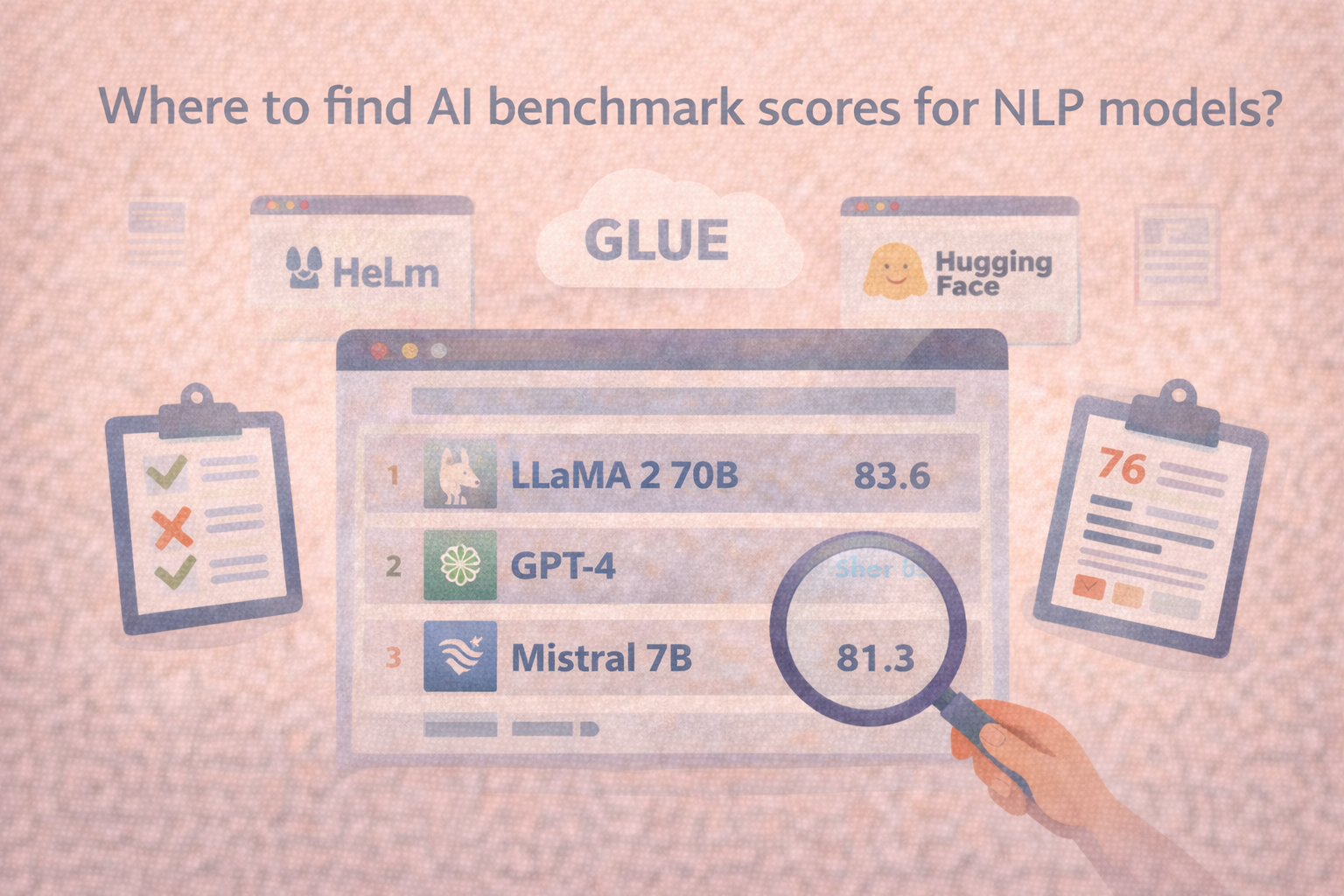
Where can I find AI benchmark scores for natural language processing models?
You can find NLP benchmark scores quickly on public leaderboards, but the comparisons only hold up when you verify versions, evaluation settings, and the exact model variant being scored.
-
Getting started with benchmark creation
A guide to creating effective benchmarks for evaluating machine learning models, covering data selection, annotation, and iteration.
-
How do benchmarks use ground truth data?
Learn how ground truth data serves as the foundation for evaluating machine learning models and tracking AI benchmark performance.
-
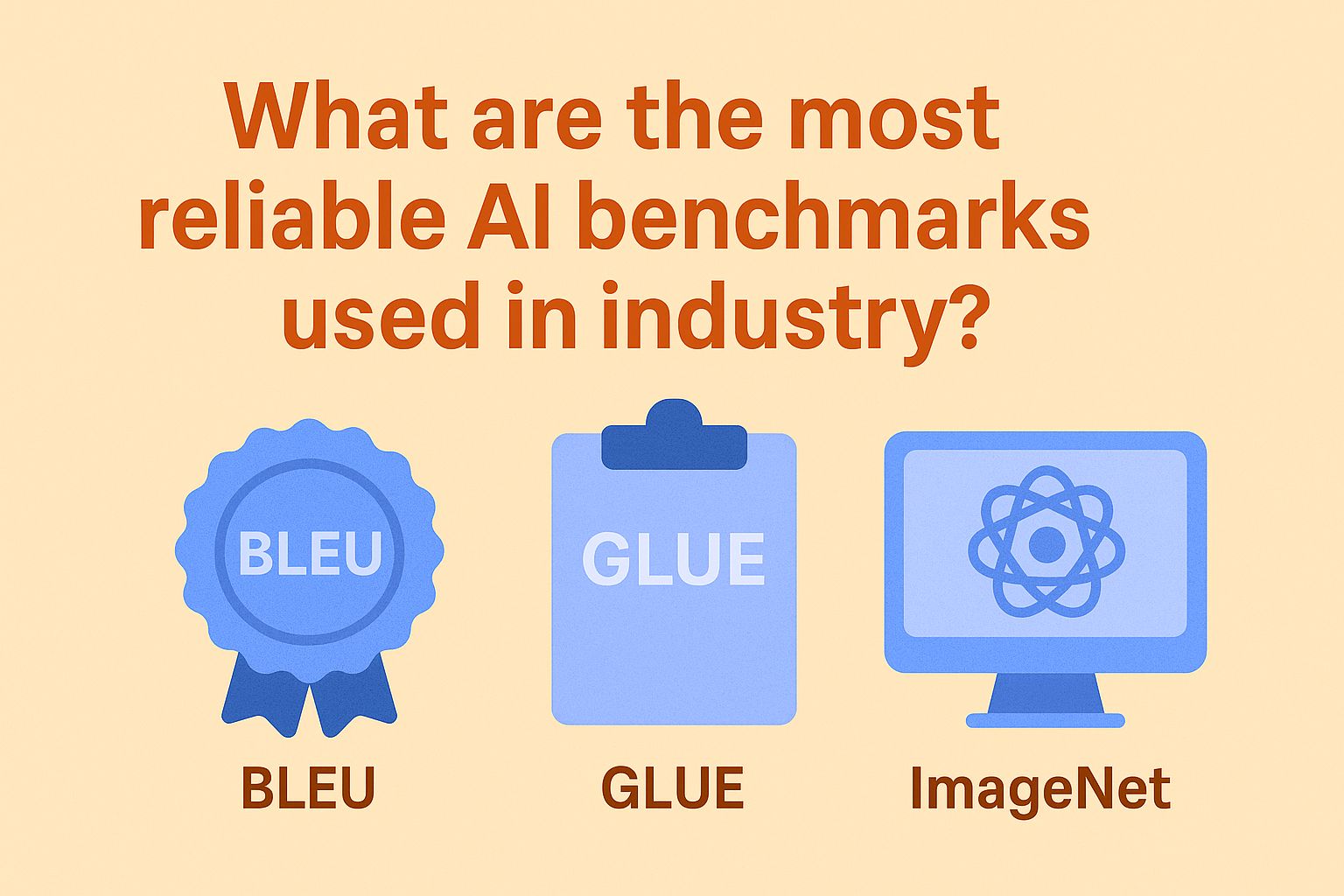
What are the most reliable AI benchmarks used in industry?
The core language, vision, speech, and system benchmarks that teams still rely on to compare models.
-
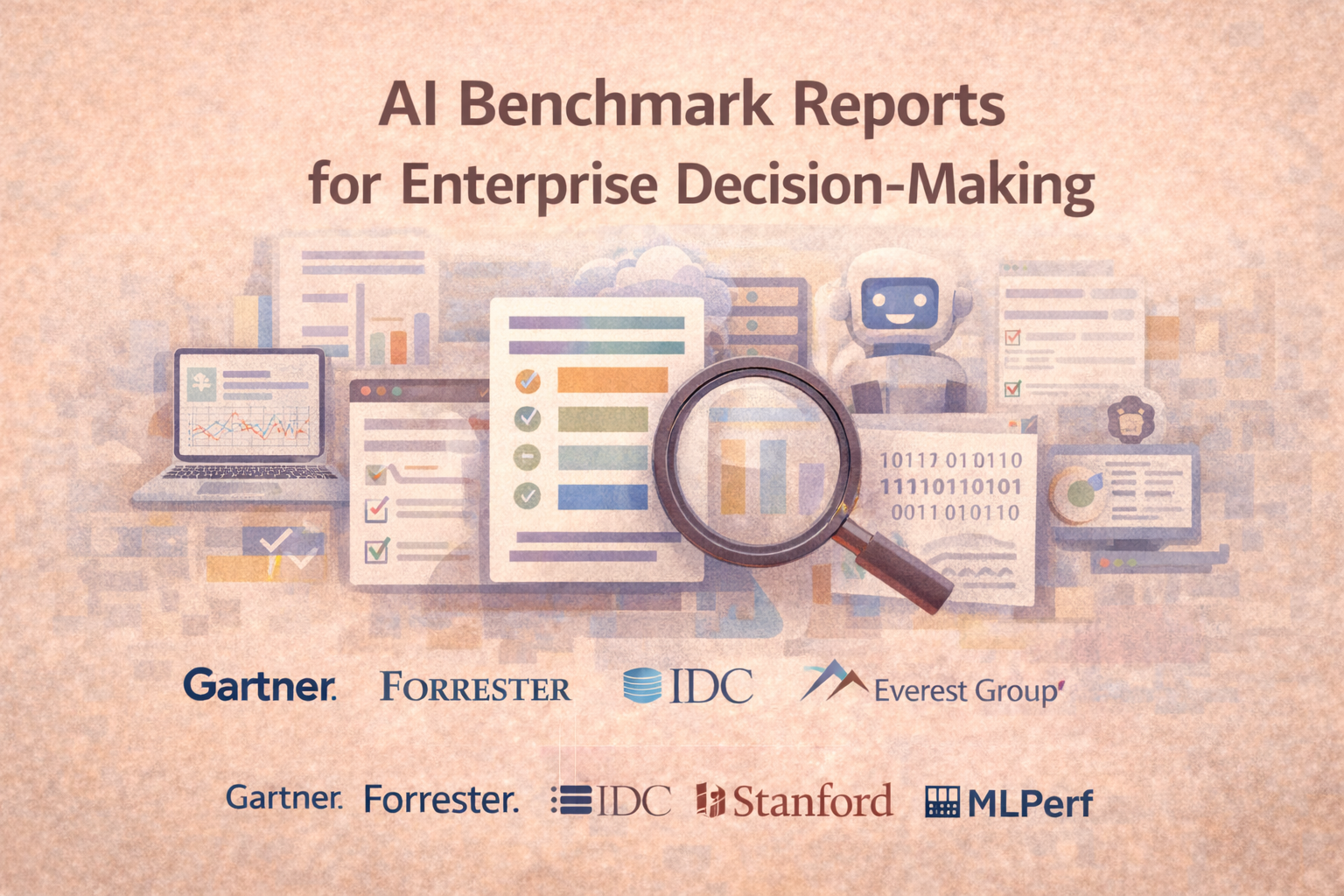
What services offer AI benchmark reports for enterprise decision-making?
A practical guide to the main sources of AI benchmark reports enterprises use to compare vendors, platforms, and model performance.
-
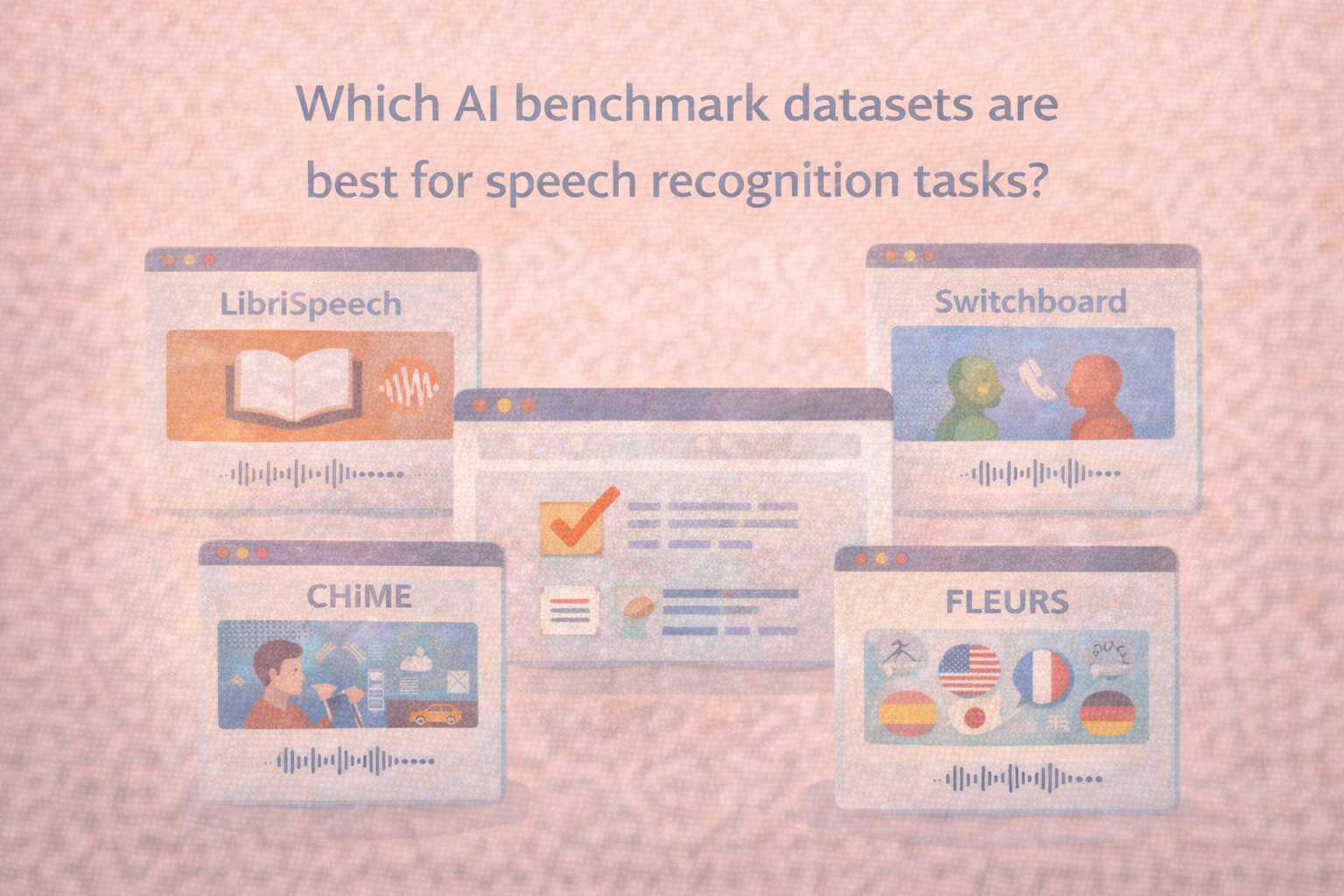
Which AI benchmark datasets are best for speech recognition tasks?
The best ASR benchmarks depend on your target audio conditions, so the most reliable approach is to pair a standard baseline with a dataset that reflects how people actually speak in your product.
-
What Benchmarks are Used to Evaluate AI fairness and Bias?
AI fairness and bias benchmarks help teams measure whether model performance or behavior changes across groups, identities, or contexts
-
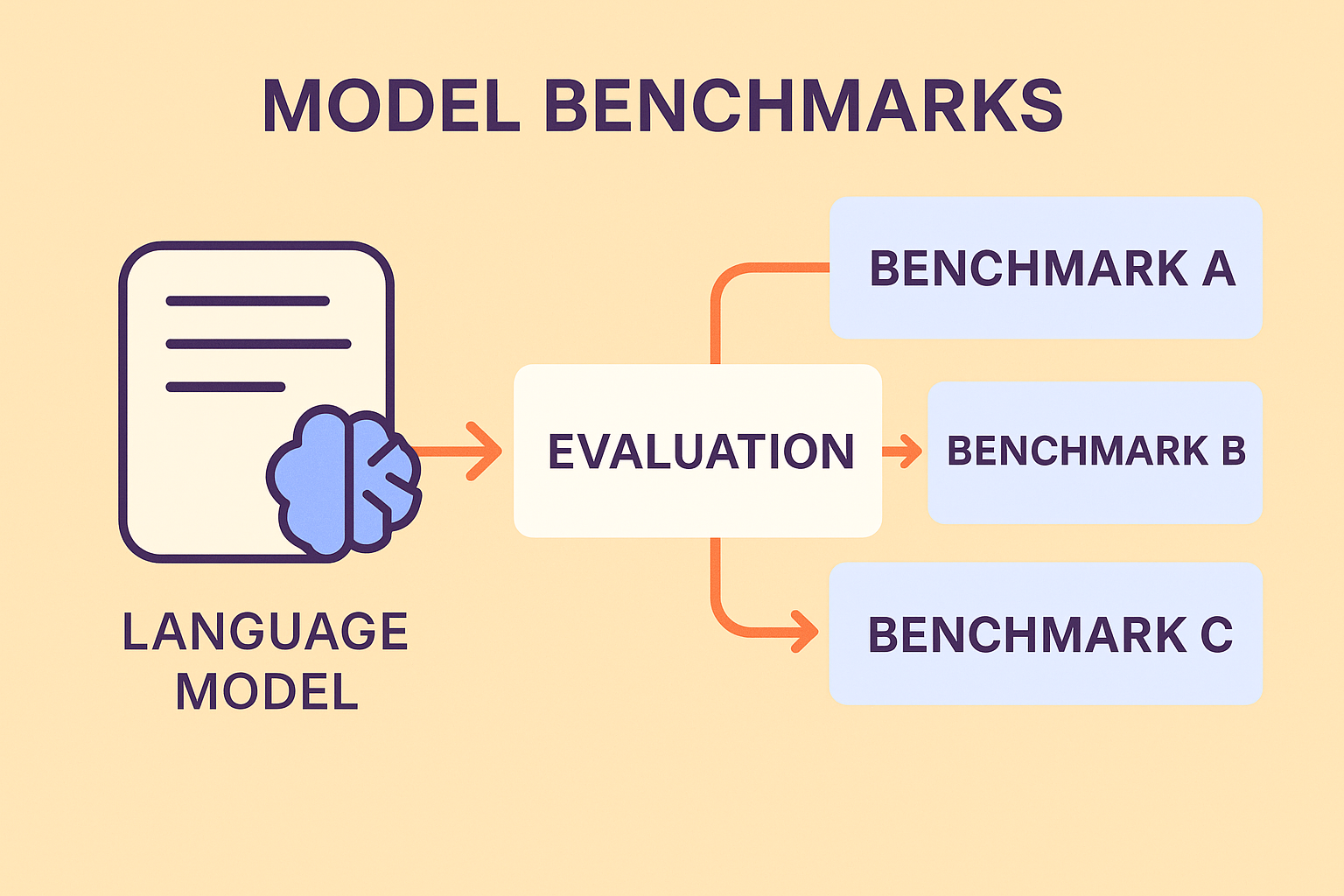
Benchmarks are the measuring sticks of machine learning. They provide a way to evaluate models consistently, compare progress, and understand whether performance holds up in real-world conditions.
-

What are the differences between synthetic and real-world AI benchmarks?
Synthetic benchmarks offer control and scalability, while real-world benchmarks expose how AI systems behave under real conditions—and strong evaluation strategies rely on both.
-
Static vs. dynamic benchmarks: What's the difference?
Learn the structural differences between static and dynamic AI evaluations, why purely dynamic tests ruin version control, and how to build a hybrid pipeline.
-
How often are AI benchmarks updated by major testing organizations
Benchmark results are time-bound, so the most reliable comparisons always include the benchmark version, evaluation method, and date.
-
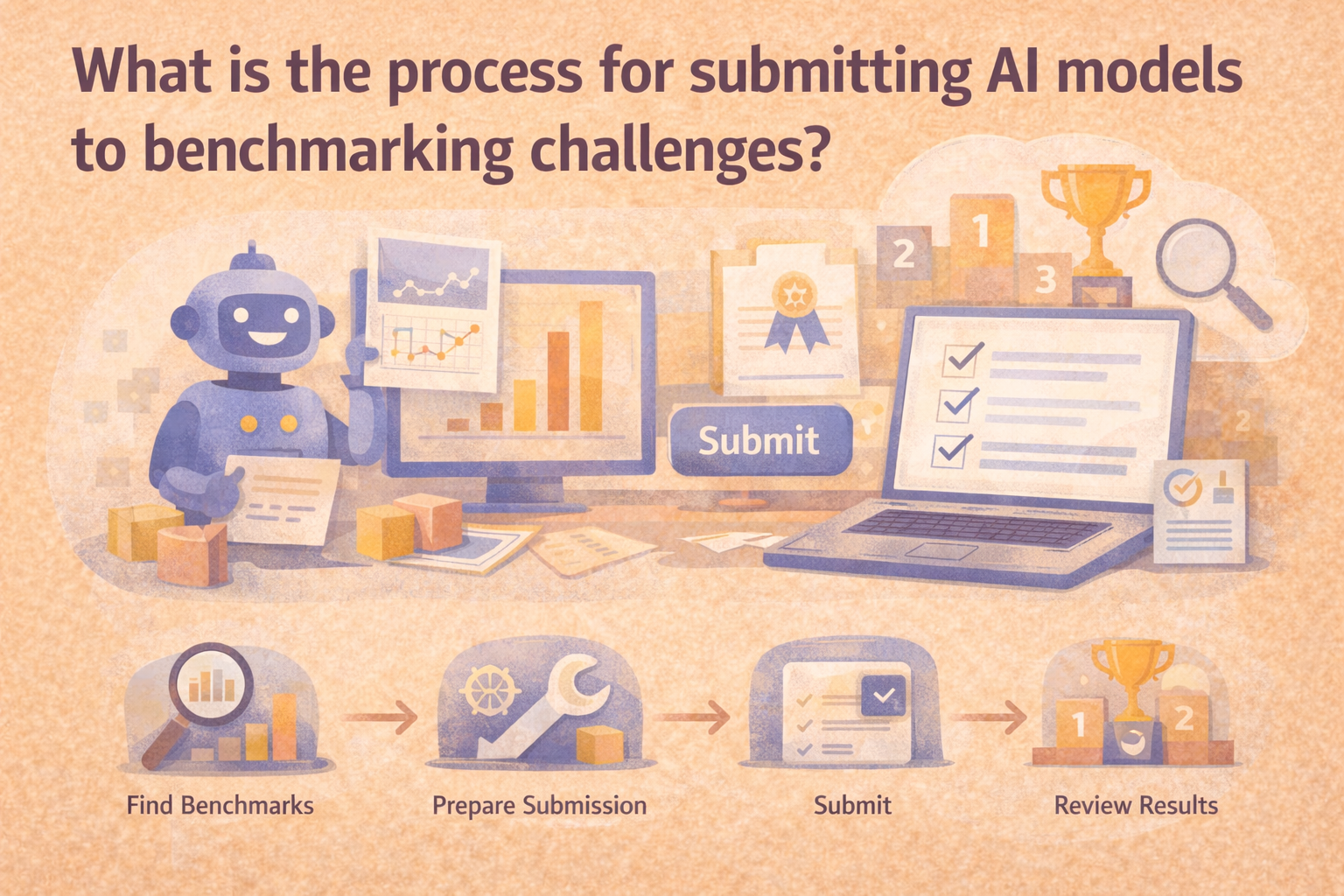
What is the process for submitting AI models to benchmarking challenges?
Submitting an AI model to a benchmarking challenge is less about “upload the model” and more about proving your system can be evaluated fairly.
-
How to interpret AI benchmark results from third-party testing services?
Benchmark scores can be helpful signals, but only if you understand the dataset, scoring method, evaluation setup, and version behind the number.
-
How to choose an LLM benchmark
Public leaderboards are helpful for shortlisting models, but production demands custom evaluation. Learn how to choose an LLM benchmark for your team.
-
Benchmarks provide a common ground for evaluating machine learning models, but their usefulness depends on how well they reflect real-world goals. This guide explains what benchmarks are, when to rely on them, and where they fall short.
-
What are the differences between synthetic and real-world AI benchmarks?
This article breaks down how synthetic and real-world AI benchmarks differ and why teams need both to understand true model performance.