Domain-specific vs. general benchmarks: What's the difference?
TL;DR
General tests measure broad capabilities across many common topics and basic reasoning tasks.
Domain-specific evaluation measures model performance on specialized industry tasks like medical diagnostics or legal processing.
Broad tests help teams compare base models against each other quickly during initial selection.
Specialized datasets reveal how effectively a model will perform in your actual production environment.
Modern enterprise teams use a combination of both testing approaches to understand an artificial intelligence system fully.
The purpose of model evaluation
Machine learning teams need clear ways to measure how well their models perform. Without a reliable grading system, deciding which model to deploy becomes a stressful guessing game. Evaluation frameworks provide a standardized set of tests to assess artificial intelligence. Developers run their mathematical models through these predefined datasets and score the outputs. High scores typically indicate better capability on those specific tasks.
Choosing the proper evaluation method dictates whether you can trust your model in production environments. A severe mismatch between your testing parameters and your real-world application leads to poor performance and unpredictable behavior. Understanding the core differences between broad testing scopes and specialized tests helps teams build safer intelligent systems. As models grow increasingly complex, relying on simple intuition fails. Engineering teams need structured data to prove their model generates safe outputs.
Evaluating models correctly prevents expensive mistakes. Pushing an untested model into a customer-facing application leads to hallucinations, poor user experiences, and brand damage. A well-designed testing suite catches these issues long before the model reaches live users.
Understanding general benchmarks
Generic testing frameworks evaluate broad model capabilities. These standardized tests assess logical reasoning, basic mathematics, reading comprehension, and common trivia knowledge.
Researchers use these standardized sets to compare foundation models rapidly. When major AI companies release new base models, they publish scores on these standard tasks. These publicized numbers give developers an immediate sense of baseline intelligence. The broad nature of these tests makes them widely applicable across thousands of initial use cases.
You can quickly verify if a new model is better at reasoning than older software versions. The standardization allows the entire AI community to track industry-wide progress over time. Seeing a model jump ten points in math reasoning signals a real improvement in logic handling capabilities. Developers rely on these markers to decide if an upgrade is worth the engineering effort.
Common general tests
The industry relies on several well-known public standards. MMLU (Massive Multitask Language Understanding) is one of the most popular tests. It covers dozens of subjects, ranging from high school history to professional law. The questions are straightforward multiple-choice format.
Another primary standard is GSM8K. It tests basic math word problems. Models must break the problem down into logical steps and arrive at the correct numerical answer. Similarly, HumanEval measures coding capabilities by asking models to write small functions based on plain English instructions. A high score on HumanEval suggests the model understands programming logic well.
The limitations of broad testing
Standard tests do not reflect real-world performance accurately. A system might score exceptionally well on MMLU and yet fail utterly at parsing highly specialized financial documents. The questions in standard datasets rely heavily on public internet data. Foundation models often memorize the answers during their initial training phase.
Relying exclusively on generic tests creates a false sense of security. Teams regularly discover their deployed models struggle with tight vocabulary or strict formatting requirements only after pushing to production. Public frameworks test for general capability. They do not check for reliability within exact business workflow contexts. Because public metrics become the target for model providers, the systems themselves become artificially good at taking those specific tests without actually improving at the underlying skills.
Understanding domain-specific benchmarks
Specialized benchmarks evaluate performance on customized tasks within a particular industry. These rigorous tests use highly targeted data to measure precise skills. A medical testing set might assess a system's ability to extract patient symptoms selectively from messy clinical notes. A legal testing set might evaluate how accurately a program identifies liability clauses in complex defense contracts.
Creating specialized tests requires deep subject matter expertise. Doctors, lawyers, or software engineers must carefully define the correct answers. The testing data closely mimics the exact inputs the model will process in the real world. Every prompt is tailored to a specific operational workflow.
The benefits of targeted evaluation
Targeted testing environments tell you plainly how a system will perform your specific tasks. The highly focused nature of the questions removes most evaluation ambiguity. Think about building a customer triage chatbot for a regional airline. Testing it on historical flight booking transcripts provides far more useful data than testing its ability to solve middle school biology problems.
Specialized evaluation also helps identify narrow operational failure states. An AI trained for legal work might write excellent case summaries. The same AI might struggle heavily with identifying indemnification clauses without specific prompting techniques. Targeted metrics highlight these narrow gaps. Highlighting the gaps allows engineering teams to train the model further using better legal data. By focusing on your exact use case, you align your artificial intelligence metrics directly with your business goals.
Core differences explained
Comparing broad evaluation scopes versus targeted testing setups reveals distinct approaches to AI management. Both methods measure capability. They simply serve different operational purposes in the development lifecycle.
Data characteristics
Broad datasets pull information from everywhere imaginable. They include public encyclopedia articles, open developer forums, elementary school workbooks, and generic news stories. The language style is highly common. The structural formatting is standard. The topics jump wildly from ancient history to basic arithmetic.
Targeted datasets contain hyper-specific information sets. They feature heavy industry jargon, non-standard text formatting, proprietary database structures, and complex logic unique to a single profession. The clinical notes of a specialized surgeon look nothing like a clean wiki article. The source data is frequently difficult for laypeople to read or evaluate.
Evaluation metrics
Most standard tests rely on simple multiple-choice questions or exact text-string matching. The tested system earns a point for selecting the correct option. The simplicity makes automated mathematical grading fast and consistent.
Targeted evaluation frequently requires complex grading mechanisms. Models might need to output structured JSON arrays, follow strict step-by-step logic, or generate text that adheres to specific regulatory guidelines. Grading often requires careful manual review or advanced large language model setups. In a model-as-a-judge system, a massive external artificial intelligence assesses the answers based on custom criteria provided by human experts.
Resource requirements
Running generic tests is extraordinarily cheap and fast. Open-source scripts exist to evaluate models automatically on public datasets. Engineering teams can download the code, run it locally, and have detailed result graphs in fifteen minutes. The financial barrier to entry sits near zero.
Building and running customized tests demands significant time and capital. You need expensive subject matter experts to gather, review, and label the underlying data. Data-labeling tools from HumanSignal help teams manage the annotation process by coordinating human experts to review model outputs efficiently. Creating a customized test set manually takes weeks or months of concerted team effort. The rigorous review process runs slowly because human experts must read and evaluate long documents individually.
How to choose the right approach
Selecting an evaluation strategy depends heavily on your project stage and business goals. Early development phases benefit from different metrics than final production readiness checks.
Selecting base models
If you are selecting a base model for an initial prototype, standard generic frameworks offer a great starting platform. You filter out weak models quickly. You see which providers handle memory context windows well and which ones stumble on basic logic. Once you narrow the competitive field to two or three strong candidates, you shift focus away from broad scores.
Building for production
For production applications, teams should generally build customized internal tests. Base models change frequently as artificial intelligence companies update their core APIs. Sometimes a provider update improves general capabilities while simultaneously breaking your specifically formatted outputs. Having a private testing suite allows you to verify that underlying model changes do not subtly break your application. The specialized test framework acts as an automated quality assurance check for your data pipeline.
The role of data quality
The effectiveness of any testing evaluation depends upon the quality of the underlying data files. Bad datasets produce false reassurance and highly inaccurate grading scores.
The data contamination problem
Many public testing frameworks suffer from heavy data contamination. Leading foundation models train on nearly all public internet text. Those massive training datasets often include the very questions used in public testing datasets. When the model takes the evaluation test, it merely recites previously memorized answers.
Private corporate test sets avoid the contamination problem. Foundation models have never seen your proprietary internal data. Testing them on internal customer support tickets or private legal documents forces the model to actually compute the correct logic sequence.
Curation and annotation strategies
High-quality private testing files require careful manual curation. The specific examples must represent rare edge cases alongside common everyday operational scenarios. Human experts must agree on the correct answers before testing begins.
Software platforms like HumanSignal support private test workflows natively. The application suite organizes data labeling teams, tracks annotator agreement levels, and channels high-quality human feedback directly into the engineering evaluation process. Proper management oversight ensures your test set actually reflects reality. Properly structured evaluation data acts as the ultimate truth source for an intelligent application. It defines exactly what good outputs look like for your specific business division.
Developing an evaluation strategy
Most successful machine learning teams employ a combination of generic and targeted evaluation methods. Generic scores primarily help researchers track broader industry progress. Targeted scores dictate specific corporate deployment decisions.
Continuous evaluation remains the standard operating procedure for modern production systems. Mathematical models drift over time. User behavior shifts seasonally. The complex questions your users ask today differ from the queries they typed three quarters ago. Your specialized test suite must grow to include new real-world examples continuously.
Update your test questions regularly. Analyze failure cases generated from your live production logs. Turn those specific failures into brand new test cases. The continuous iterative loop ensures your testing metrics accurately reflect reality long after initial deployment dates.
Why do broad public scores keep rising so quickly?
Model builders deliberately train their systems to perform exceptionally well on standard public logic tests. Better computing hardware, massive training budgets, and larger training datasets also contribute heavily to the higher intelligence baseline scores seen broadly across the technology industry.
Can I use open datasets for targeted industry tests?
Open public datasets exist for major fields like medicine, corporate law, and personal finance. Using your proprietary internal company data provides a much more accurate representation of how the artificial intelligence will perform in your highly specific technical environment.
How large should a specialized test set be?
A valuable specialized test file typically starts with a few hundred carefully verified practical examples. As your application grows and you discover new edge scenarios in production logs, the dataset should expand into the thousands. Larger datasets handle significantly more edge scenarios.
Do I need multiple experts to verify test answers?
Having at least two human experts review each testing case reduces personal bias and basic formatting errors. Disagreements between human domain experts often point to ambiguous prompt instructions. These fuzzy instructions need clarification before you use them to grade the model. Tracking these disagreements closely helps teams refine their overall evaluation guidelines safely.
Related Content
-
Do you need a custom benchmark?
Learn why public AI leaderboards constantly fail enterprise deployments and how to scale a continuous evaluation maturity framework from proof-of-concept to production without wasting endless engineering hours.
-
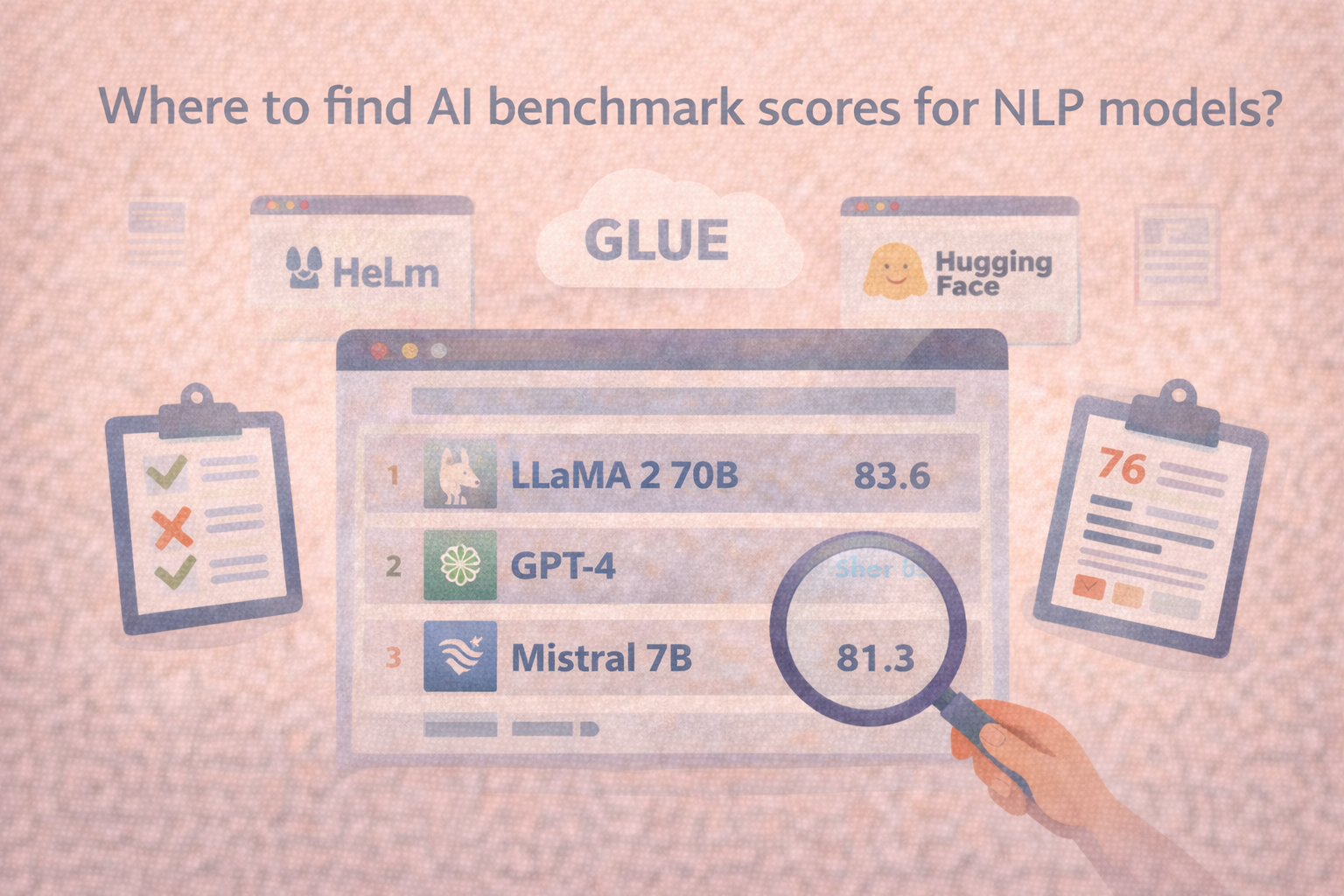
Where can I find AI benchmark scores for natural language processing models?
You can find NLP benchmark scores quickly on public leaderboards, but the comparisons only hold up when you verify versions, evaluation settings, and the exact model variant being scored.
-
Getting started with benchmark creation
A guide to creating effective benchmarks for evaluating machine learning models, covering data selection, annotation, and iteration.
-
How do benchmarks use ground truth data?
Learn how ground truth data serves as the foundation for evaluating machine learning models and tracking AI benchmark performance.
-
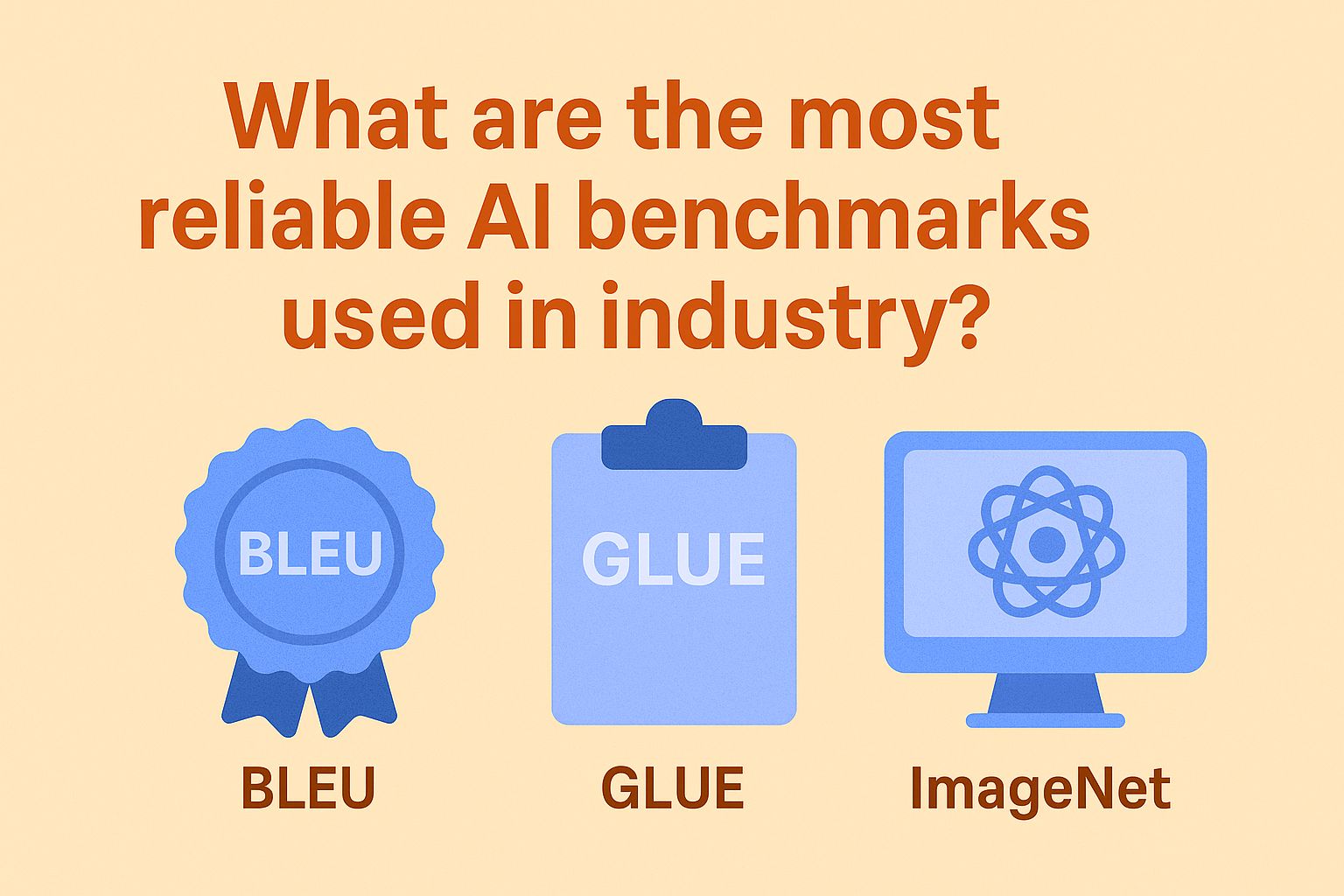
What are the most reliable AI benchmarks used in industry?
The core language, vision, speech, and system benchmarks that teams still rely on to compare models.
-
What services offer AI benchmark reports for enterprise decision-making?
A practical guide to the main sources of AI benchmark reports enterprises use to compare vendors, platforms, and model performance.
-
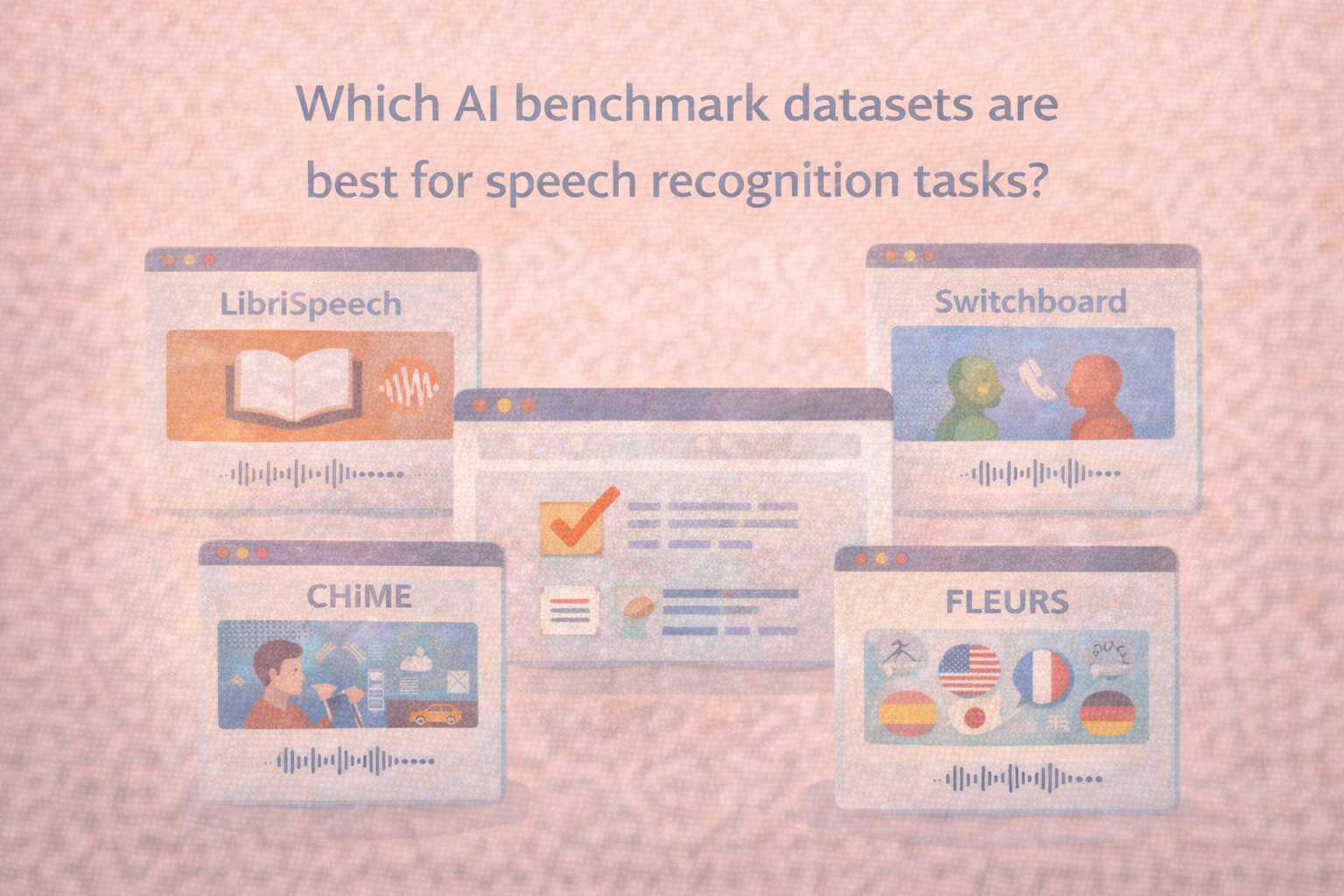
Which AI benchmark datasets are best for speech recognition tasks?
The best ASR benchmarks depend on your target audio conditions, so the most reliable approach is to pair a standard baseline with a dataset that reflects how people actually speak in your product.
-
What Benchmarks are Used to Evaluate AI fairness and Bias?
AI fairness and bias benchmarks help teams measure whether model performance or behavior changes across groups, identities, or contexts
-
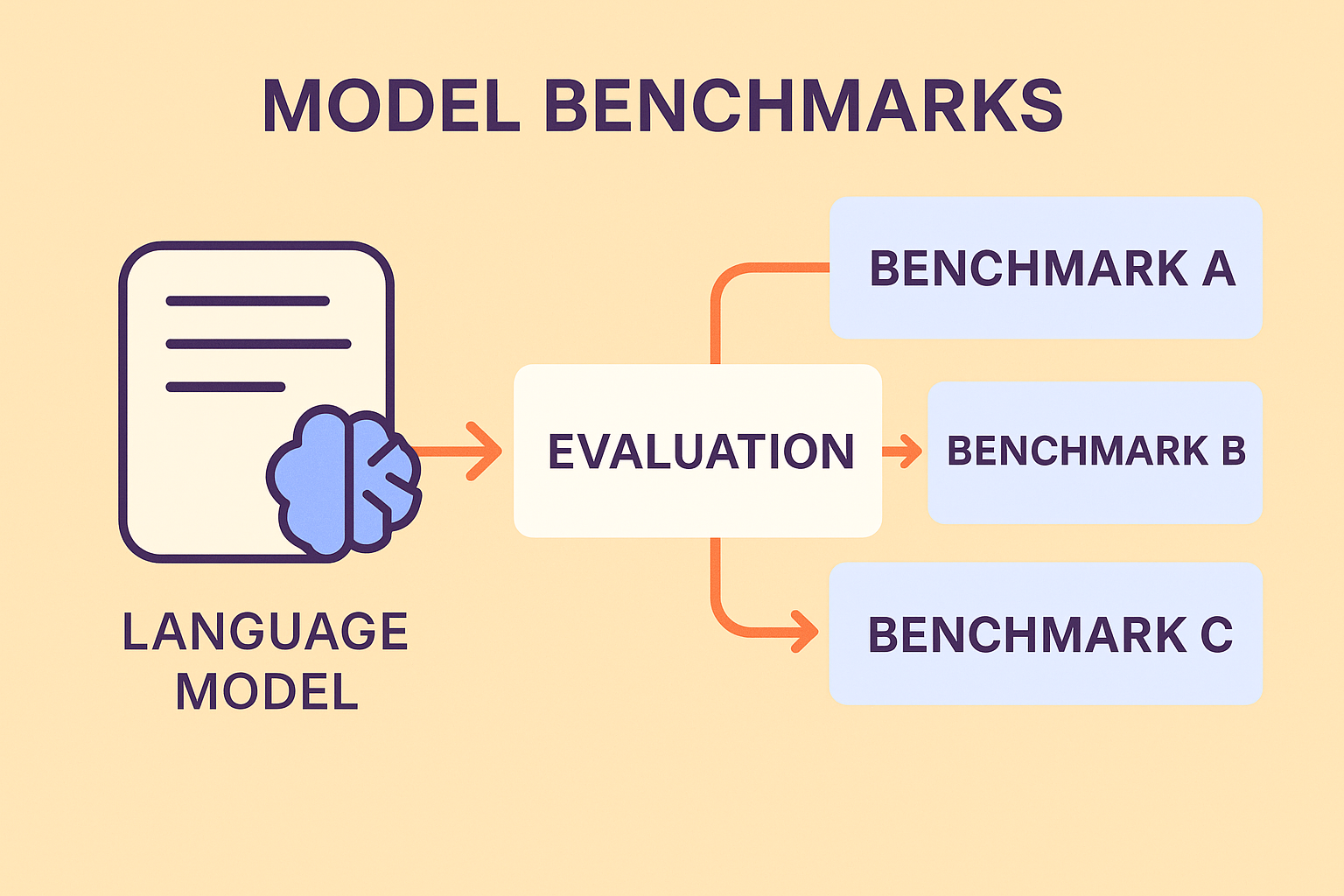
Benchmarks are the measuring sticks of machine learning. They provide a way to evaluate models consistently, compare progress, and understand whether performance holds up in real-world conditions.
-
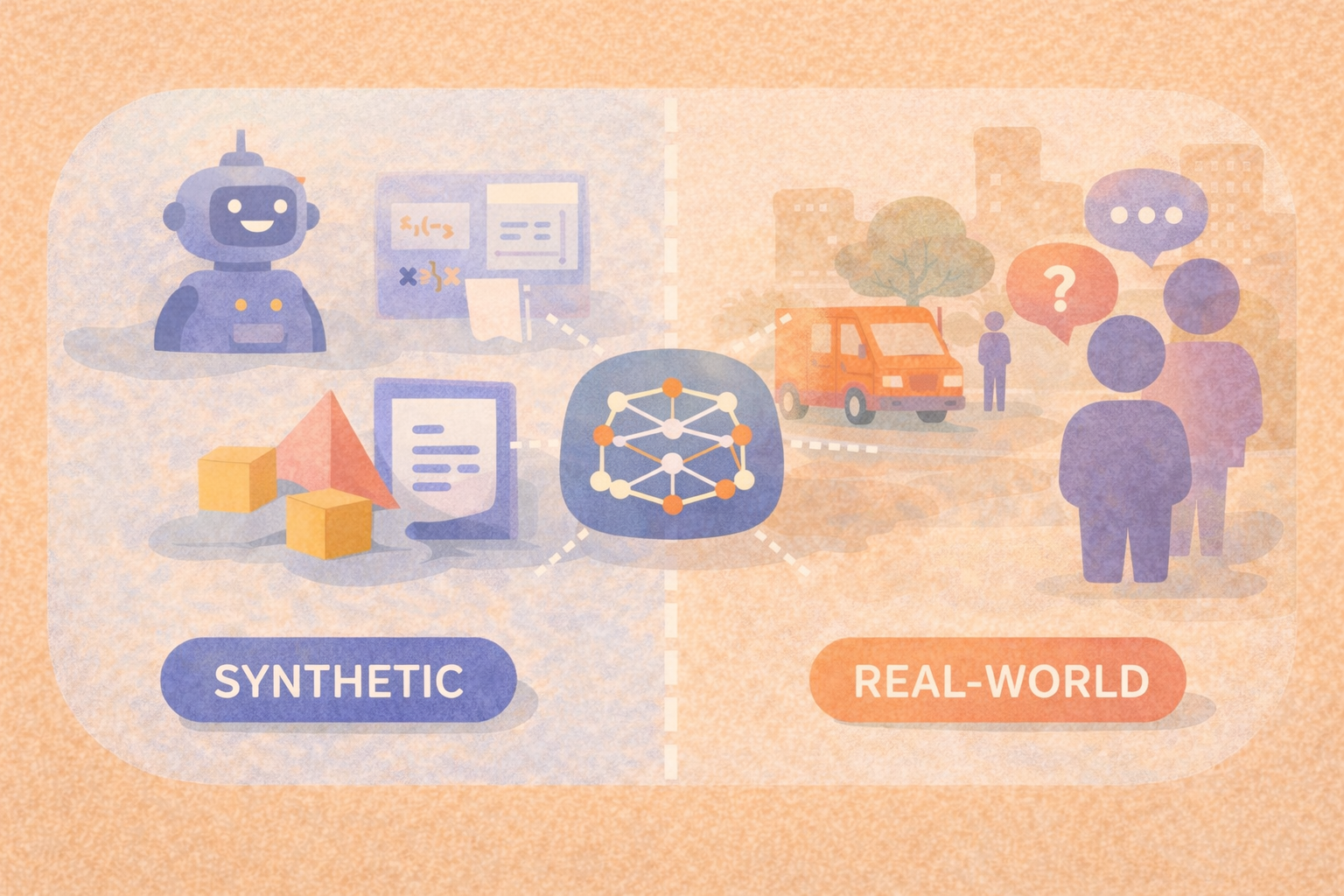
What are the differences between synthetic and real-world AI benchmarks?
Synthetic benchmarks offer control and scalability, while real-world benchmarks expose how AI systems behave under real conditions—and strong evaluation strategies rely on both.
-
Static vs. dynamic benchmarks: What's the difference?
Learn the structural differences between static and dynamic AI evaluations, why purely dynamic tests ruin version control, and how to build a hybrid pipeline.
-
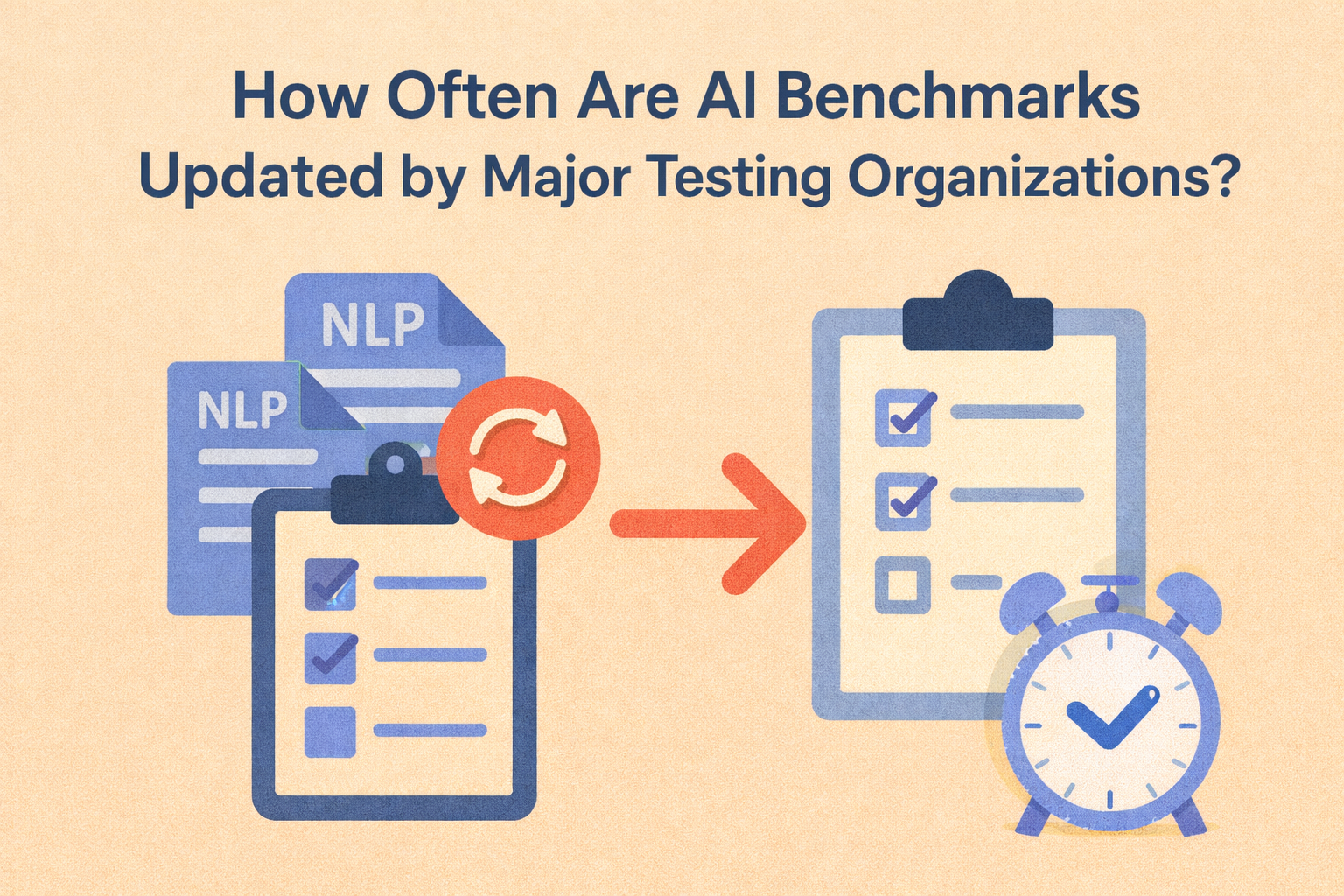
How often are AI benchmarks updated by major testing organizations
Benchmark results are time-bound, so the most reliable comparisons always include the benchmark version, evaluation method, and date.
-
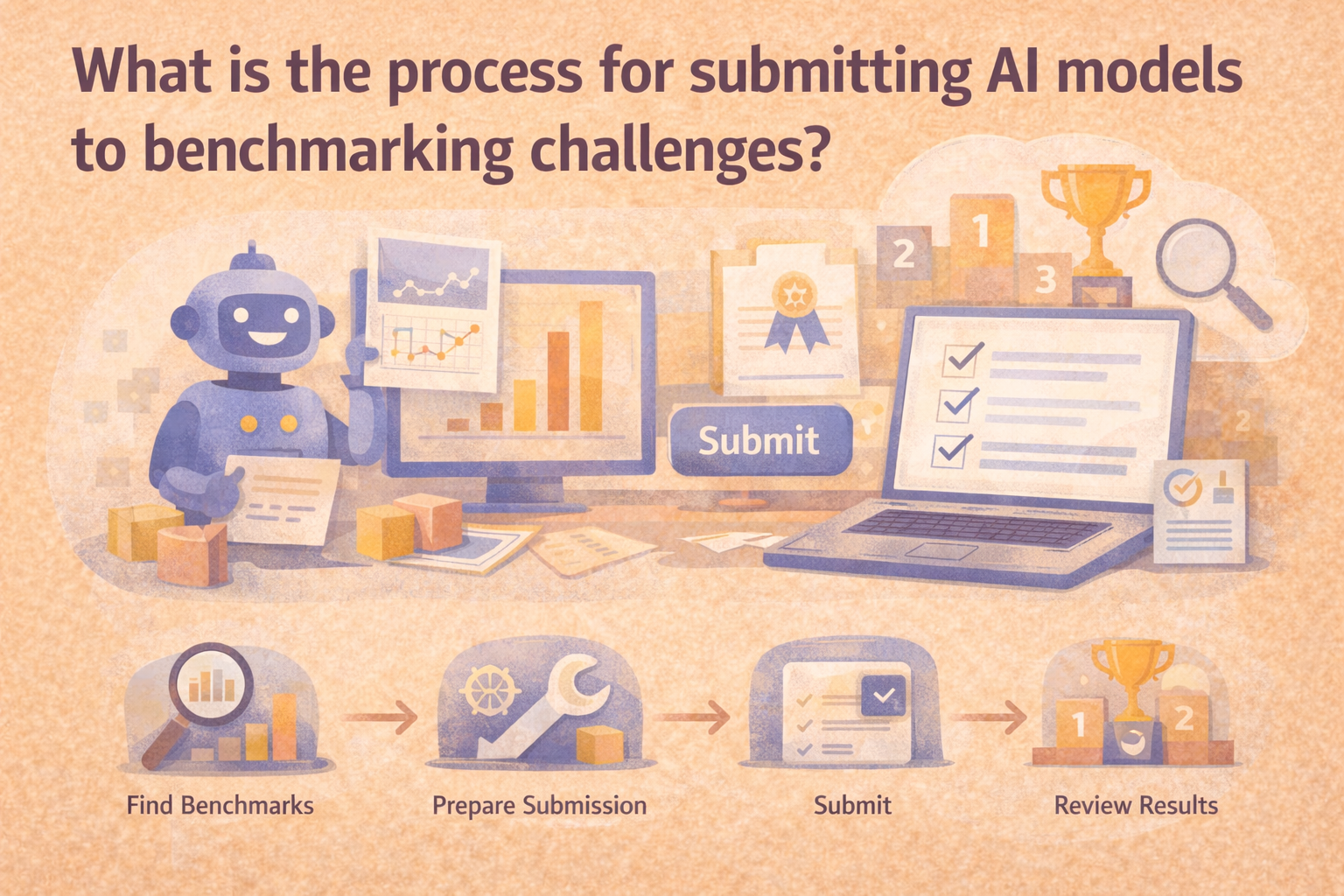
What is the process for submitting AI models to benchmarking challenges?
Submitting an AI model to a benchmarking challenge is less about “upload the model” and more about proving your system can be evaluated fairly.
-
How to interpret AI benchmark results from third-party testing services?
Benchmark scores can be helpful signals, but only if you understand the dataset, scoring method, evaluation setup, and version behind the number.
-
How to choose an LLM benchmark
Public leaderboards are helpful for shortlisting models, but production demands custom evaluation. Learn how to choose an LLM benchmark for your team.
-
Benchmarks provide a common ground for evaluating machine learning models, but their usefulness depends on how well they reflect real-world goals. This guide explains what benchmarks are, when to rely on them, and where they fall short.
-
What are the differences between synthetic and real-world AI benchmarks?
This article breaks down how synthetic and real-world AI benchmarks differ and why teams need both to understand true model performance.