Getting started with benchmark creation
TL;DR
Benchmark creation helps teams measure model performance reliably.
Good benchmarks require clear evaluation criteria and diverse datasets.
High-quality annotation ensures the accuracy of your baseline metrics.
Iterative testing reveals hidden biases and edge cases.
HumanSignal tools support data labeling for better evaluation sets.
Evaluating machine learning models requires clear, consistent testing standards. Teams need reliable ways to measure accuracy, speed, safety, and operational cost before deploying systems to production. Benchmark creation provides a structured foundation for testing models against real-world tasks. Building a targeted evaluation set lets you see how a model handles specific edge cases and conversational nuances. You can identify failure patterns early and correct them faster.
Why custom benchmarks matter
Public testing sets evaluate general capabilities like reading comprehension or basic logic. General scores matter less when you need a model to handle specialized tasks like triaging medical support tickets or parsing financial contracts. Custom test sets let you measure performance on the specific problems your users face.
Standard evaluation sets also suffer from data contamination. Large language models often consume public test datasets during their training process. Seeing the answers beforehand artificially inflates their scores. A private, custom evaluation set provides a true test of a system's reasoning and adaptability. Your team can trust the results because the model has never seen the questions.
Defining clear standards helps align engineering and product teams. Engineers need specific metrics to tune system prompts and adjust weights. Product managers need confidence that the system responds safely to sensitive user inputs. A well-designed test set provides the objective standard both groups need.
Setting clear evaluation criteria
Before selecting data, clarify what you want to measure. Different applications require different scoring methods. A summarization tool might prioritize conciseness and factual accuracy. A code generation assistant requires logic assessment and syntax validation.
Start by listing your critical failure modes. If you run a customer service chatbot, generating an incorrect refund policy creates immediate financial risk. Your test set needs heavy coverage of policy questions to catch hallucinations. Define specific grading rubrics for these scenarios. You might score responses on a numeric scale or use simple pass and fail flags.
Consider execution speed and resource constraints. Some applications need responses in milliseconds. Your evaluation should track latency alongside accuracy. Documenting specific thresholds helps the team understand what qualifies as a successful deployment.
Selecting diverse source data
The strength of your test dataset depends heavily on the quality of your source material. Grabbing any available text often leads to skewed results. You need a mix of typical inputs, rare edge cases, and adversarial prompts.
Real production logs serve as an excellent starting point. User interactions contain natural typos, confusing phrasing, and unexpected context shifts. Stripping these logs of personally identifiable information gives you highly realistic testing scenarios. Combine authentic baseline data with synthetic examples to fill in coverage gaps.
Diversity means covering different languages, dialects, cultural contexts, and regional slang. Models often perform well on standard American English but fail on colloquial phrasing or translated text. Intentionally injecting regional variations helps expose these blind spots. Include prompts that test the system's ability to refuse harmful requests. Safety testing requires a specific subset of data designed to trigger restricted behaviors.
Structuring the annotation process
Raw data needs accurate labels to become a useful baseline. Review teams provide the ground truth answers the machine learning system will be graded against. Clear labeling guidelines prevent inconsistencies between different reviewers.
Write detailed instructions for your annotation team. Specify how to format the correct answer. If a prompt asks for a JSON response, the ground truth needs to feature accurate JSON syntax. Ambiguity in the instructions leads to conflicting labels. When labels conflict, the metric becomes noisy and untrustworthy.
Multiple reviewers should examine complex or subjective tasks. Calculating inter-annotator agreement helps you identify confusing questions in your test set. If humans cannot agree on the right answer, the machine learning system will also struggle. Remove or clarify ambiguous examples. Platforms like HumanSignal allow teams to manage multiple reviewers and track these agreement metrics easily.
Automated labeling tools can speed up the early stages of data preparation. A larger model can generate a first draft of the answers. Human experts then review and correct the automated labels. Combining machine generation with human review keeps the evaluation process moving fast.
Managing test dataset evolution
Testing limits change as models grow more capable. A test suite designed last year might be too simple for a modern deployment. You need a strategy for updating your questions without losing the ability to track historical progress.
Divide your test questions into stratified tiers. Maintain a core set of fundamental questions that rarely change. These stable questions let you compare a new release directly to a version from six months ago. Create a separate, rotating tier of difficult questions reflecting recent capability upgrades.
Retiring solved problems keeps the evaluation focused. If your system consistently achieves high scores on a specific category for multiple releases, drop those basic questions from the active rotation. Replace them with harder variations. Keeping the test suite lean reduces evaluation time and computing costs.
Version control applies to data just as much as code. Assign clear version numbers to your test suites. When engineers report a score, they should specify which version of the dataset they used. Tracking data versions prevents miscommunication when scores fluctuate unexpectedly.
Common pitfalls in evaluation design
Teams often fall into predictable traps when evaluating models. Understanding the most frequent risks helps you build more reliable measurement systems.
Relying too heavily on automated metrics causes significant problems. Automated scoring tools like BLEU or ROUGE measure superficial text overlap. They cannot judge reasoning or factual correctness. Human evaluation remains necessary for understanding true performance on complex tasks.
Another frequent issue involves testing on homogeneous data. When a test set contains only well-formatted, polite requests, it ignores the chaotic nature of real traffic. Including broken formatting and confusing inputs reveals how the system recovers from errors.
Ignoring safety and bias testing opens the door to public relations disasters. Performance metrics often focus purely on task completion. You need secondary metrics tracking the rate of biased or unsafe responses. Build specific subsets of data designed to evaluate fairness across different demographic groups.
Scaling up with human feedback
As your measurement system matures, traditional static datasets can be supplemented with dynamic evaluation. Reinforcement learning from human feedback introduces real-time grading into the pipeline.
Reviewers interact directly with the model and rank its responses. Direct interaction catches nuanced errors that static tests miss. The feedback loop continuously trains a separate reward model. The reward model then learns to grade the primary system automatically.
Deploying specialized tools makes managing user feedback loops easier. Annotation platforms provide interfaces where reviewers can drag, drop, review, and rank text blocks. Choosing software designed for machine learning workflows reduces friction for your human experts.
What size should a test dataset be?
A reliable test dataset typically contains between 500 and 2,000 carefully curated examples. Smaller sets risk statistical noise, while larger sets become difficult to maintain and expensive to run frequently.
Can I build an evaluation set solely with synthetic data?
You can build a large set quickly with synthetic data, but you should still include human-verified examples. Generated data often lacks the unpredictable weirdness of actual user interactions.
How often should we update our testing criteria?
Teams usually review their testing criteria during major architecture changes or quarterly planning. You should update individual test questions immediately upon discovering new critical failure modes in production.
What is data contamination?
Data contamination occurs when evaluating a system using text it has already seen during its training process. The resulting high score reflects simple memorization.
Related Content
-
Do you need a custom benchmark?
Learn why public AI leaderboards constantly fail enterprise deployments and how to scale a continuous evaluation maturity framework from proof-of-concept to production without wasting endless engineering hours.
-
Domain-specific vs. general benchmarks: What's the difference?
Learn the difference between domain-specific and general benchmarks. Understand how to measure artificial intelligence model performance effectively for your specific use case.
-
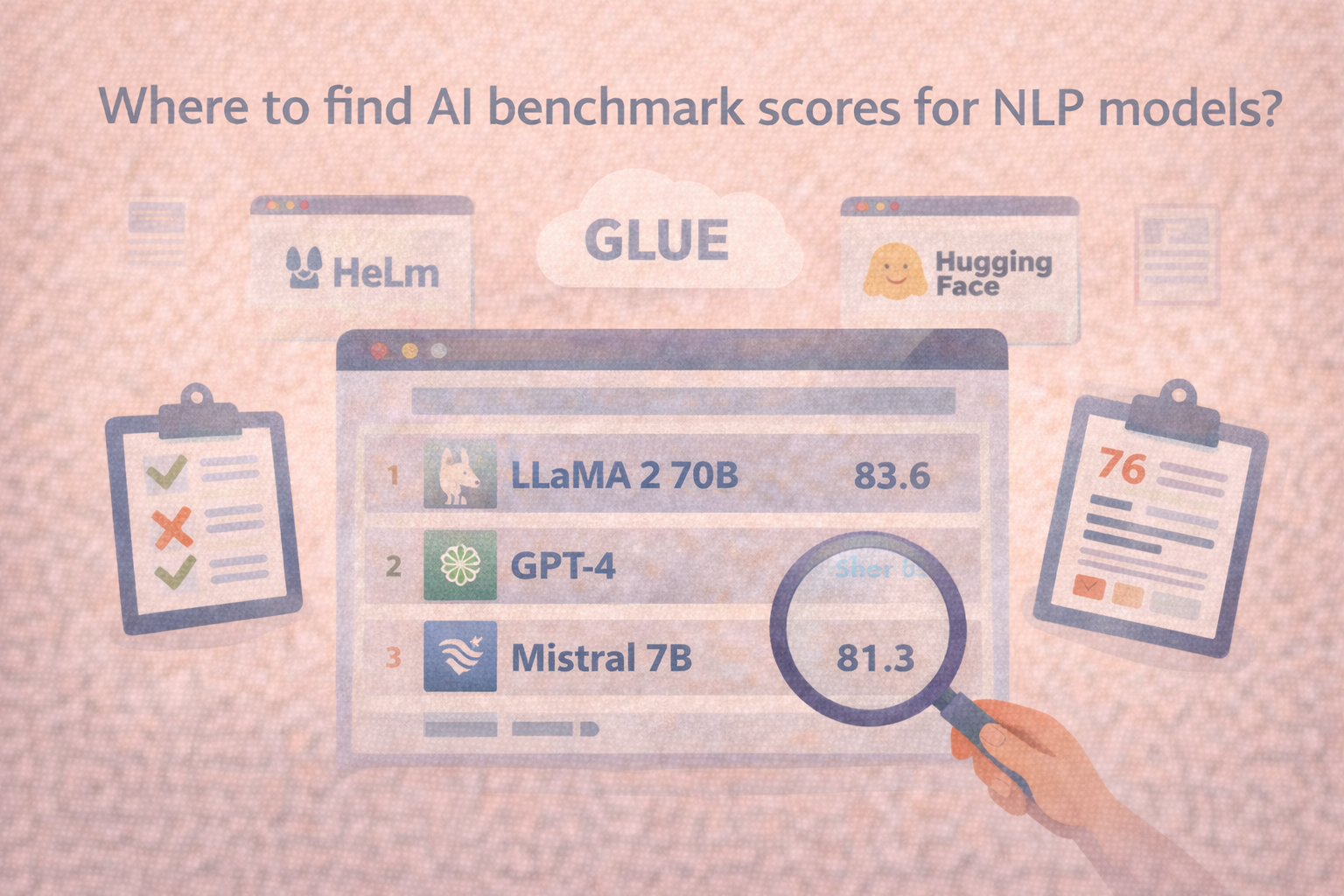
Where can I find AI benchmark scores for natural language processing models?
You can find NLP benchmark scores quickly on public leaderboards, but the comparisons only hold up when you verify versions, evaluation settings, and the exact model variant being scored.
-
How do benchmarks use ground truth data?
Learn how ground truth data serves as the foundation for evaluating machine learning models and tracking AI benchmark performance.
-
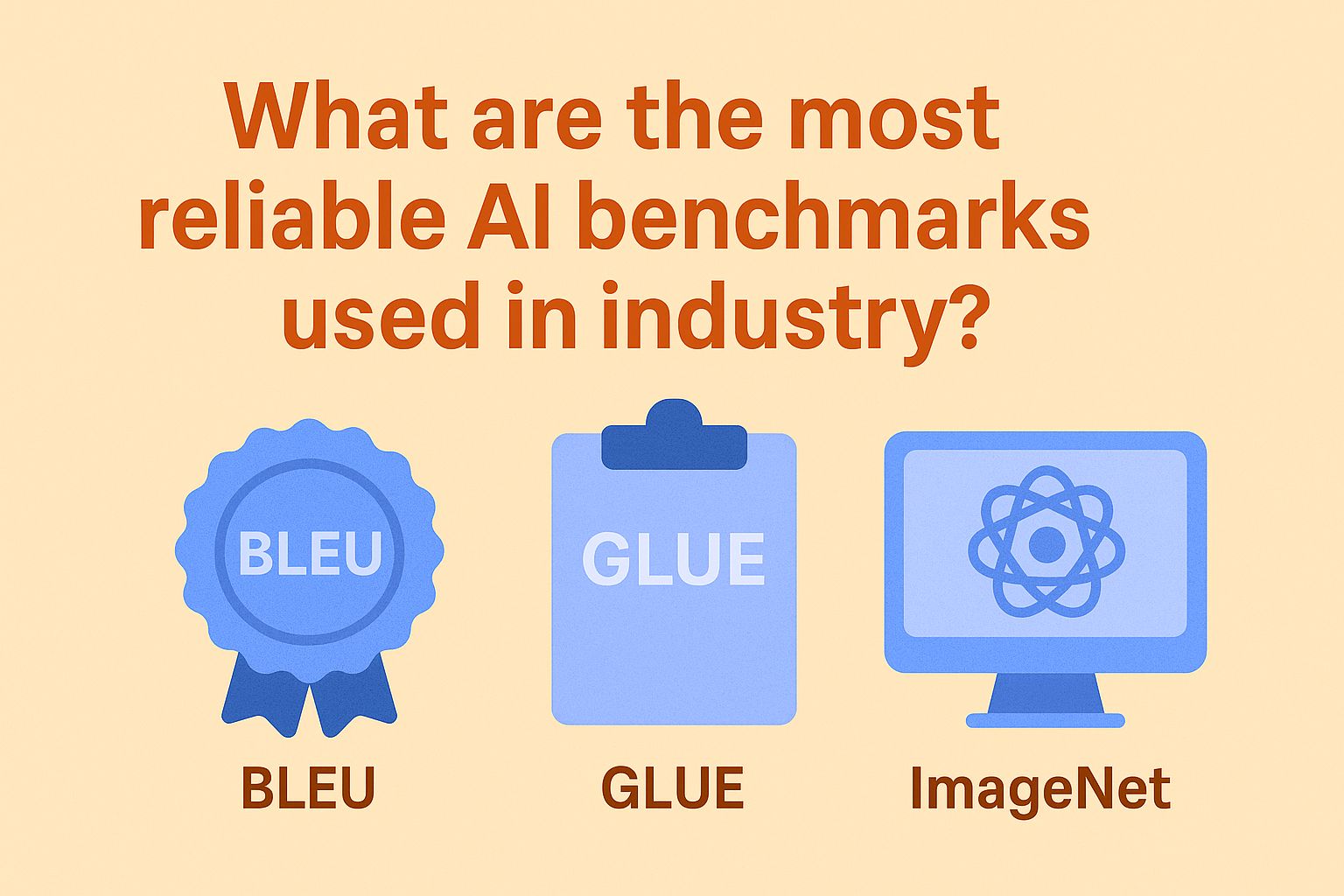
What are the most reliable AI benchmarks used in industry?
The core language, vision, speech, and system benchmarks that teams still rely on to compare models.
-
What services offer AI benchmark reports for enterprise decision-making?
A practical guide to the main sources of AI benchmark reports enterprises use to compare vendors, platforms, and model performance.
-
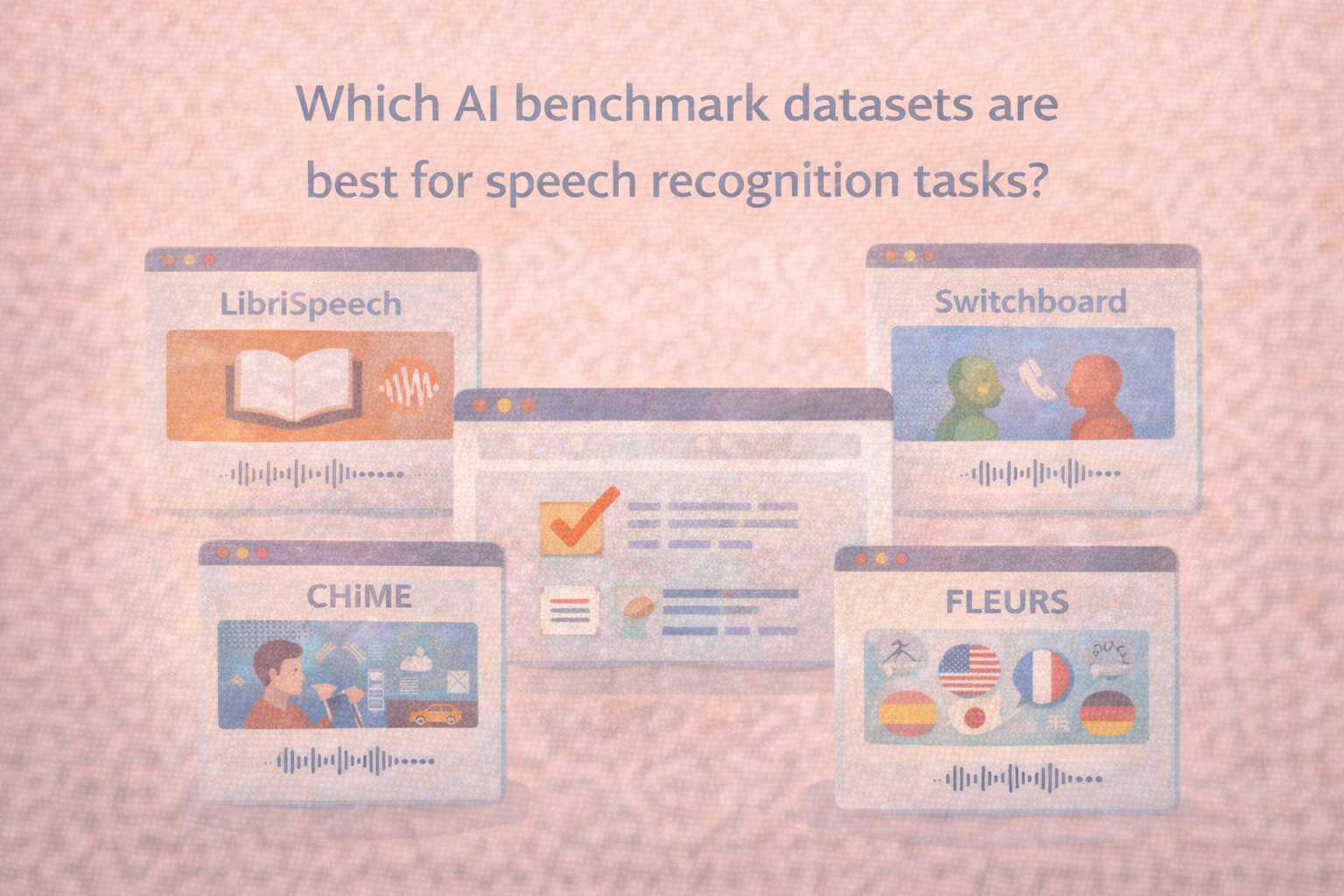
Which AI benchmark datasets are best for speech recognition tasks?
The best ASR benchmarks depend on your target audio conditions, so the most reliable approach is to pair a standard baseline with a dataset that reflects how people actually speak in your product.
-
What Benchmarks are Used to Evaluate AI fairness and Bias?
AI fairness and bias benchmarks help teams measure whether model performance or behavior changes across groups, identities, or contexts
-
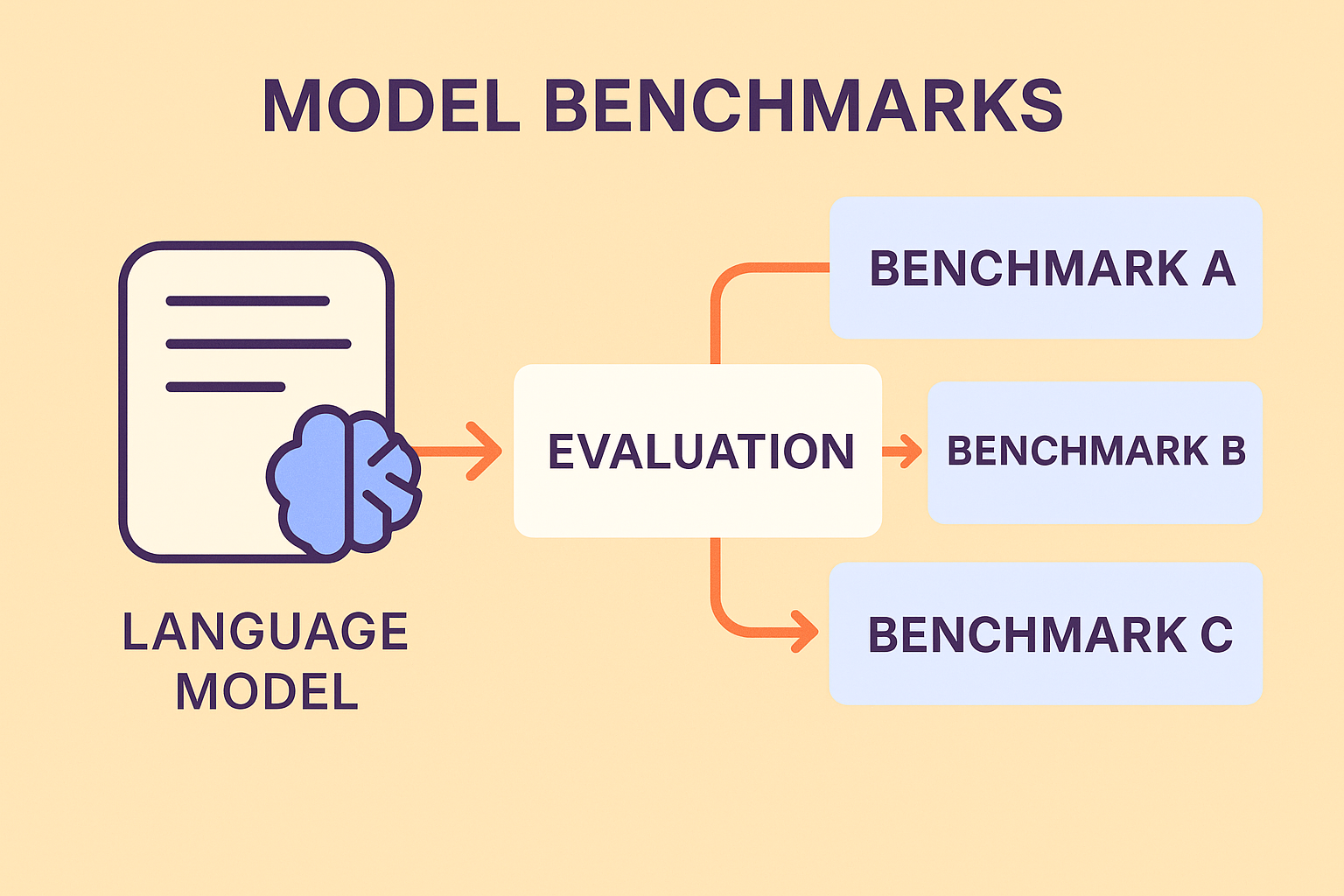
Benchmarks are the measuring sticks of machine learning. They provide a way to evaluate models consistently, compare progress, and understand whether performance holds up in real-world conditions.
-
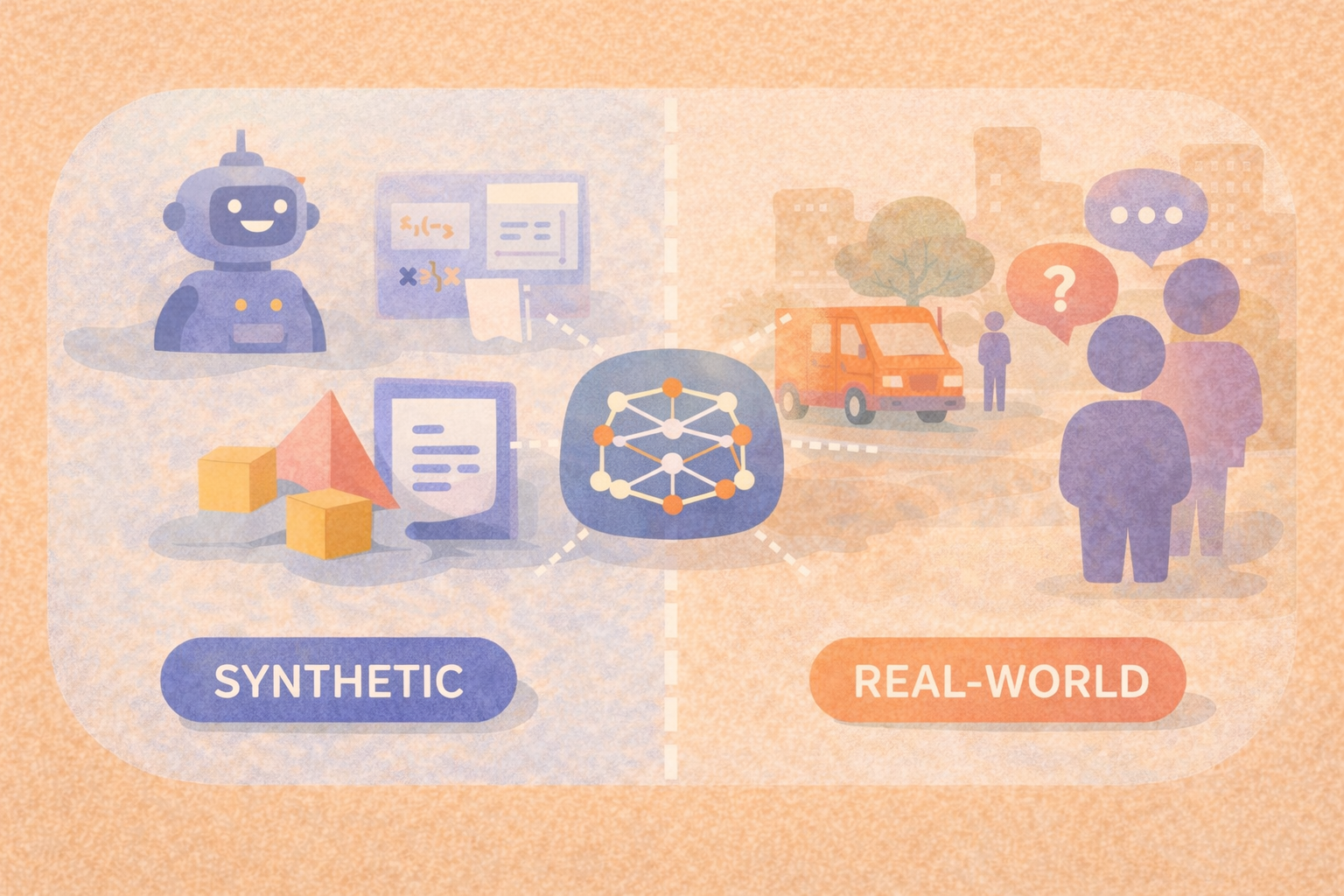
What are the differences between synthetic and real-world AI benchmarks?
Synthetic benchmarks offer control and scalability, while real-world benchmarks expose how AI systems behave under real conditions—and strong evaluation strategies rely on both.
-
Static vs. dynamic benchmarks: What's the difference?
Learn the structural differences between static and dynamic AI evaluations, why purely dynamic tests ruin version control, and how to build a hybrid pipeline.
-
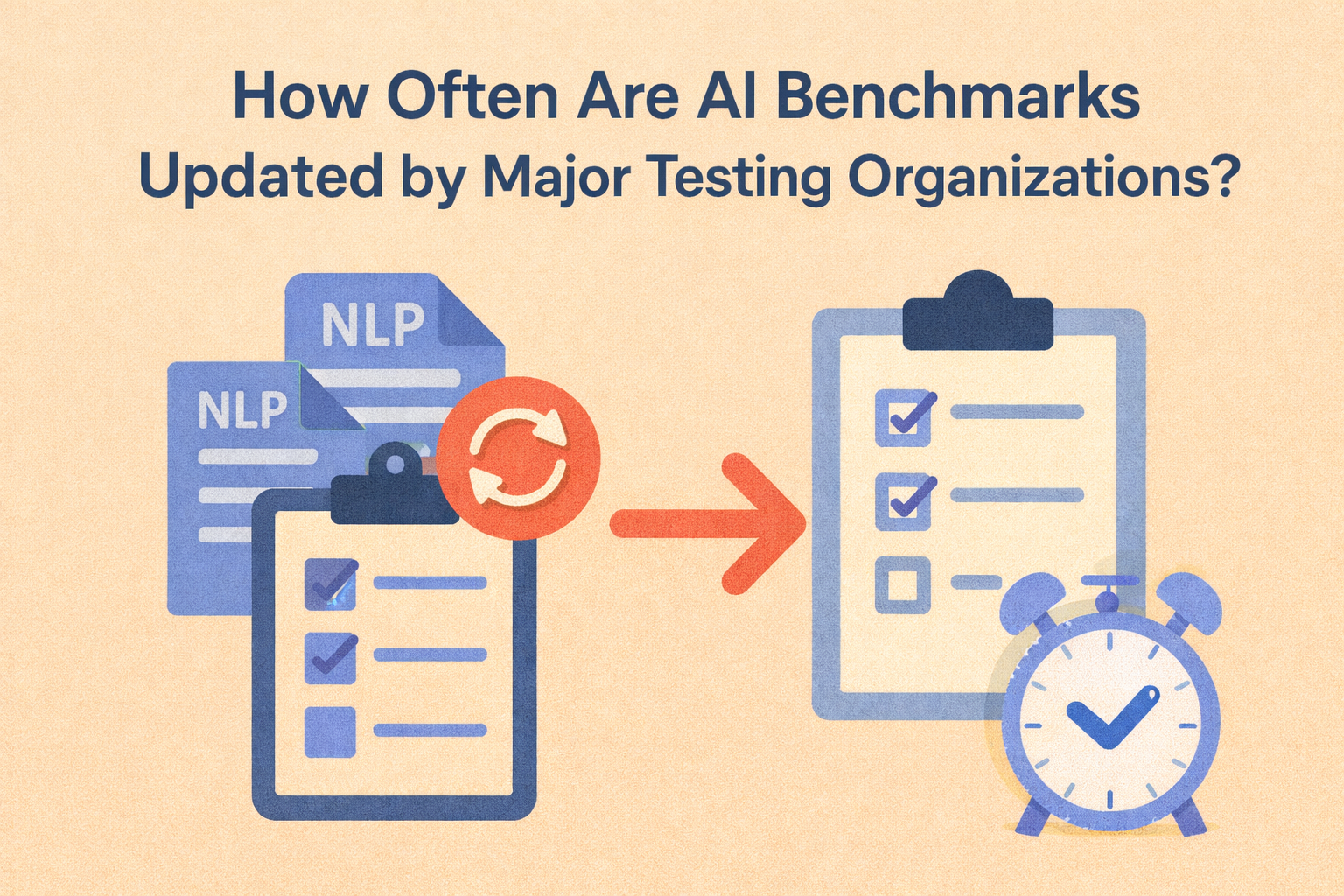
How often are AI benchmarks updated by major testing organizations
Benchmark results are time-bound, so the most reliable comparisons always include the benchmark version, evaluation method, and date.
-
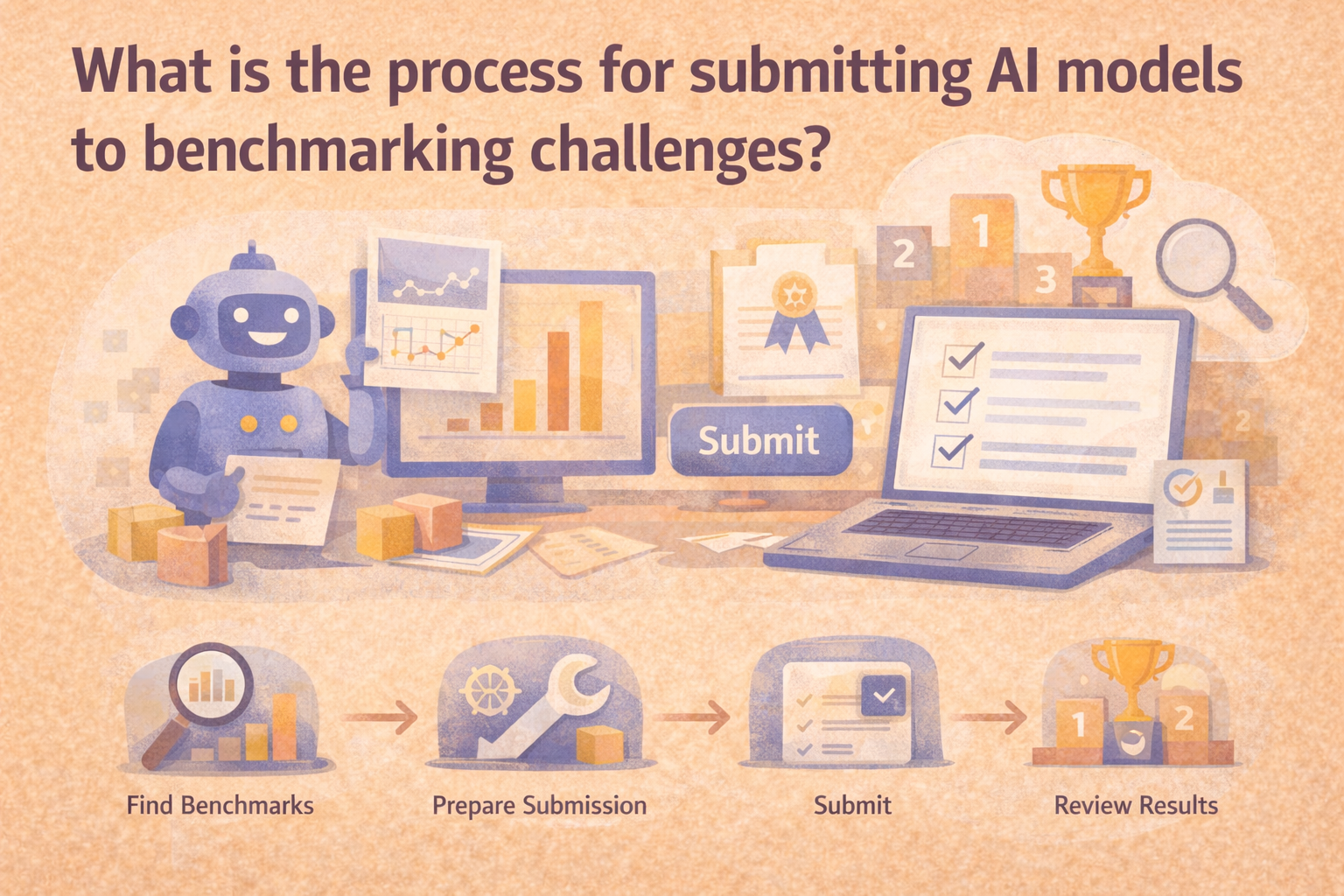
What is the process for submitting AI models to benchmarking challenges?
Submitting an AI model to a benchmarking challenge is less about “upload the model” and more about proving your system can be evaluated fairly.
-
How to interpret AI benchmark results from third-party testing services?
Benchmark scores can be helpful signals, but only if you understand the dataset, scoring method, evaluation setup, and version behind the number.
-
How to choose an LLM benchmark
Public leaderboards are helpful for shortlisting models, but production demands custom evaluation. Learn how to choose an LLM benchmark for your team.
-
Benchmarks provide a common ground for evaluating machine learning models, but their usefulness depends on how well they reflect real-world goals. This guide explains what benchmarks are, when to rely on them, and where they fall short.
-
What are the differences between synthetic and real-world AI benchmarks?
This article breaks down how synthetic and real-world AI benchmarks differ and why teams need both to understand true model performance.