How do benchmarks use ground truth data?
TL;DR
Ground truth data helps define the accurate, human-verified labels used to score machine learning models.
Benchmarks rely on verified data to compare different algorithms fairly across standard datasets.
Data quality directly dictates whether a benchmark measures real-world performance accurately.
What is ground truth data in machine learning?
Ground truth data refers to information known to be factual, confirmed by direct observation or human reviewers. Machine learning models learn generalized patterns from large batches of training data. Once training concludes, data scientists test the system against a standardized benchmark dataset. The testing group contains human-verified ground truth labels. If an algorithm attempts to categorize animal species in photographs, the ground truth is the expert-verified label confirming what animal actually appears in the image.
Models do not inherently know right from wrong. Algorithms rely heavily on math and probability functions to guess answers. The ground truth dataset acts as an answer key, telling the scoring system whether the model guessed correctly. Without verified reference data, developers have no mathematical way to score the output.
The relationship between benchmarks and ground truth data
Benchmarks evaluate software performance against standard metrics. Every system needs a reliable baseline to measure accuracy. Ground truth data establishes that baseline. Evaluators give an artificial intelligence model unseen data and compare the machine's predictions directly to the human-verified labels. A high match rate indicates strong predictive capacity. A low match rate highlights algorithmic flaws and logic errors.
Benchmarks only hold testing value if developers explicitly trust the evaluation criteria. The trustworthiness of a benchmark links directly to the quality of its ground truth data. If the underlying data contains errors, the benchmark gives misleading grades. Top-performing models might receive poor scores simply because the provided answer key is wrong.
Establishing fairness across models
Various engineering groups build different models using varied architectures. Comparing diverging systems requires a shared testing environment. Standard benchmarks provide this environment by testing every system against universally accepted ground truth datasets.
Consider the GLUE benchmark for natural language processing tasks. The test relies on sentences labeled by expert linguists. Every natural language model runs through the same set of questions and compares its outputs to the identical linguist-verified labels. Developers can clearly evaluate which architectural approach produces superior results. Fair, standardized comparisons demand strictly identical testing conditions.
Tracking progress over time
The field of artificial intelligence expands rapidly. Teams update algorithmic structures weekly. Measuring whether an update improved the system requires consistent testing baselines. A static benchmark uses the same ground truth data week after week. If the model scores 85 percent accuracy on Tuesday, and an update drops the score to 82 percent on Thursday, the engineering team knows the newest code introduced a regression. The unchanging nature of the ground truth helps teams track specific changes across long development timelines.
How datasets guide model evaluation
Testing an algorithmic system requires specific, high-quality inputs. Raw, unlabeled data cannot determine predictive accuracy. Organizations rely on structural labeling workflows to build trustworthy benchmark datasets.
Identifying edge cases
Real-world applications present highly ambiguous situations. A self-driving car might encounter a stop sign partially covered by an overgrown tree branch. Human annotators carefully label these complex images to establish ground truth for difficult edge cases. Benchmarks heavily weight these challenging scenarios. Models that only memorize average, obvious cases perform poorly on tests heavily featuring complicated edge cases.
Edge cases reveal the actual capacity of an algorithmic system. An algorithm might identify standard daytime traffic lights with near-perfect reliability. Testing the system with ground truth data representing nighttime, rainy, or foggy conditions proves whether the software is safe for real roads. Benchmark designers specifically seek out rare data points to create strenuous operational tests.
Preventing data leakage
Testing integrity breaks down if a model reviews the answers before taking the test. Developers split all available data into three segments: training, testing, and periodic validation. The benchmark test depends on ground truth data kept strictly hidden from the algorithm during the initial training phases.
Separating the data ensures the benchmark accurately measures generalization. Generalization refers to an algorithm's ability to handle new information it has not processed before. A system might memorize the training data and score exceptionally well on familiar items. If it fails when presented with the unseen benchmark data, the model lacks generalizability. Strict data separation keeps the final evaluation fair.
Ensuring balanced data representation
A benchmark test only reflects reality if the ground truth data accurately samples broader real-world populations. If an algorithmic system evaluates loan applications, the benchmark dataset needs equitable representation across different income levels and geographic regions. When ground truth data heavily favors one demographic or user group, the resulting benchmark fails to test the model's objective fairness. Engineers spend significant time curating data distributions before assigning labels. Proper representation ensures the benchmark test spots algorithmic bias during early evaluation phases.
Challenges of creating benchmark data
Building high-quality datasets for benchmark tests requires significant technical effort and capital. Human labeling demands time and focused resources. Annotators frequently encounter difficult items and disagree on subjective topics.
Addressing human subjectivity
Different people interpret text or imagery distinctively. Emotion recognition tests often lack a definitive ground truth. One person might view a text message as sarcastic, while a second reviewer finds it deeply serious. Evaluators address varying interpretations by assigning multiple human annotators to label the identical task.
The benchmark dataset normally accepts a label as ground truth only if a large majority of human reviewers agree on the outcome. If reviewers remain split, dataset creators often remove that controversial item from the benchmark pool. Excluding disputed items ensures the benchmark tests the algorithm against clearly understood concepts rather than confusing anomalies.
Maintaining data freshness
Information formats change rapidly in modern operational environments. A financial risk model trained on economic data from 2018 will likely fail a benchmark test evaluating current market conditions. Datasets require regular contextual updates to reflect current global realities.
Benchmarks lose testing weight if the ground truth data becomes stale. Algorithmic drift occurs when a model's operational environment changes while the underlying software code stays the same. Updating the benchmark's ground truth helps companies test their systems against current realities rather than historical artifacts.
Specialized applications of benchmarks ground truth data
Distinct industries create specialized benchmarks to track technical progress. Each corporate sector defines ground truth according to specific operational priorities and regulatory needs.
Medical imaging evaluations
Healthcare artificial intelligence software depends heavily on deeply verified benchmarks. A benchmark for early-stage tumor detection requires x-rays and scans labeled by certified medical specialists. The doctors' professional diagnoses constitute the necessary ground truth data.
Software models examine the scans and receive benchmark scores based on how frequently automated predictions match the specialist diagnosis. Medical benchmarks demand exceptionally low error rates. A minor fluctuation in ground truth accuracy can lead to dangerous testing outcomes within healthcare settings.
Natural language processing tests
Language modeling algorithms demand complex benchmarks capable of tracking deep textual context. Companies use HumanSignal platforms to help annotators categorize intent and sentiment in large conversational text bases. These labeled bases function as the ground truth for benchmarks grading conversational artificial intelligence.
Chatbots face rigorous tests calculating how accurately they parse complicated phrasing compared to baseline human labels. The benchmarks determine whether a chatbot understands casual slang and implied verbal meanings.
Autonomous vehicle safety
Self-driving vehicles require benchmarks simulating millions of driving miles. The ground truth data includes carefully labeled video frames identifying pedestrians, lane markings, traffic signals, and physical obstacles. Evaluators test the object detection software against these benchmark videos to verify safety protocol compliance before allowing the software onto public streets.
The cost of inaccurate benchmark data
Building imperfect benchmarks creates compounding issues for software developers. If the ground truth answers are wrong, subsequent engineering decisions often degrade the core system.
Wasted computing resources
Training machine learning models demands massive amounts of electrical power and expensive server time. If a team evaluates their model against a flawed benchmark, developers might mistakenly believe the code is failing. Engineers might then spend thousands of dollars retraining the algorithm to match incorrect ground truth labels. Retraining a model needlessly wastes substantial capital and delays production schedules.
Decreased user trust
Companies deploy models based on high internal benchmark scores. If a benchmarking test relies on heavily flawed ground truth data, a faulty model might initially score reasonably well. Once released tracking real user data, the model will produce high error rates. Users quickly abandon software platforms that behave unpredictably. High-quality ground truth data functions as an essential safety net, keeping unready software from reaching public markets.
Improving accuracy through better labeling
The functional value of any benchmark links directly to the accuracy of the foundational ground truth. Poorly labeled inputs produce misleading evaluation metrics and hide glaring algorithmic flaws.
Clear annotation guidelines
Labeling inconsistencies severely degrade benchmark reliability. Engineering teams require highly defined rules for categorizing structural data. Detail-oriented instructions help human annotators apply textual or visual labels uniformly across massive datasets.
Clear instructions dictate specifically where to place bounding boxes around vehicles in a photograph. Guidelines dictate whether the box includes the side mirrors or the vehicle's shadow. Specific guidelines eliminate basic human guesswork. Stronger guidelines result directly in cleaner ground truth data, yielding highly accurate model evaluations.
Software tooling and collaboration
Platforms built specifically for data labeling operations make the process much faster and significantly more reliable. Technology companies deploy HumanSignal interfaces where annotators review inputs, communicate with supervisors about challenging border cases, and apply required tags directly.
Efficient digital workflows help engineering teams construct excellent benchmark datasets rapidly. Built-in quality control checks flag technical instances where human workers format labels incorrectly. Automated validation rules keep messy data from entering the final benchmark system.
Is ground truth data error-free?
Minor errors occasionally enter final training datasets. Human annotation mistakes or subjective disagreements among reviewers introduce noise into the broader data. Quality control processes attempt to identify and remove formatting errors, but achieving absolute data perfection across millions of items rarely happens.
Can computers generate ground truth data automatically?
Techniques like weak supervision generate automated labels for specific software tasks. These software methods speed up processing times considerably, but they regularly lack the reliability of strict human verification. High-quality benchmarks typically depend on human-checked data rather than machine-generated guesses.
Why do researchers update benchmark tests?
Human language patterns, complex visual environments, and software user behaviors shift steadily over time. Older benchmarks might fail to grade a model's ability to process rapidly changing operational tasks. Renewing ground truth data prevents structural tests from becoming obsolete and keeps evaluations tied to modern real-world usage.
Related Content
-
Do you need a custom benchmark?
Learn why public AI leaderboards constantly fail enterprise deployments and how to scale a continuous evaluation maturity framework from proof-of-concept to production without wasting endless engineering hours.
-
Domain-specific vs. general benchmarks: What's the difference?
Learn the difference between domain-specific and general benchmarks. Understand how to measure artificial intelligence model performance effectively for your specific use case.
-
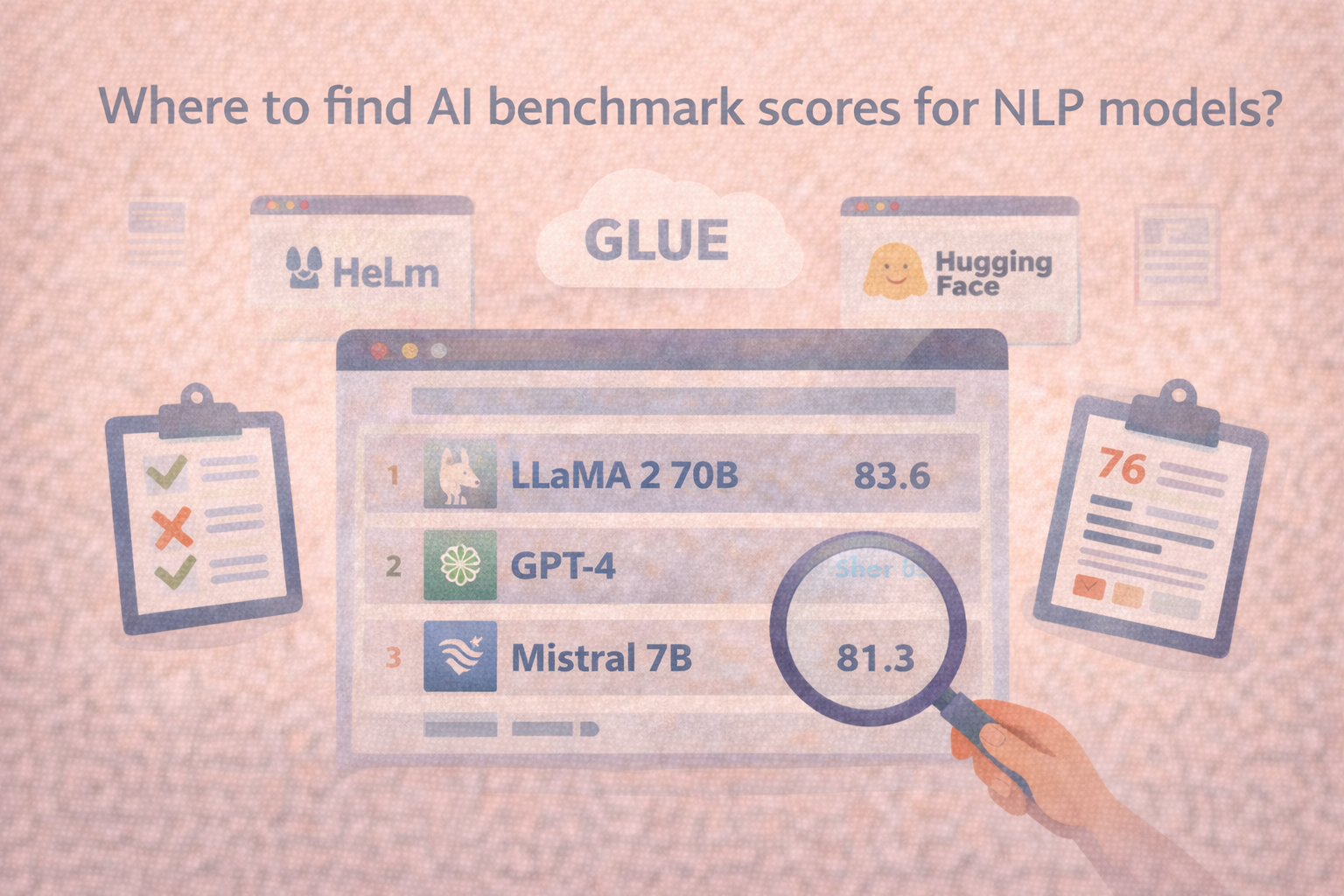
Where can I find AI benchmark scores for natural language processing models?
You can find NLP benchmark scores quickly on public leaderboards, but the comparisons only hold up when you verify versions, evaluation settings, and the exact model variant being scored.
-
Getting started with benchmark creation
A guide to creating effective benchmarks for evaluating machine learning models, covering data selection, annotation, and iteration.
-
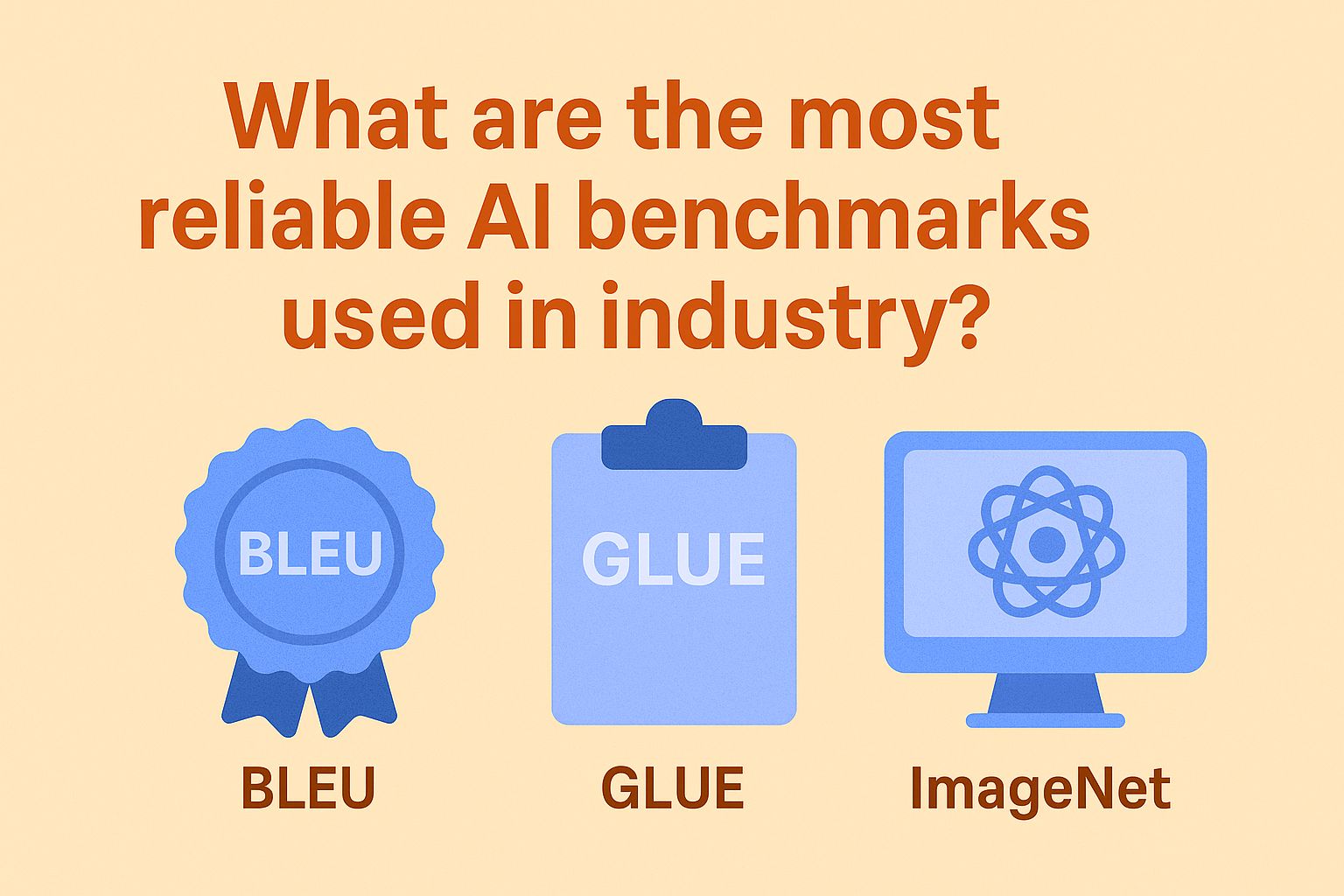
What are the most reliable AI benchmarks used in industry?
The core language, vision, speech, and system benchmarks that teams still rely on to compare models.
-
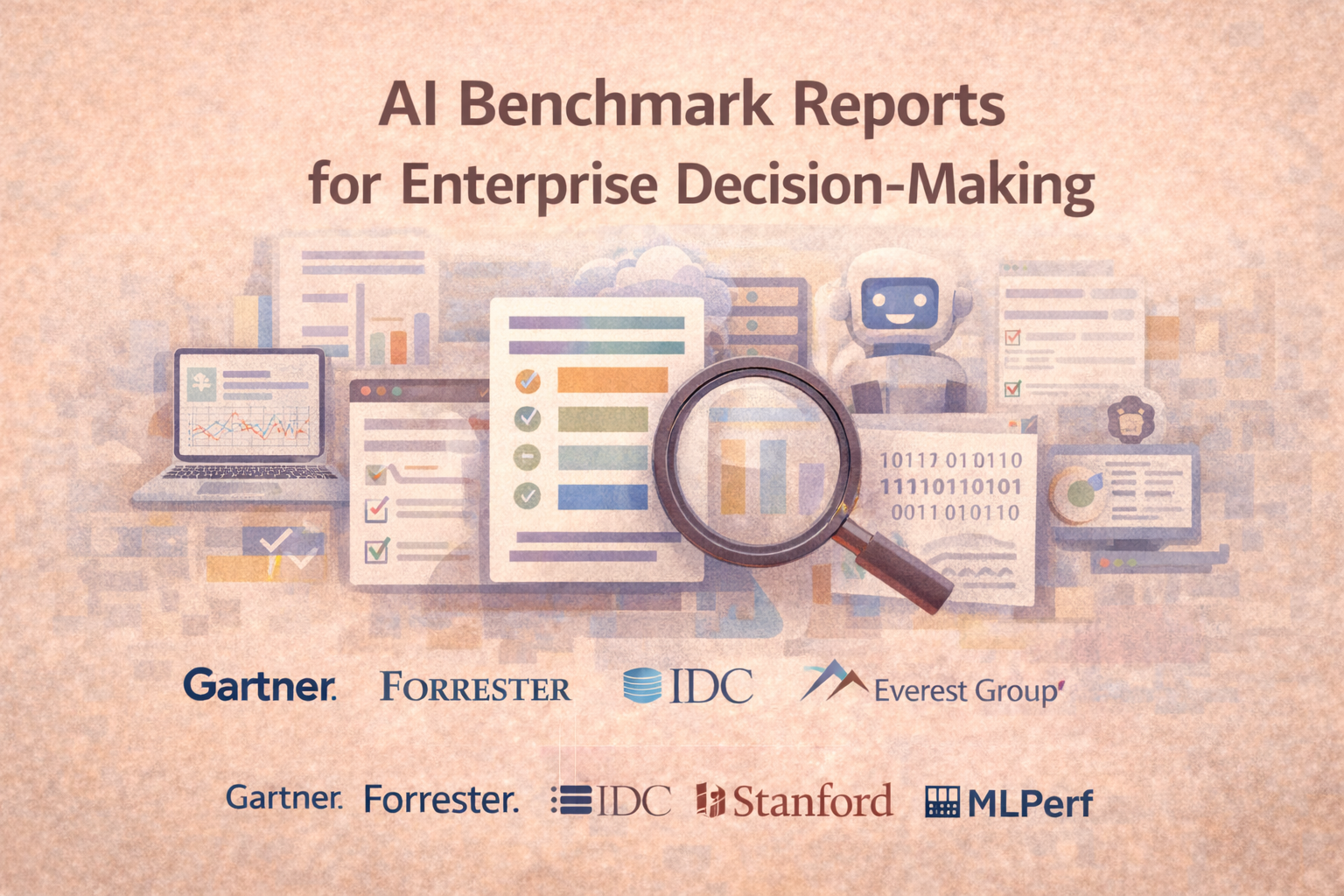
What services offer AI benchmark reports for enterprise decision-making?
A practical guide to the main sources of AI benchmark reports enterprises use to compare vendors, platforms, and model performance.
-
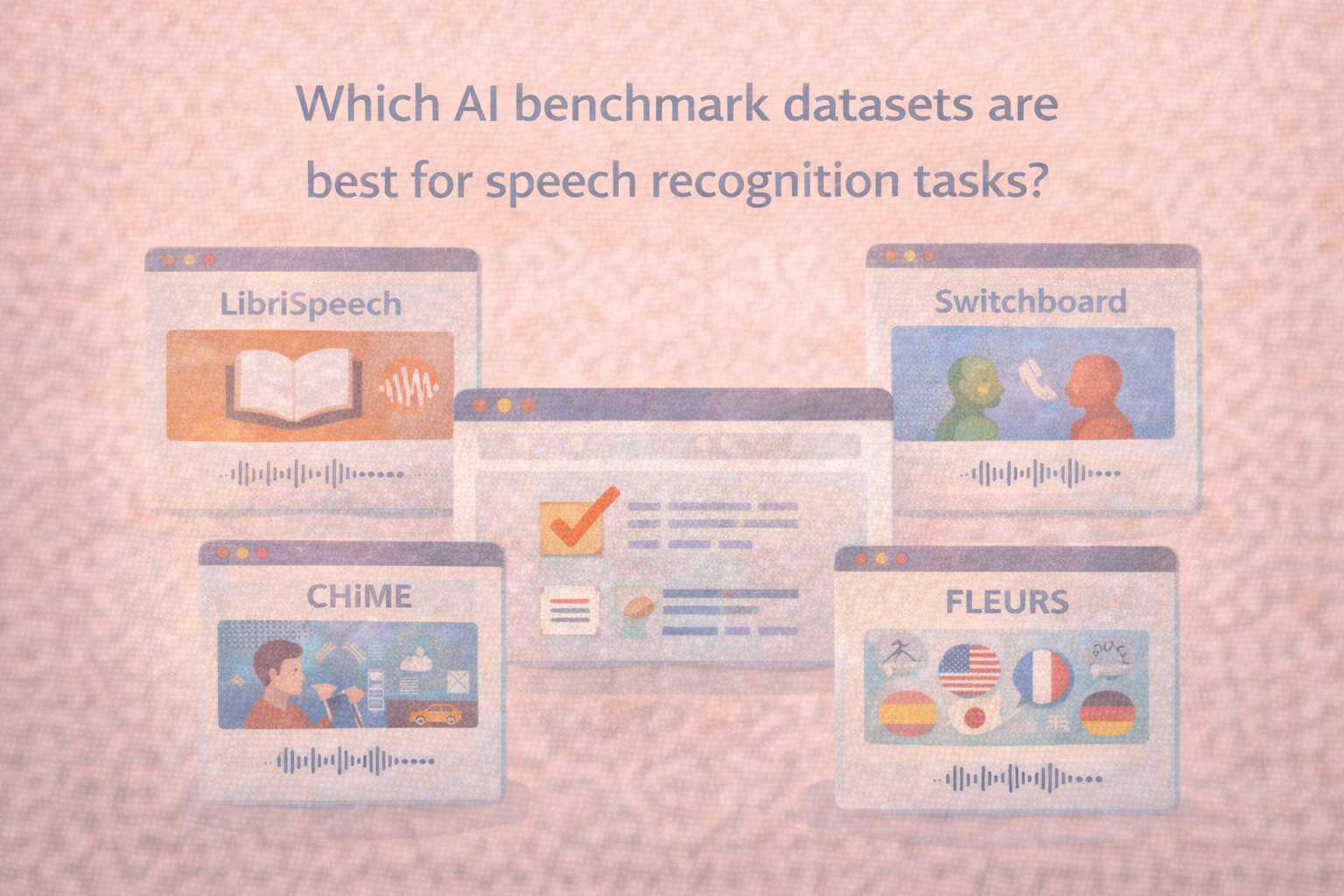
Which AI benchmark datasets are best for speech recognition tasks?
The best ASR benchmarks depend on your target audio conditions, so the most reliable approach is to pair a standard baseline with a dataset that reflects how people actually speak in your product.
-
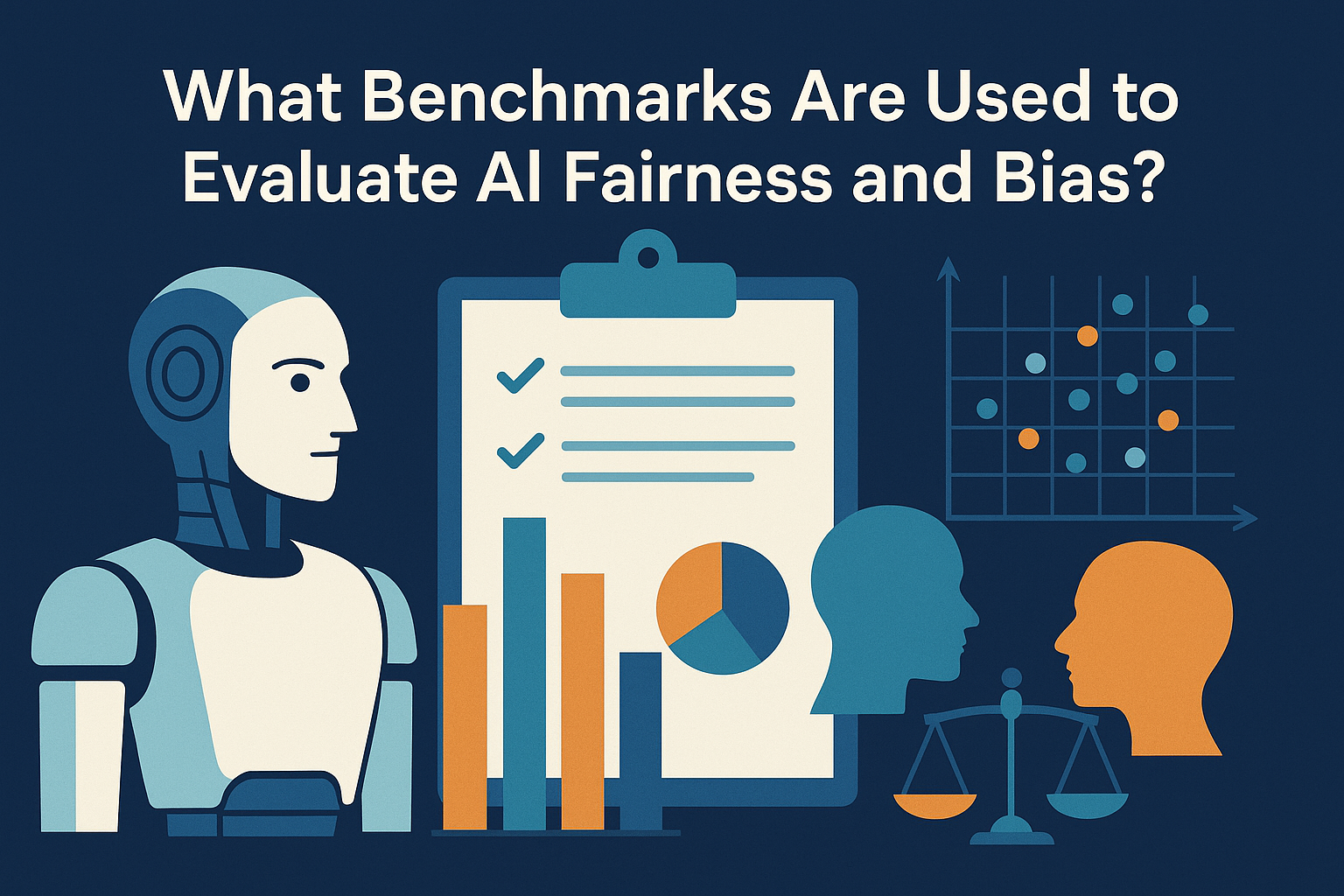
What Benchmarks are Used to Evaluate AI fairness and Bias?
AI fairness and bias benchmarks help teams measure whether model performance or behavior changes across groups, identities, or contexts
-
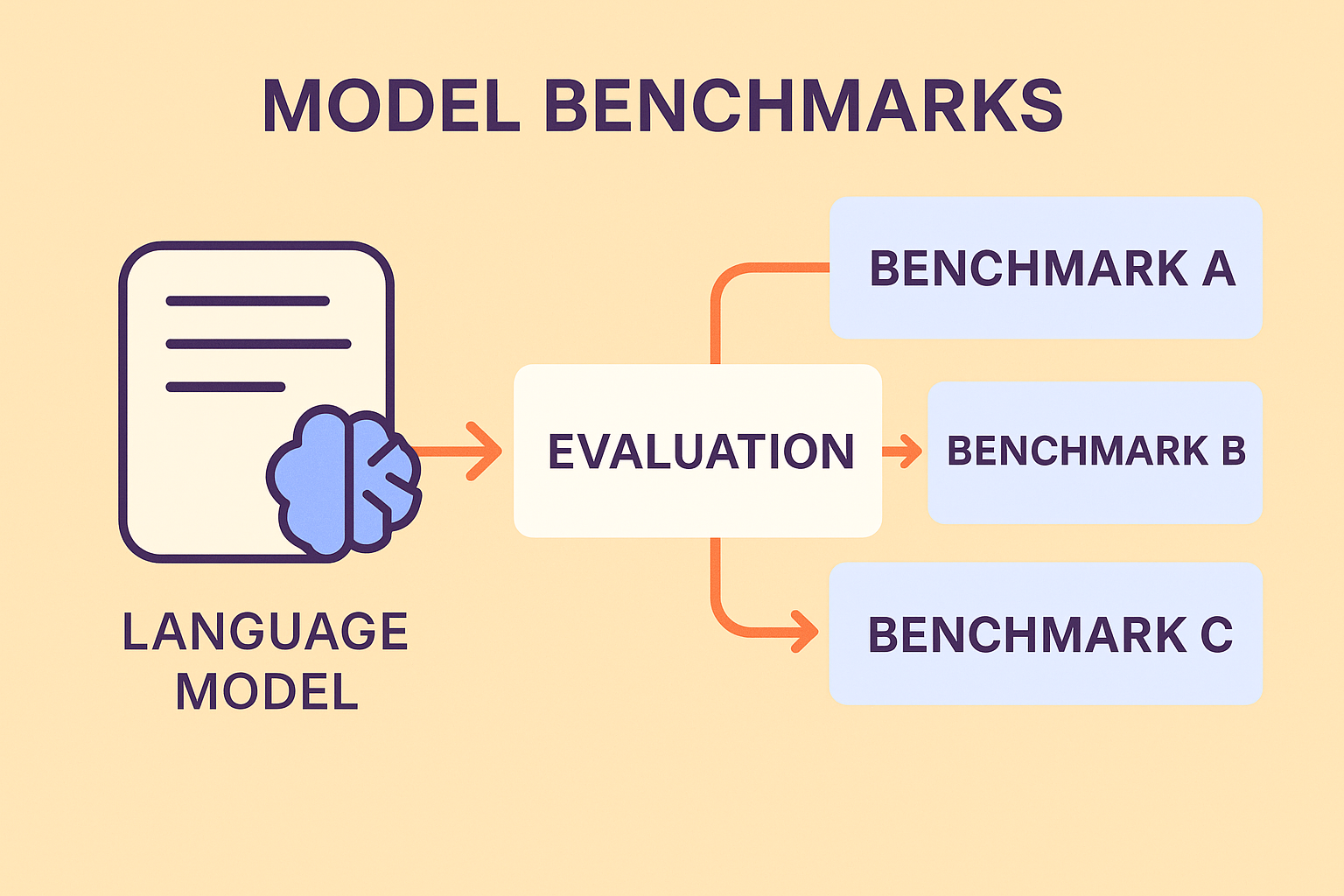
Benchmarks are the measuring sticks of machine learning. They provide a way to evaluate models consistently, compare progress, and understand whether performance holds up in real-world conditions.
-
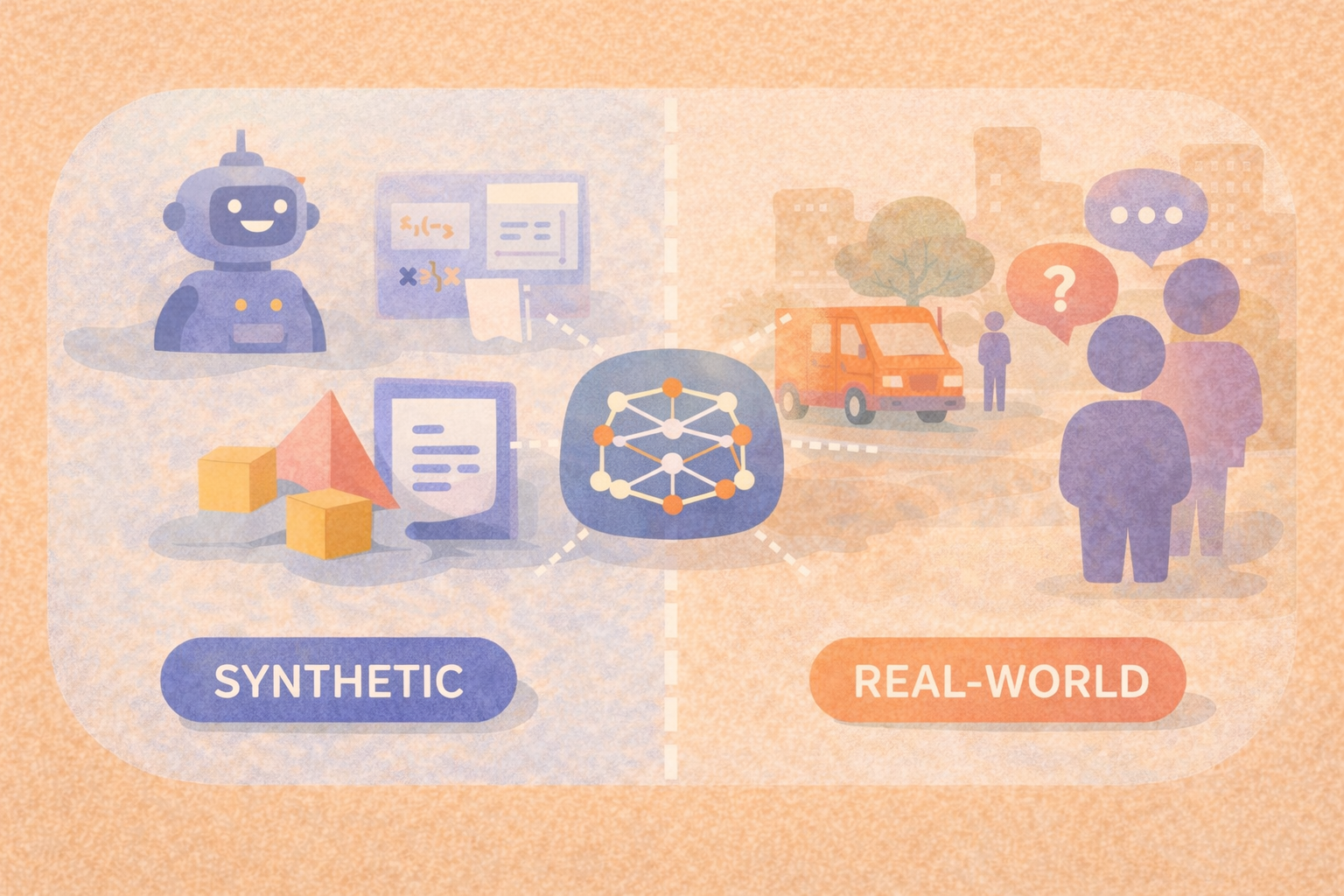
What are the differences between synthetic and real-world AI benchmarks?
Synthetic benchmarks offer control and scalability, while real-world benchmarks expose how AI systems behave under real conditions—and strong evaluation strategies rely on both.
-
Static vs. dynamic benchmarks: What's the difference?
Learn the structural differences between static and dynamic AI evaluations, why purely dynamic tests ruin version control, and how to build a hybrid pipeline.
-
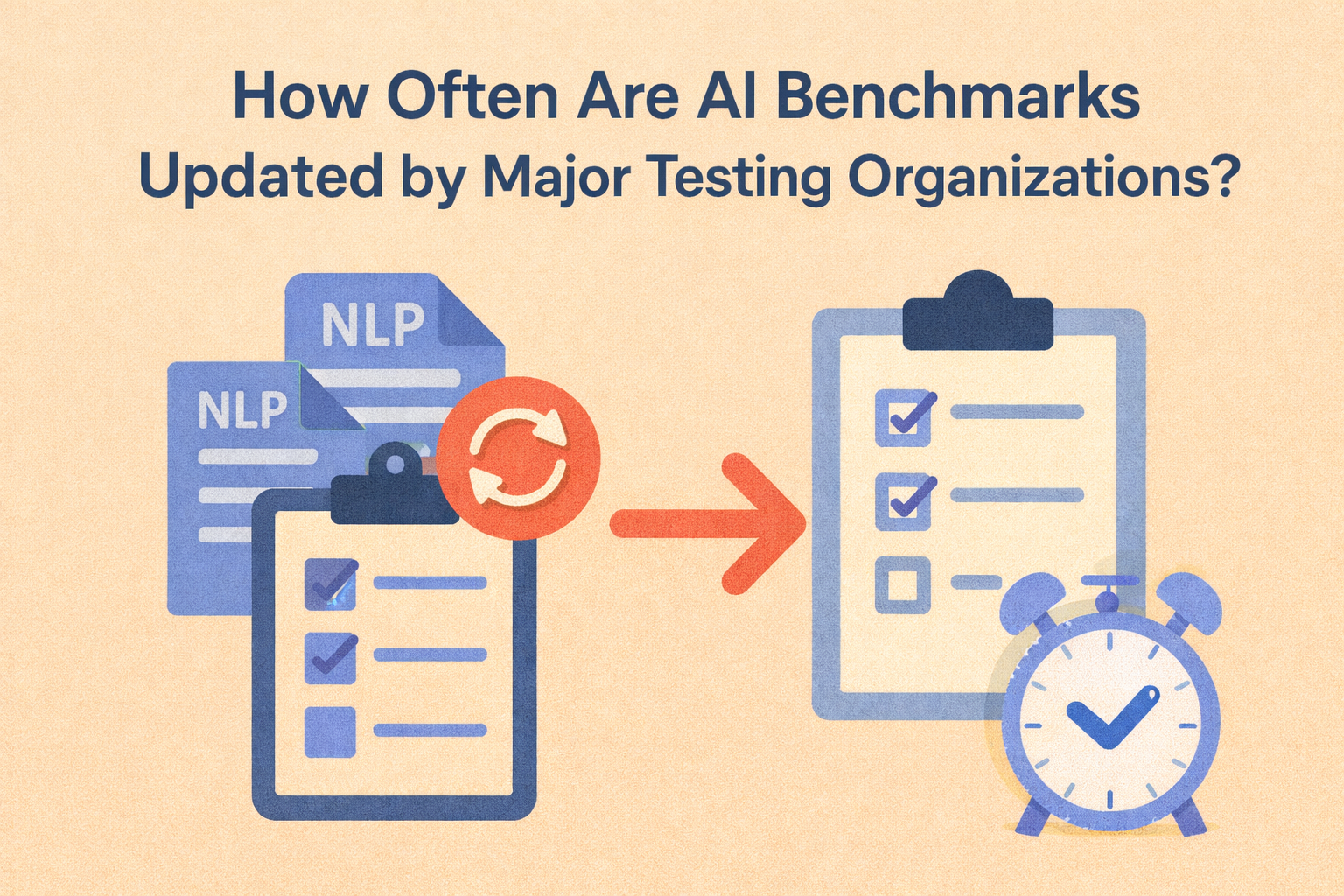
How often are AI benchmarks updated by major testing organizations
Benchmark results are time-bound, so the most reliable comparisons always include the benchmark version, evaluation method, and date.
-
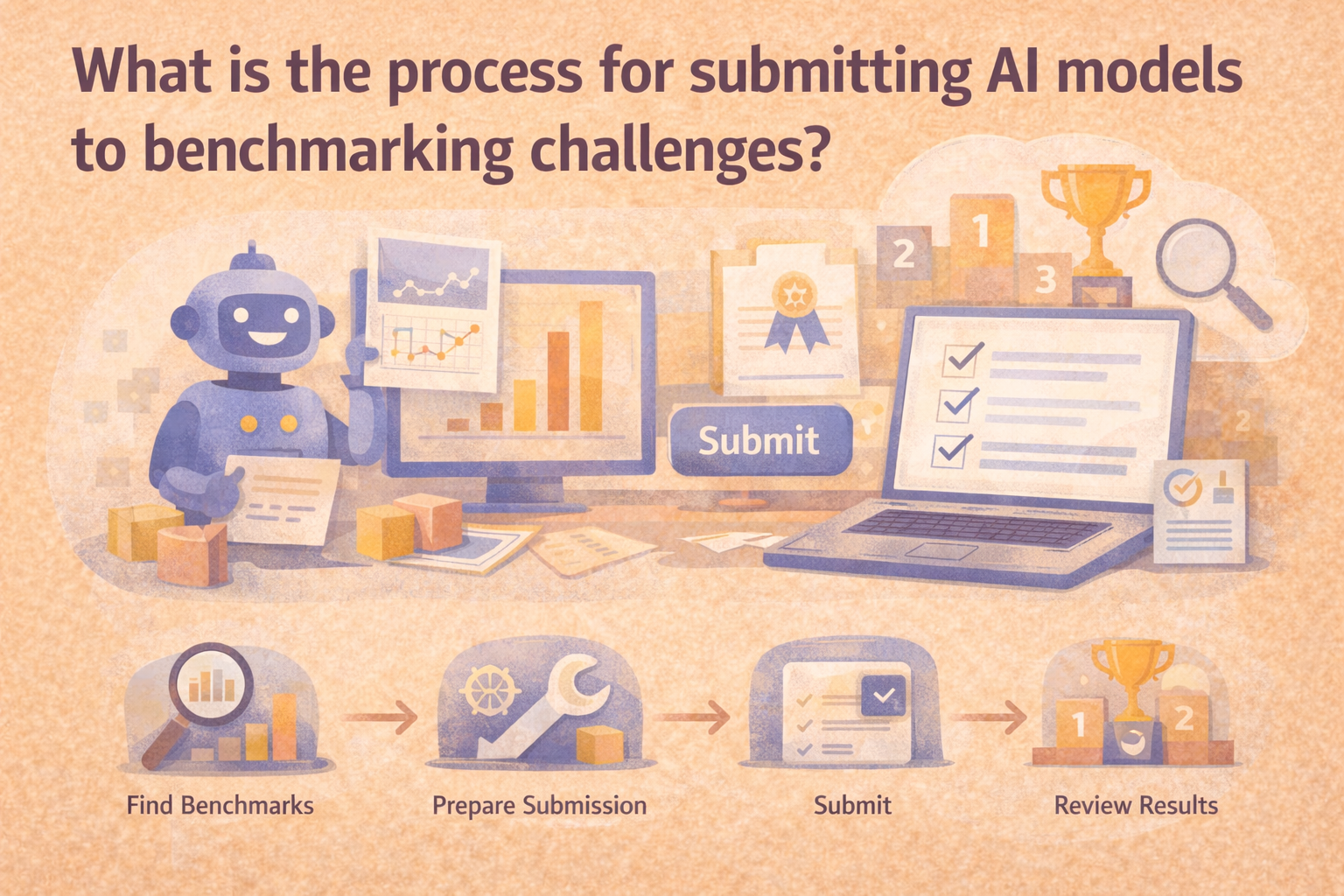
What is the process for submitting AI models to benchmarking challenges?
Submitting an AI model to a benchmarking challenge is less about “upload the model” and more about proving your system can be evaluated fairly.
-
How to interpret AI benchmark results from third-party testing services?
Benchmark scores can be helpful signals, but only if you understand the dataset, scoring method, evaluation setup, and version behind the number.
-
How to choose an LLM benchmark
Public leaderboards are helpful for shortlisting models, but production demands custom evaluation. Learn how to choose an LLM benchmark for your team.
-
Benchmarks provide a common ground for evaluating machine learning models, but their usefulness depends on how well they reflect real-world goals. This guide explains what benchmarks are, when to rely on them, and where they fall short.
-
What are the differences between synthetic and real-world AI benchmarks?
This article breaks down how synthetic and real-world AI benchmarks differ and why teams need both to understand true model performance.