Static vs. dynamic benchmarks: What's the difference?
Passing a static public AI benchmark no longer proves your foundational model is actually capable. It mostly just proves the model has a very good memory. While the industry touts dynamic evaluation as the ultimate fix for contaminated leaderboards, rapidly switching out test datasets destroys your engineering team's ability to track historical regressions.
You do not have to choose between fresh data and reliable version control. Enterprise product teams need to maintain a stable regression baseline alongside a separate dynamically updated pipeline to capture real-world drift.
Unlike application security, where SAST and DAST test software code for vulnerabilities, this benchmarking concept applies specifically to AI model evaluation. The following guide breaks down how dynamic methods impact model deployment, why complex agents force the issue, and how to operate a pipeline that actually works in production.
TL;DR
Fixed public datasets leak into model training data, turning reasoning tests into memory tests.
Constantly refreshing your evaluation datasets solves the contamination problem, but it destroys your ability to track model regressions accurately week over week.
Multi-step reasoning and tool-calling cannot be graded against static ground-truth datasets, forcing a move toward time-dependent trace evaluation.
Production teams should use a stable static suite specifically for version control, while managing a separate dynamic pipeline governed by human-in-the-loop oversight to gauge real-world performance.
The allure and failure of static AI benchmarks
A static benchmark uses a fixed dataset and fixed evaluation protocol that does not change over time. Operations teams rely on these tools because fixed tasks make evaluation cheap, fast, repeatable, and comparable across teams and time. If you want to know if today's model is 2 percent better than last month's model, an unchanging set of questions gives you a direct numerical answer.
But fixed reference datasets rarely survive contact with widespread internet scraping. Public static benchmark datasets end up in model training data by default. Contamination inflates reported performance because models effectively memorize the test content. Such leakage occurs directly through identical examples appearing in training data, indirectly through paraphrased answers, temporally when the underlying training data post-dates the benchmark reference, or synthetically through model-generated study guides.
Older coding benchmarks like HumanEval demonstrate clear signs of overfitting and training contamination as these tests become standard targets for model builders to fine-tune against. Relying on these saturated tests masks real-world failure. Public leaderboards look deeply impressive until the model actually faces proprietary edge cases.
If you want accuracy, custom benchmarks outperforming generic leaderboards is a consistent pattern on tasks that actually matter to corporate revenue. Enterprise teams test what they expect the model to do in specific production environments and skip generalized academic riddles.
The backward compatibility trap of purely dynamic evaluation
Because static benchmarks eventually measure a model's memory, bypassing its actual reasoning capabilities, the AI evaluation field is actively shifting from static to dynamic benchmark designs. Researchers acknowledge that static anti-contamination fixes have inherent limits.
A dynamic benchmark refreshes its test data periodically or uses synthetic rules to ensure test novelty. Changing the questions continuously stops models from memorizing the answers. Academic teams use temporal cutoffs to evaluate models on novel real-world clinical examples, causing 84 percent of models to degrade heavily against post-cutoff data, with top scores barely reaching 39 percent.
The logic seems undeniable at first glance. If you test models on data that didn't exist last week, they cannot cheat. While they prevent simple memorization, dynamic methods often introduce new failure modes, scoring poorly on interpretability, tracking comparability, diversity, and complexity control.
Updating data constantly also creates a severe versioning crisis for engineering teams. Continuously changing evaluation datasets makes historical tracking and backward compatibility exceptionally difficult. If your test dataset changes every single week, a 5 percent drop in system accuracy could mean your new model iteration is worse. Or, it could merely mean your dataset generation script accidentally created harder questions this week.
Constantly shifting test data destroys the scientific control group. For pilot projects, this margin of error is acceptable. At corporate scale, the coordination cost changes the calculus. Dynamic datasets force teams to manage the lifecycle as models evolve with strict oversight to ensure the tests show genuine improvements and filter out random fluctuations.
Why agentic workflows break static rules
Losing direct comparability is a painful operational tradeoff, but as model usage moves from simple chat to complex reasoning, it is an obstacle engineering teams are forced to address. Conventional ground-truth answers work perfectly when you ask an LLM a trivia question. They fail when you evaluate autonomous systems executing ongoing tasks.
An enterprise team ships a customer service AI agent during a brief pilot sprint. Two months later, a user asks the agent to refund a complex multi-item purchase. The system executes five distinct actions: querying the billing API, validating the return policy, calculating the prorated total, initiating the refund, and drafting the confirmation email.
An off-the-shelf static test checks whether the final email text appears polite and factually correct. The fixed test ignores that the agent actually called the wrong internal billing endpoint three times before stumbling into the right answer.
Grading agent performance safely demands deep visibility into the intermediate logic. You need human-in-the-loop evaluation for agentic observability to audit the distinct branching logic and non-deterministic tool calls that foundational models generate. Time-dependent traces require proactive oversight that goes beyond a basic strict-match grade against a static file.
Operating a hybrid evaluation pipeline
Because complex agents require fluid trace evaluation, yet safe software deployment requires rigid regression testing, production teams cannot rely on a single approach and need to run both methods side-by-side.
Evaluation goes beyond a strict static versus dynamic division. Benchmarks should be evaluated across realistic quality criteria and managed through distinct lifecycle phases, including maintenance and eventual retirement. Data science leaders resolve this structural tension by deploying dual test architectures. An effective operating model retains a static pipeline for regression control while running a fresher dynamic path for real-world drift.
Lock down a small suite of highly specific internal tests first. You freeze these test paths to enforce the same baseline stability Stanford's HELM metric requires for prompt-level reproducibility. These fixed tests prove that the new model candidate does not break existing core functionality. Historical regression tracking depends on this foundation.
Next, you operate a secondary dynamic track that constantly intakes flagged user failures, novel edge cases, shifting prompt structures, and changing business logic. You see the value of this dual-pipeline architecture clearly when testing foundational series against custom task arrays, where performance on isolated internal data drastically diverges from public claims.
Creating a dynamic pipeline requires fresh data, forcing teams to adopt ongoing grading strategies for open-ended outputs without relying on flawed synthetic judges.
Injecting human review into the dynamic lifecycle
A dynamic test set is only as reliable as the ground truth scoring it. Relying purely on a secondary AI to grade your dynamic inputs creates a closed loop where software grades its own homework. Domain experts need to actively review and curate new datasets to prevent evaluation bias.
With HumanSignal, you manage custom evolving benchmarks by organizing the human-in-the-loop review protocols necessary to keep dynamic pipelines valid. Teams use the platform to capture production traces, structure the complex multi-step context, assign them to experts for validation, and fold those hardened examples back into the dynamic testing suite.
When you focus on building task arrays that evolve alongside your engineering needs, off-the-shelf datasets stop dominating the conversation. You build proprietary updates based on actual customer interactions to ensure the model survives real-world deployment.
Finding stability in evolving systems
The debate between static and dynamic AI benchmarks is largely a false dichotomy set up by theoretical research. In the gritty reality of production pipelines, dropping fixed datasets breaks basic software engineering principles, while blindly trusting them invites catastrophic real-world failure.
Managing this balancing act requires maintaining two diverse streams of evaluation. One remains locked in place, while the other constantly shifts based on trace logic and fresh edge cases.
With HumanSignal, you establish reliable foundational evaluation workflows that enforce dedicated human review, ensuring your dynamic scores track actual capability and filter out random noise. Public leaderboards are fantastic for generating press releases, but only rigorous, dual-track internal evaluation keeps models safely running in production.
What is the difference between static and dynamic application security testing versus AI benchmarking?
In application security, SAST and DAST refer to analyzing source code at rest versus running applications to find active vulnerabilities. In AI benchmarking, static versus dynamic refers directly to whether the dataset used to grade the model is permanently fixed or continuously updated over time to prevent memorization.
Why do models score high on static leaderboards but fail in production?
Data contamination causes the massive disconnect between lab testing and real-world performance. When the fixed questions from public benchmarks end up in the model's training data, the model effectively memorizes the test answers and fails to learn how to reason through complex problems.
How frequently should dynamic AI benchmarks update?
The refresh rate depends heavily on the specific use case, but the timeline needs to match how rapidly your edge cases shift. Academic tools like LiveBench update monthly with newly released sources to prevent contamination, while medical benchmarks harvest new real-world clinical cases weekly to maintain strict temporal separation from model training runs.
Can synthetic data fully replace static benchmarks?
No. While synthetic generation explores endless novel scenarios, AI judges scoring AI outputs often lack proper oversight and fail to grasp subtle human nuance. You still need stable baseline tests for regression tracking and human-in-the-loop pipelines to verify synthetic generation accuracy over time.
How do you test multi-step AI agents?
Single-answer static tests fail agents because these systems generate complex reasoning traces and execute external tool calls. Evaluating agentic workflows requires dynamic trace evaluation and human-adversarial oversight to grade the logic between intermediate steps along with the final text output.
Related Content
-
Do you need a custom benchmark?
Learn why public AI leaderboards constantly fail enterprise deployments and how to scale a continuous evaluation maturity framework from proof-of-concept to production without wasting endless engineering hours.
-
Domain-specific vs. general benchmarks: What's the difference?
Learn the difference between domain-specific and general benchmarks. Understand how to measure artificial intelligence model performance effectively for your specific use case.
-
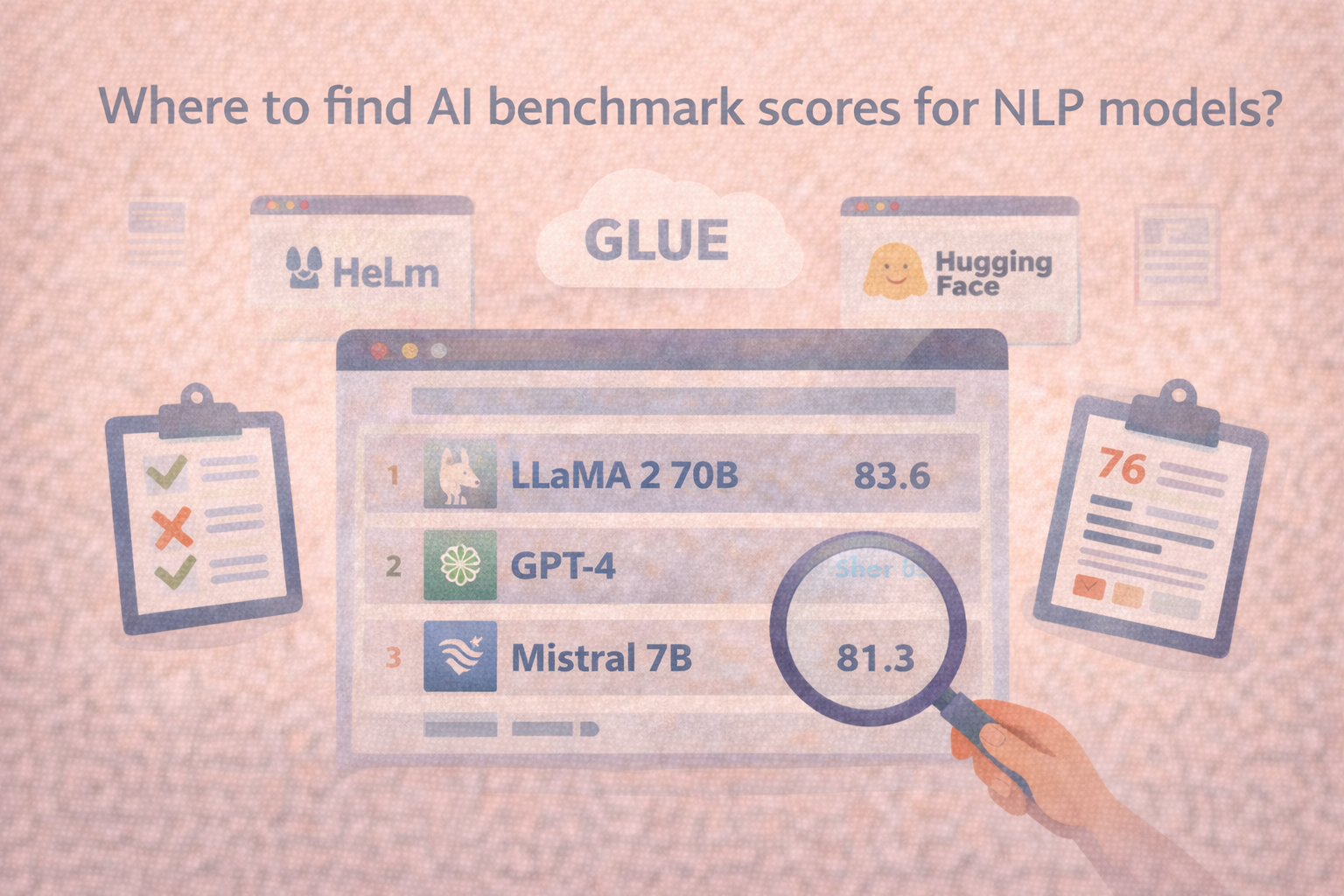
Where can I find AI benchmark scores for natural language processing models?
You can find NLP benchmark scores quickly on public leaderboards, but the comparisons only hold up when you verify versions, evaluation settings, and the exact model variant being scored.
-
Getting started with benchmark creation
A guide to creating effective benchmarks for evaluating machine learning models, covering data selection, annotation, and iteration.
-
How do benchmarks use ground truth data?
Learn how ground truth data serves as the foundation for evaluating machine learning models and tracking AI benchmark performance.
-
What are the most reliable AI benchmarks used in industry?
The core language, vision, speech, and system benchmarks that teams still rely on to compare models.
-
What services offer AI benchmark reports for enterprise decision-making?
A practical guide to the main sources of AI benchmark reports enterprises use to compare vendors, platforms, and model performance.
-
Which AI benchmark datasets are best for speech recognition tasks?
The best ASR benchmarks depend on your target audio conditions, so the most reliable approach is to pair a standard baseline with a dataset that reflects how people actually speak in your product.
-
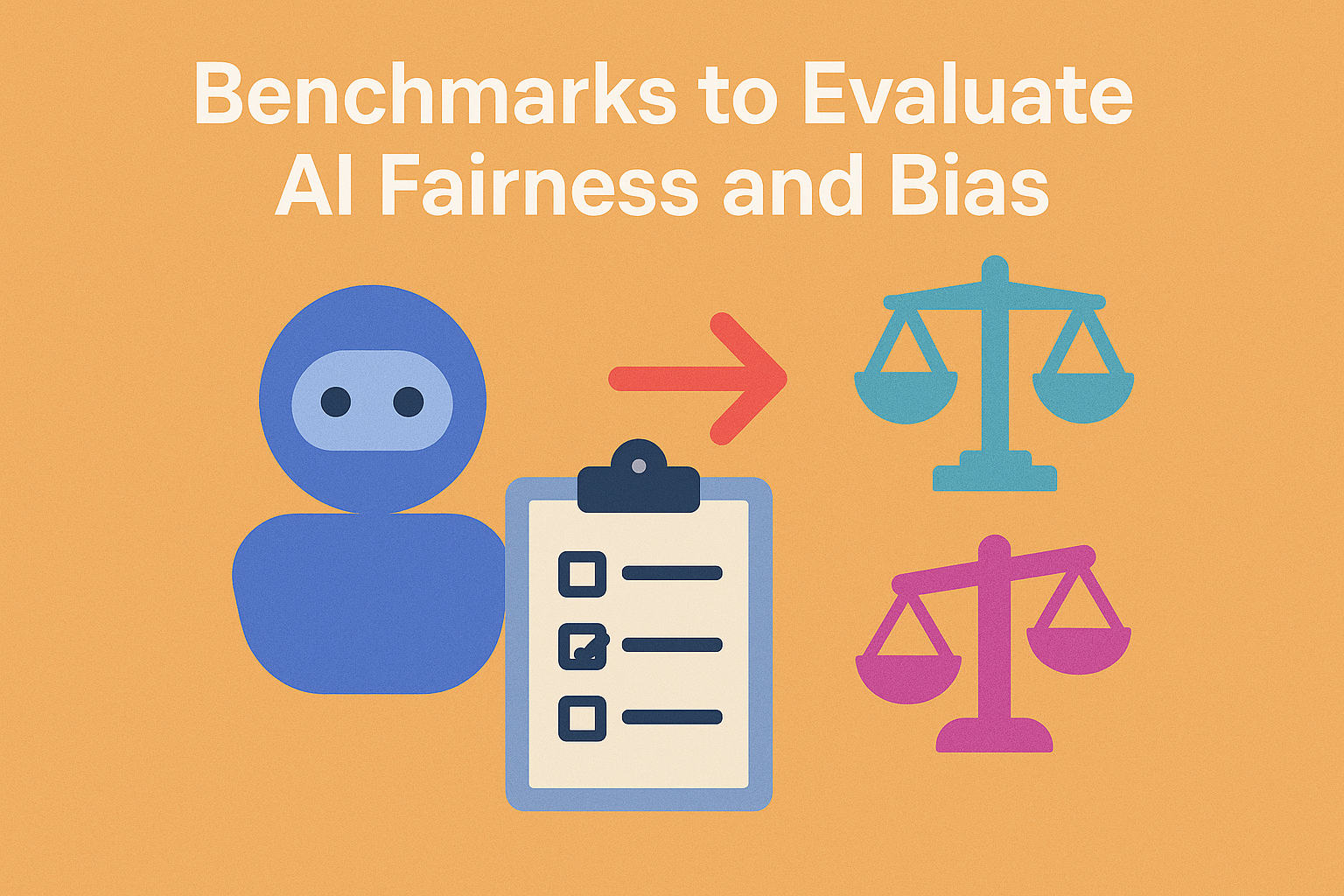
What Benchmarks are Used to Evaluate AI fairness and Bias?
AI fairness and bias benchmarks help teams measure whether model performance or behavior changes across groups, identities, or contexts
-
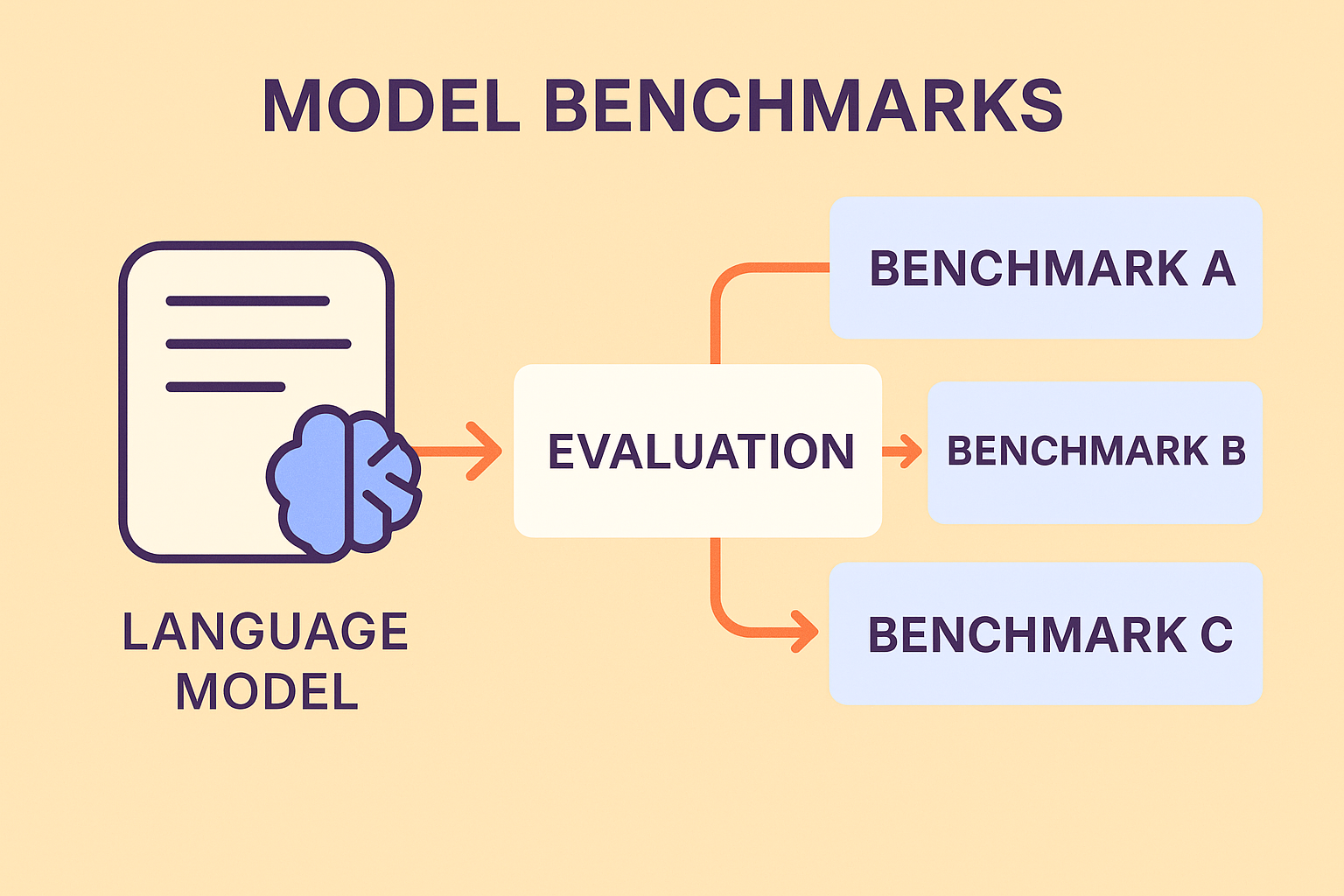
Benchmarks are the measuring sticks of machine learning. They provide a way to evaluate models consistently, compare progress, and understand whether performance holds up in real-world conditions.
-
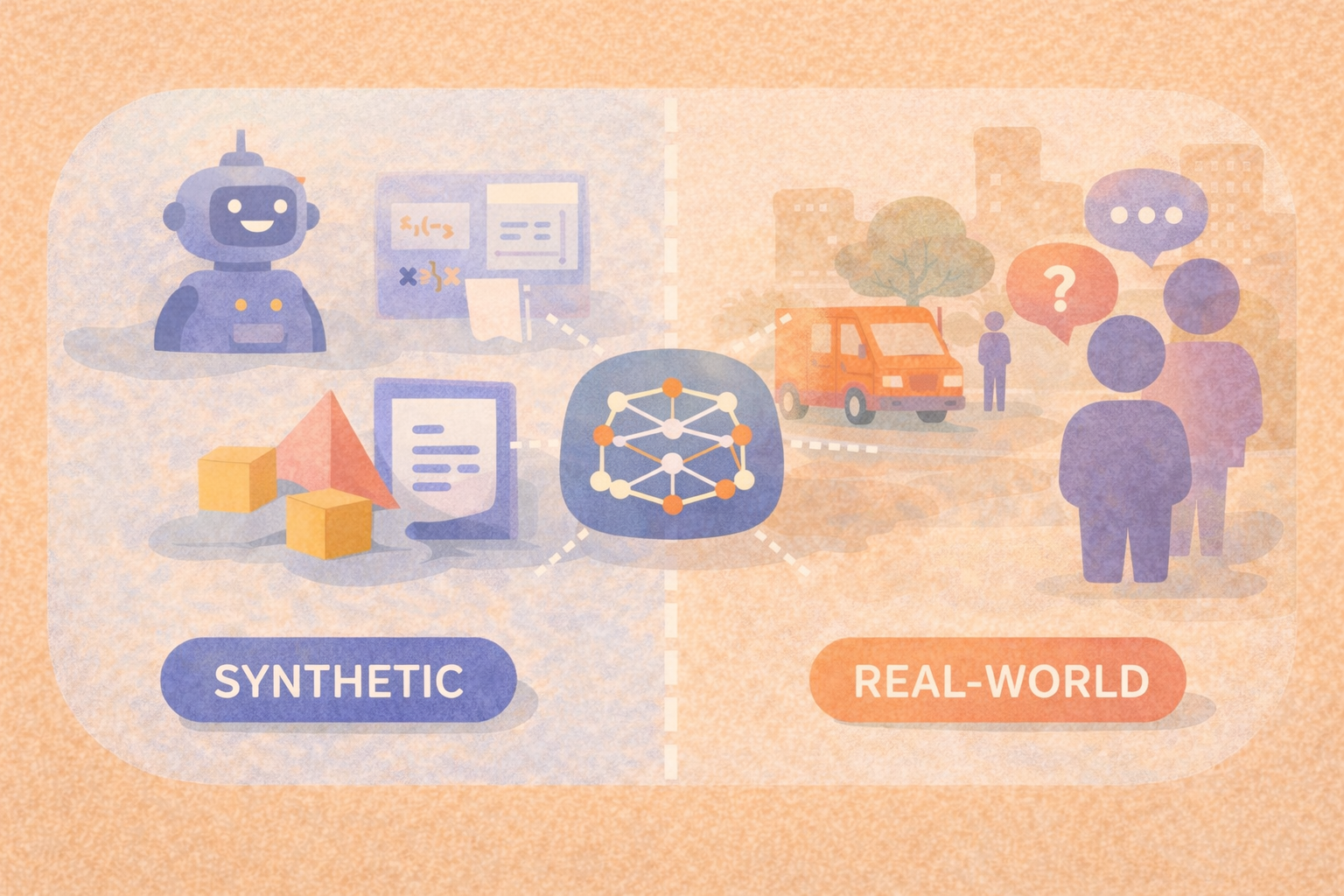
What are the differences between synthetic and real-world AI benchmarks?
Synthetic benchmarks offer control and scalability, while real-world benchmarks expose how AI systems behave under real conditions—and strong evaluation strategies rely on both.
-
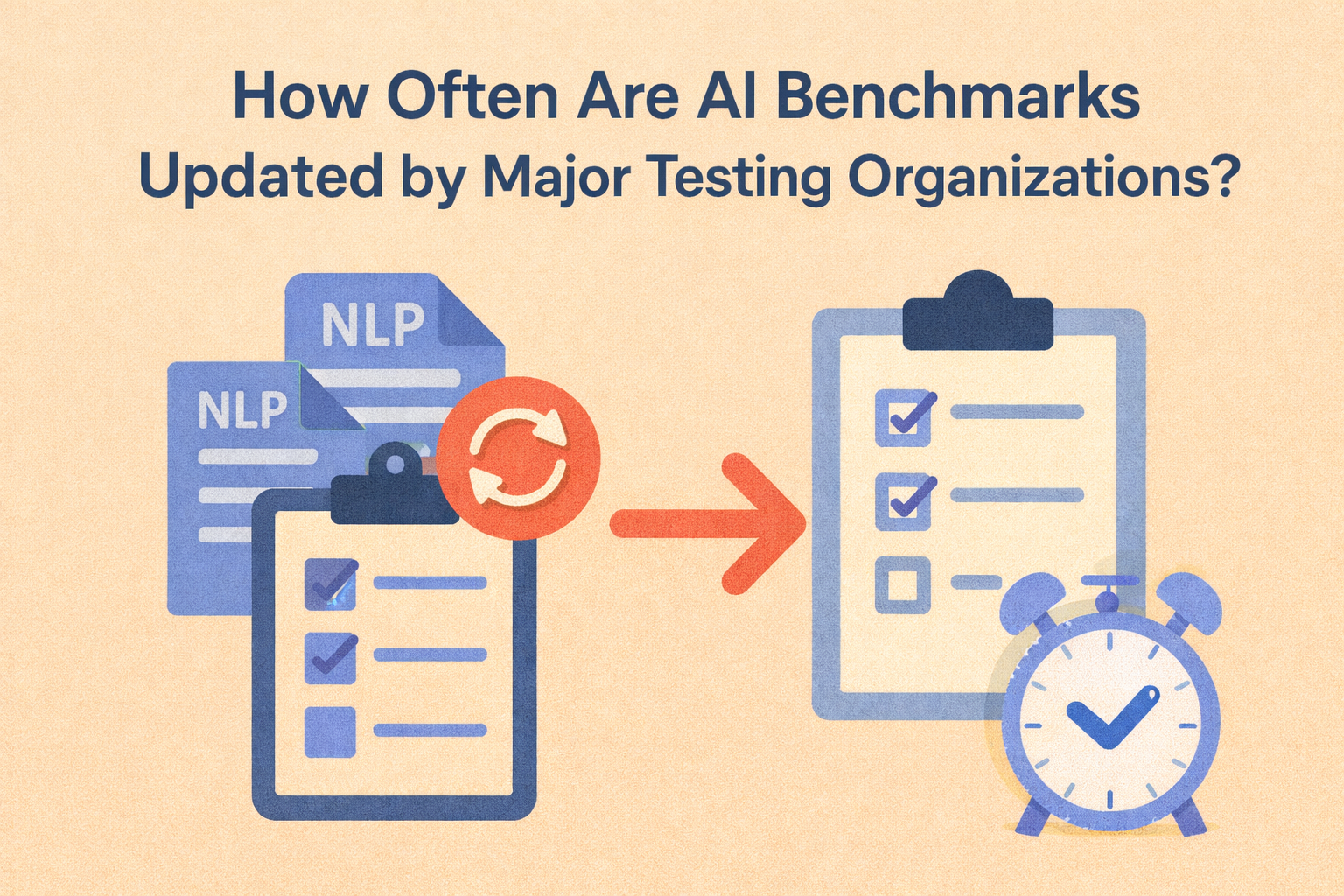
How often are AI benchmarks updated by major testing organizations
Benchmark results are time-bound, so the most reliable comparisons always include the benchmark version, evaluation method, and date.
-
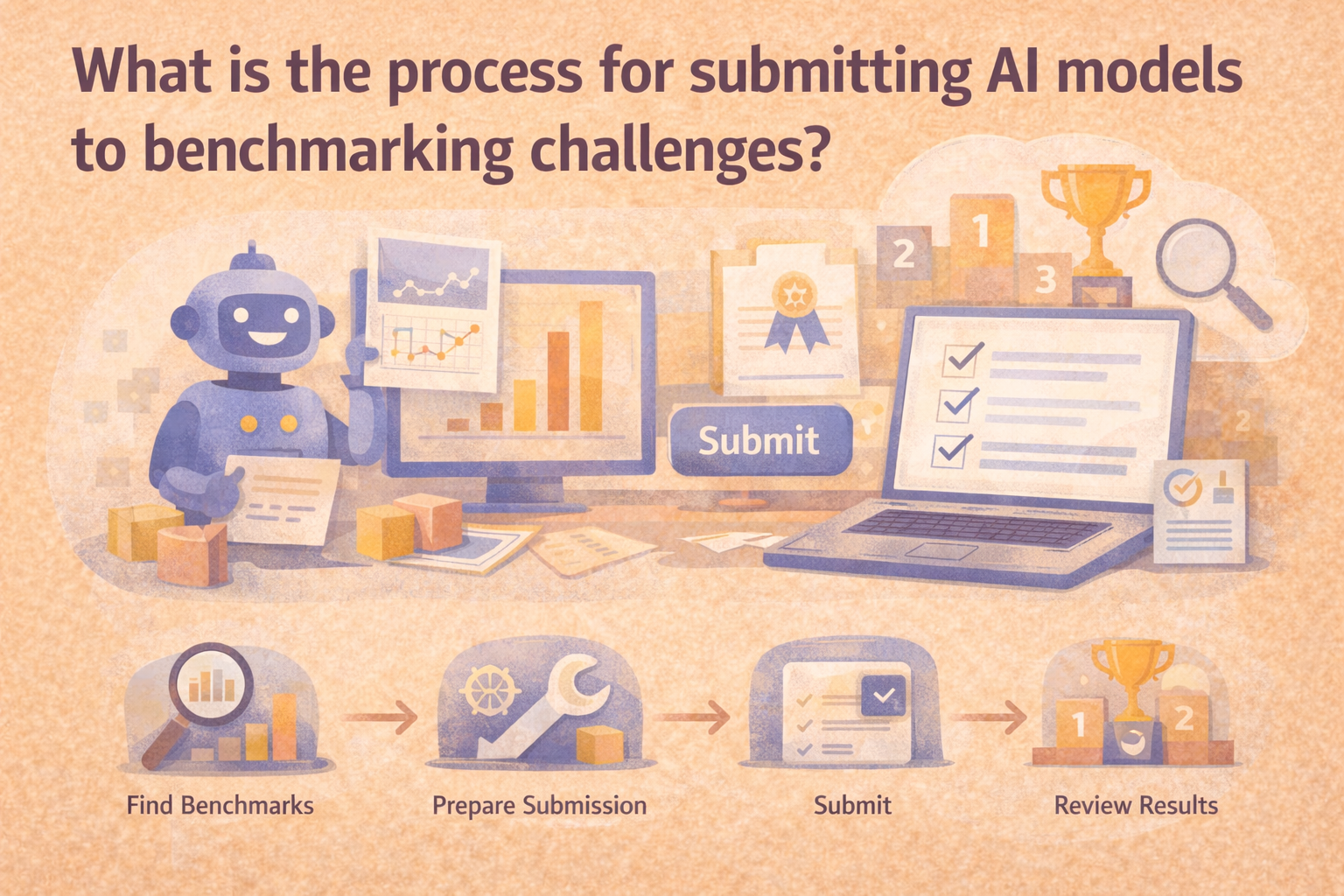
What is the process for submitting AI models to benchmarking challenges?
Submitting an AI model to a benchmarking challenge is less about “upload the model” and more about proving your system can be evaluated fairly.
-
How to interpret AI benchmark results from third-party testing services?
Benchmark scores can be helpful signals, but only if you understand the dataset, scoring method, evaluation setup, and version behind the number.
-
How to choose an LLM benchmark
Public leaderboards are helpful for shortlisting models, but production demands custom evaluation. Learn how to choose an LLM benchmark for your team.
-
Benchmarks provide a common ground for evaluating machine learning models, but their usefulness depends on how well they reflect real-world goals. This guide explains what benchmarks are, when to rely on them, and where they fall short.
-
What are the differences between synthetic and real-world AI benchmarks?
This article breaks down how synthetic and real-world AI benchmarks differ and why teams need both to understand true model performance.